Short answer
When an AC in New Orleans shuts off with water standing in the pan, the condensate drain line is almost always clogged with algae and sludge, and the float switch did its job by cutting power. Clearing the line with suction and a flush usually restores cooling on the same visit. A rusted secondary pan or a failed condensate pump needs replacing before it leaks into a ceiling.
Signs the drain is backing up
Why condensate lines clog
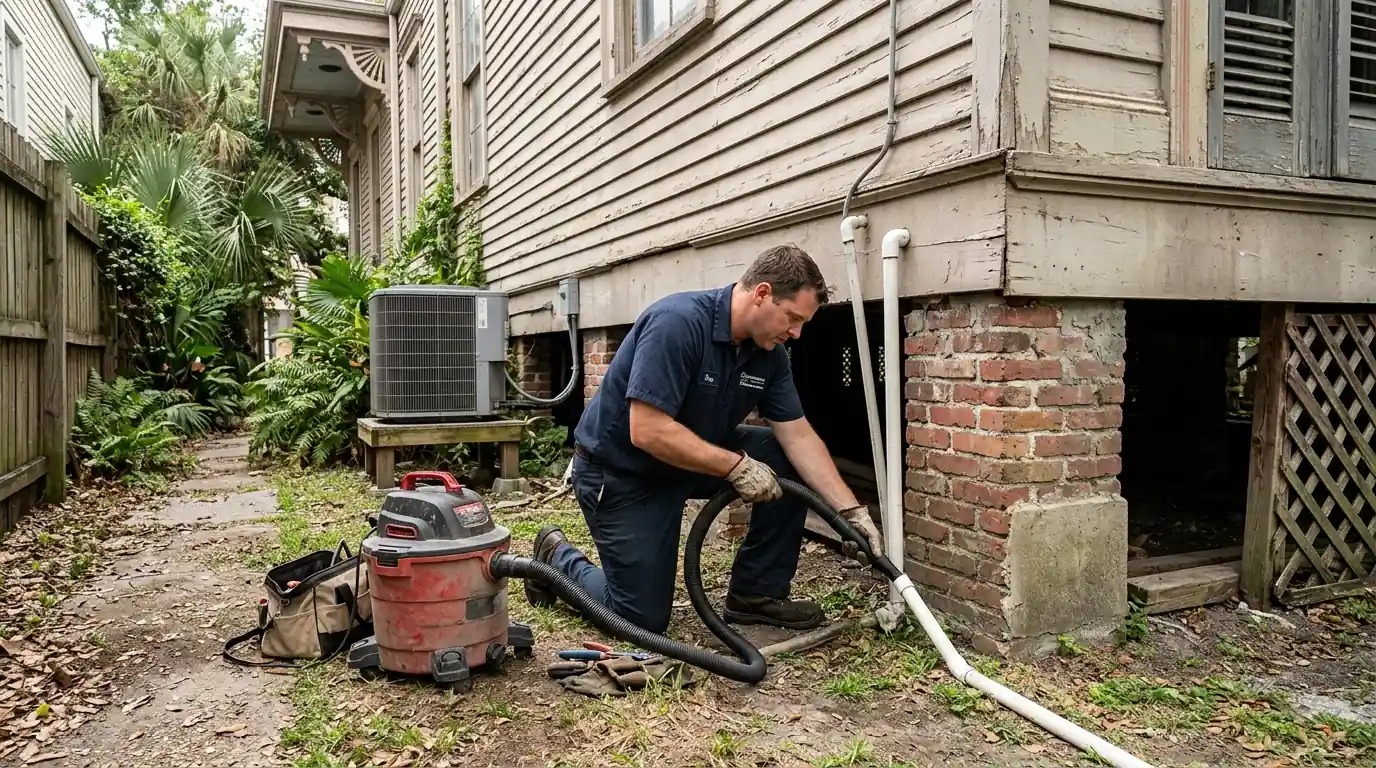
The indoor coil runs below the dew point, so water condenses on it all day, drips into a pan and drains through a PVC line. That water is warm, dark and dusty, which is what algae and bacterial slime need, and over a season the slime narrows the line until water backs up.
Attic air handlers carry a second, emergency pan, and a float switch cuts the system off when water rises. That shut-off is the safety feature, not the fault. A warm house, a blank thermostat and water in the pan point straight at the drain.
Clearing a clogged condensate line
Most clogs sit near the air handler, where the trap holds water and slime builds fastest. We pull the clog out with a wet vacuum at the outside end, flush the line from the cleanout tee and run water through to prove it drains. Then we look at why it clogged: too little slope, a missing trap or vent, or a dried-out trap pulling attic air. Fixing the slope or adding a cleanout makes the next clearing a five-minute job.
Float switch shutting the system off
A float switch cuts the thermostat circuit when water rises in the pan or line. If it trips, the drain is backed up, and resetting it without clearing the line just floods the pan again. Sometimes the switch fails on its own and shuts the system down with a dry pan. We test it, clear the line it guards and replace a faulty switch. Where an attic unit has none, we add one; it is a small part that saves ceilings.
Rusted secondary drain pans
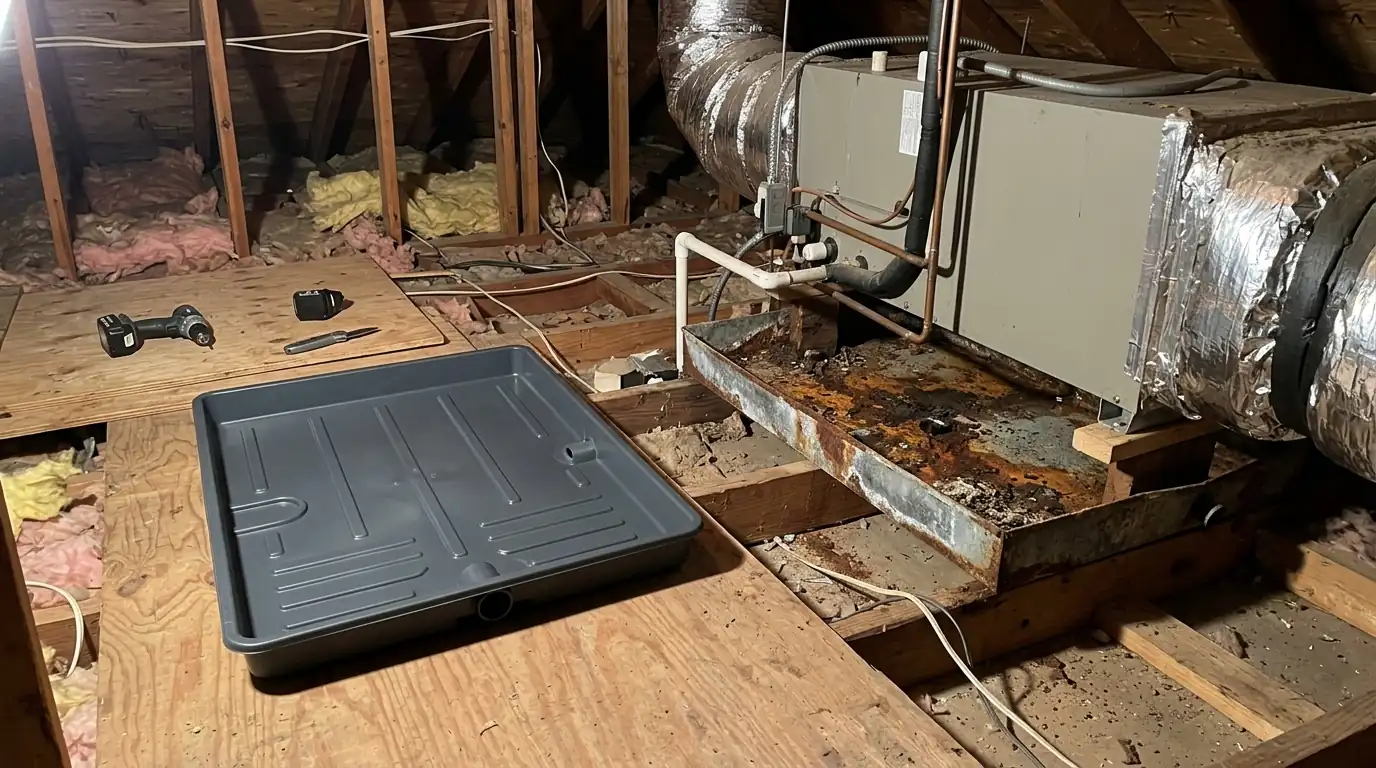
The metal emergency pan under an attic air handler sits in hot, damp air for years. Once it rusts through, only drywall stands between an overflow and your ceiling. A pan with rust spots, standing water or old stains should be replaced. We support the air handler, slide in a new pan, usually a plastic one that cannot rust, and reconnect its drain and float switch. It costs far less than a ceiling and insulation repair after a summer overflow.
Condensate pump replacement
When the air handler sits too low to drain by gravity, a small pump lifts the water out. Pumps fail with a burnt motor, a stuck float or a check valve clogged with slime, which means water on the floor or a tripped safety switch. We replace the pump, clean the reservoir, check that its overflow switch shuts the AC off, and pour water through until it cycles. If the line can be rerouted to drain by gravity, we suggest that instead, since it has no motor to fail.
Why drains work harder in New Orleans
From mid-July to mid-August, the warmest stretch of the year, dew points here sit in the upper 70s and can approach 80, and summer humidity averages about 76 percent. More moisture means more water wrung out at the coil every hour, and more warm water for slime to grow in. A drain that would go years untouched in a drier city needs clearing every spring in New Orleans.
How we fix a backed-up drain
- Stop the waterWe shut the system down and vacuum the pan.
- Clear the lineSuction outside, a flush from the cleanout tee.
- Check the safety switchWe test the float switch, or add one.
- Fix the causeSlope, trap, pan or pump problems get corrected.
- Prove it drainsWater poured through the pan must leave before restart.
What a drain repair usually costs
- Clog only. Clearing and flushing a line is the simplest call.
- Float switch. Adding or replacing a switch is a small part and a short job.
- Pan replacement. Supporting the air handler and swapping the pan takes more time.
- Condensate pump. A new pump and tubing cost more than a gravity drain fix.
- Line rework. Correcting slope or adding a trap and cleanout adds pipe and labor.
Planning range: common central AC repairs, drain clogs included, typically run about $150 to $650 (source: thisoldhouse.com). It is a market range, not our price; we quote after we see the system.
Drain care you can do yourself
Safe to do yourself
- Pour a cup of white vinegar into the cleanout tee every few months
- Use a wet vacuum on the outside end when it drips slowly
- Keep the outside outlet clear of mulch and soil
Leave to a technician
- Bypassing a float switch; it is there to save your ceiling
- Replacing a pan under an air handler that must be lifted
- Rerouting a line or replacing a condensate pump