Short answer
Commercial HVAC maintenance in New Orleans means scheduled visits, often quarterly, to change filters, check and replace belts, clean condenser and evaporator coils, clear condensate drains, check refrigerant and electrical parts, and test economizers and controls. Kitchens need more frequent coil and filter work because grease builds up fast. Each visit ends with notes on what was found and what is wearing out.
What scheduled maintenance prevents
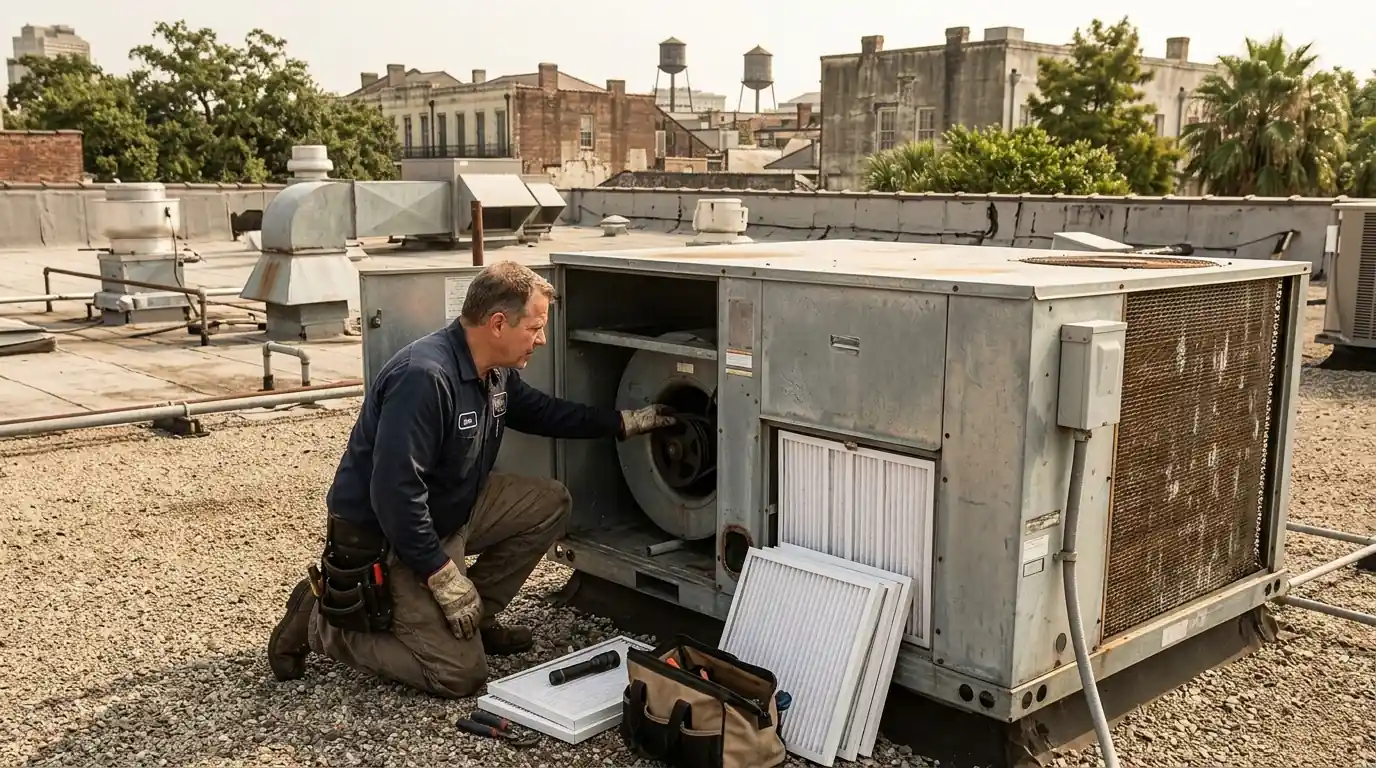
Most commercial breakdowns start small: a slipping belt, a clogged filter, a drain line full of slime, a coil coated in grease. Left alone, each one forces the unit to work harder until a motor, compressor or control fails, usually on the busiest day.
A schedule fixes that. We set visit frequency by how hard each unit works, keep a record per unit, and flag parts nearing the end so replacements can be planned instead of rushed. Repairs found during a visit are quoted before any work. Breakdowns are handled under commercial AC repair.
What each maintenance visit covers
- Filters changed to the right size and rating
- Belts inspected, tensioned or replaced
- Condenser and evaporator coils checked and cleaned
- Condensate drains cleared and treated
- Refrigerant pressures and electrical parts checked
- Economizer and controls tested
- Written notes per unit after each visit
Quarterly filter and belt service
Filters and belts are the parts that wear fastest on a commercial unit. A loaded filter starves the coil and blower; a glazed or loose belt slips, squeals and eventually snaps, leaving the blower still while the compressor runs. On each scheduled visit we change filters to the right size and rating, inspect belts for wear and tension, check pulley alignment and bearings, and replace belts on a set schedule rather than waiting for one to fail. Quarterly visits suit most stores and offices.
Coil cleaning for restaurant kitchens
Kitchen air carries grease, and grease sticks to coils, blower wheels and filters far faster than ordinary dust. A greasy condenser coil on the roof cannot shed heat, and a coated evaporator coil cuts airflow and freezes. For restaurants we clean coils more often, use degreasers suited to the coil metal, and check that make-up air and exhaust are balanced so the dining room is not pulling hot, greasy air from the kitchen. Hood and duct cleaning stay with your hood contractor; we coordinate with them.
Setting a schedule for New Orleans hours
Commercial equipment in New Orleans runs long hours through a warm, humid season that starts early and ends late, so filters load faster, drains grow slime sooner and condenser coils on hot roofs work near the edge of their capacity. That is why we set visit frequency by each unit's real hours and duty, a kitchen unit sooner than an office unit, rather than handing every business the same twice-a-year plan.
How a maintenance program runs
- Survey the unitsWe list every unit, its age, size and condition.
- Set the scheduleFrequency matched to each unit's duty.
- Service visitsFilters, belts, coils, drains, controls.
- ReportNotes per unit after each visit.
- Plan replacementsAging units flagged before they fail.
What decides the cost of a maintenance plan
Commercial maintenance is priced per site, so we do not publish a figure. These are the main drivers.
- Number and size of units. More tonnage means more filters, belts and coils.
- Visit frequency. Quarterly costs more per year than twice a year.
- Kitchen grease. Restaurants need more coil cleaning.
- Roof access. Ladders, hatches and lifts affect time on site.
- Filter type. Pleated and high-efficiency filters cost more.