Short answer
Evaporator coil replacement in New Orleans means recovering the refrigerant, removing the old coil from the air handler or furnace cabinet, fitting a new coil matched to the outdoor unit, brazing the connections, replacing the filter drier, pulling a deep vacuum and charging by weight. It makes sense when the coil leaks or is badly corroded. On older or R-22 systems, a full replacement is often the better value.
Why coils fail and what replacing one involves
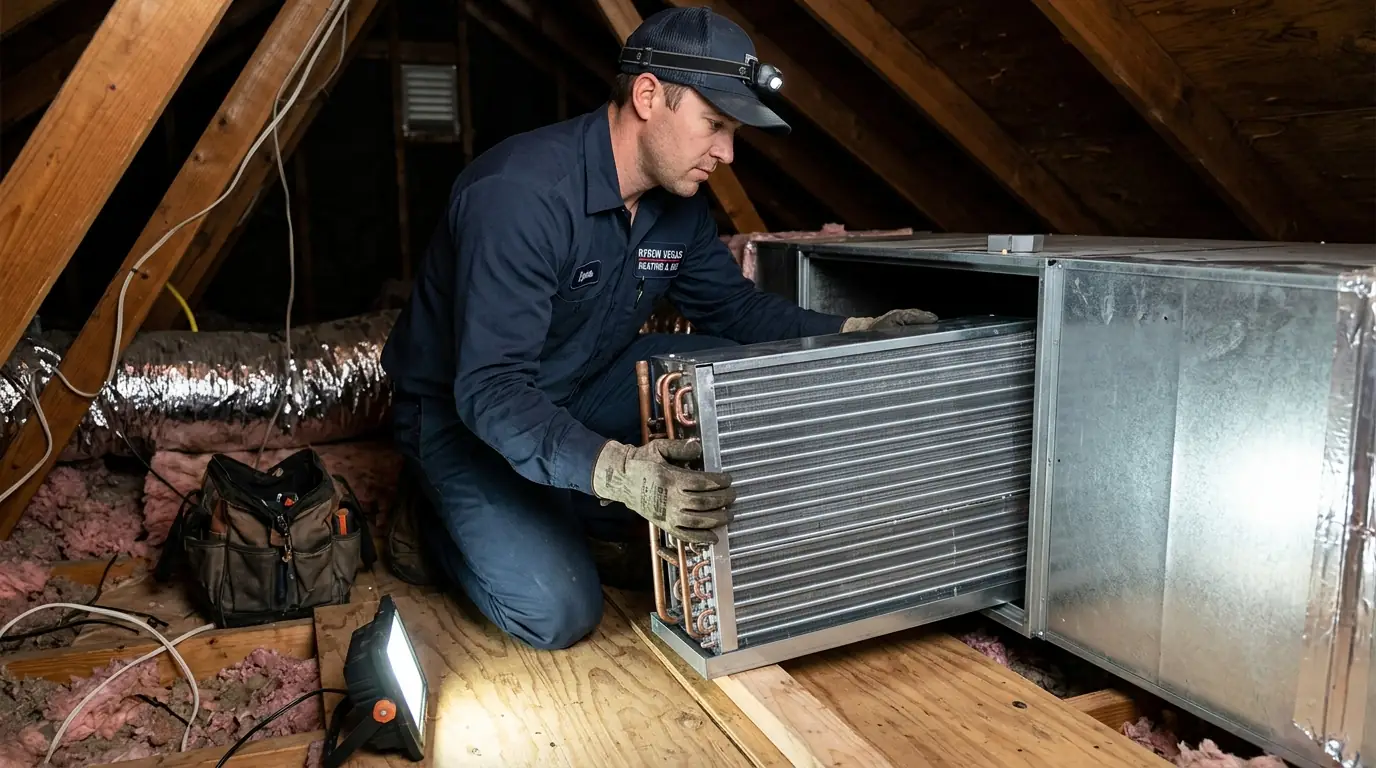
Indoor coils sit in damp air and run wet for months. Over the years, thin copper tubing can develop pinhole leaks, often from formicary corrosion caused by chemicals in indoor air, and aluminum coils can corrode at their joints. A leaking coil slowly loses the charge until the system stops cooling.
Replacement is more than swapping parts: the new coil has to match the outdoor unit's capacity and refrigerant, and the metering device has to suit both. We check warranty coverage first, since many coils carry parts warranties, and price a full AC replacement alongside when the system is older.
What a coil replacement costs
- Coil size and type. Cased, uncased and aluminum or copper coils differ.
- Warranty status. A coil under warranty leaves labor and refrigerant.
- Refrigerant. R-22 and larger charges cost more.
- Attic access. Tight attics slow the work.
- Drain pan. A rusted secondary pan is replaced at the same time.
Planning range: about $600 to $2,000 for an evaporator coil replacement (source: cost-guide-ssr.homeadvisor.com). It is a market range, not our price; we quote after we see the system.
What a coil replacement includes
- Leak confirmed at the coil first
- Refrigerant recovered
- Matched coil and metering device fitted
- Connections brazed under nitrogen
- Filter drier replaced
- Deep vacuum held, then charged by weight
- Drain pan, cabinet seal and airflow checked
A leaking coil in the attic
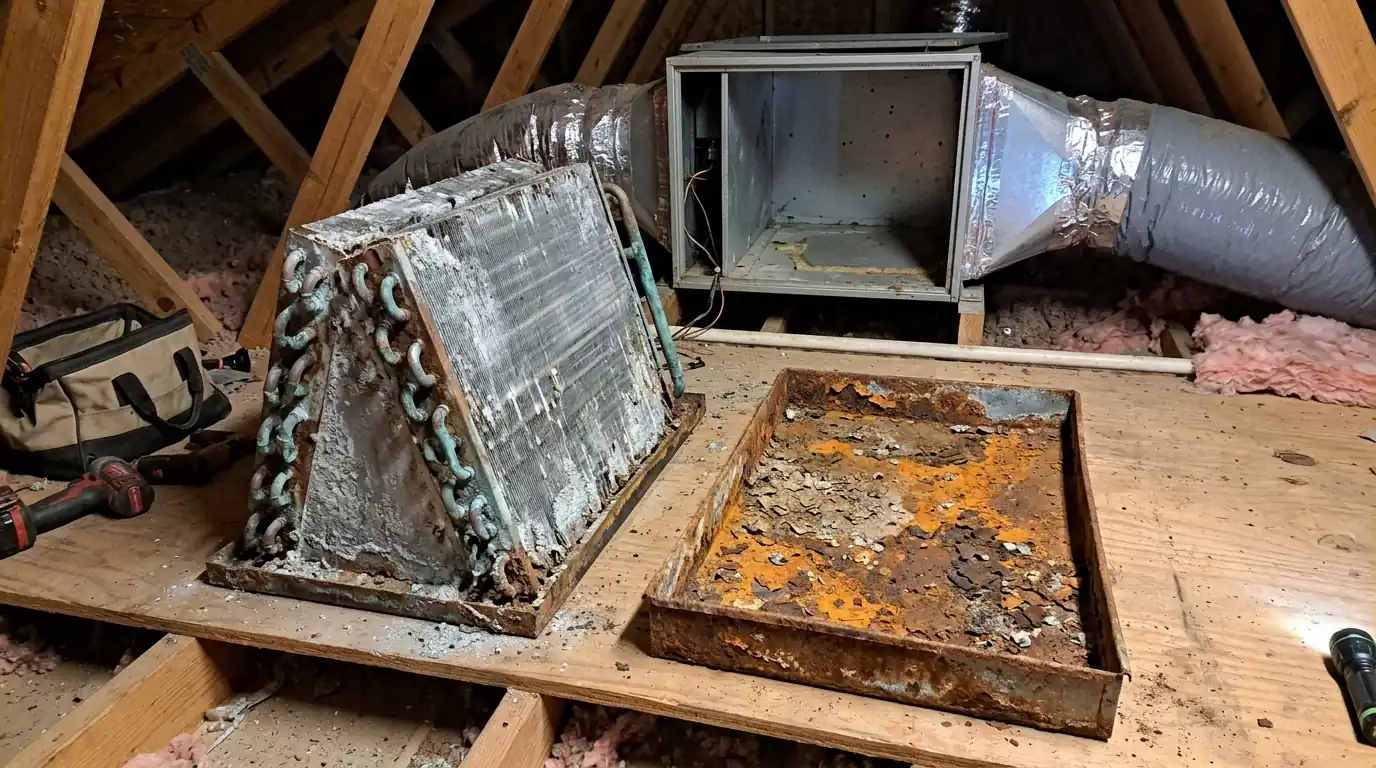
Most local coils sit in attic air handlers or on top of attic furnaces, which makes the work slower: the cabinet has to be opened in the heat, the old coil slid out, and the drain pan checked for rust while it is exposed. We confirm the leak with a detector or pressure test before condemning the coil, protect the area around the air handler, fit the new coil and drain connection, and reseal the cabinet so it does not pull attic air. A new secondary pan goes in if the old one is rusted.
Matching a coil to an older condenser
A new coil must match the outdoor unit's capacity, refrigerant and metering device, and finding a correct match for an older condenser is not always possible. If the outdoor unit runs on R-22 or is past mid-life, putting a new coil on it can leave you with a mismatched system that never reaches its rating and an old compressor that may fail next. We check what the manufacturer lists as a match and tell you plainly when the better choice is replacing both pieces together.
Attic coils in Jefferson Parish homes
Most housing in Jefferson Parish was built after 1950, and in homes of that era the coil usually sits in an attic air handler or on top of an attic furnace. That makes coil replacement an attic job in summer heat, and it makes the condition of the drain pan and the cabinet part of every coil quote. When we open the cabinet we check both, so a rusted pan does not become the next leak through the ceiling.
How a coil replacement runs
- Confirm the leakDetector or pressure test at the coil.
- Check warranty and matchSerial number and listed coil match.
- Recover the refrigerantOld charge recovered, coil removed.
- Install and brazeNew coil, metering device and filter drier.
- Vacuum and chargeDeep vacuum held, charged by weight, tested.
How long the system is off
A coil replacement usually takes a day once the coil is on hand, because the refrigerant must be recovered, the new coil brazed in, and the system evacuated and charged. Warranty coils can take longer to arrive, and we tell you the timeline when we quote.