Short answer
Air duct cleaning in New Orleans makes sense after renovation dust, flood or storm exposure, rodent or insect activity, or visible debris blowing from the vents. A proper cleaning puts the duct system under negative pressure with a large vacuum, then loosens debris with brushes and air whips so it is pulled out, and it includes the blower and coil. Cleaning only the grilles does very little.
When duct cleaning is worth paying for
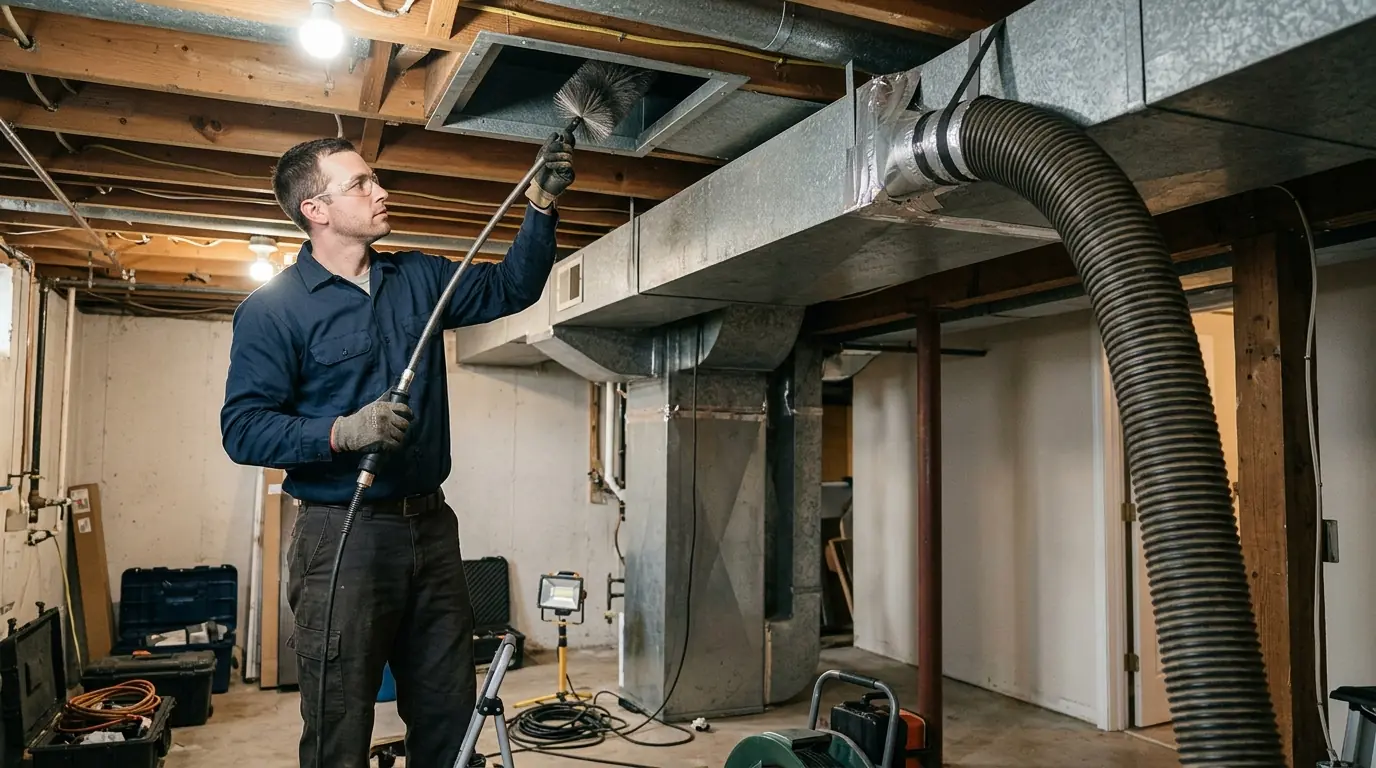
Most ducts do not need routine cleaning. They need it when something has gone into them: plaster and drywall dust from a renovation, silt and moisture from floodwater, droppings from pests, or a thick layer of dust after years of thin filters. In those cases the debris keeps cycling through the house until it is removed.
The method matters. A large vacuum goes on the trunk, the grilles are sealed, and each run is worked with brushes and air whips so debris is pulled toward the vacuum. Cleaning ducts but not the blower and coil leaves the dirtiest parts behind, so both are included. Ducts that held floodwater usually need replacing instead.
What a duct cleaning includes
- Inspection of ducts, blower and coil
- Vacuum on the trunk under negative pressure
- Supply and return grilles sealed during work
- Brushes and air whips through every run
- Blower wheel and housing cleaned
- Coil inspected and cleaned if needed
- New filter fitted to the return
Cleaning after a renovation
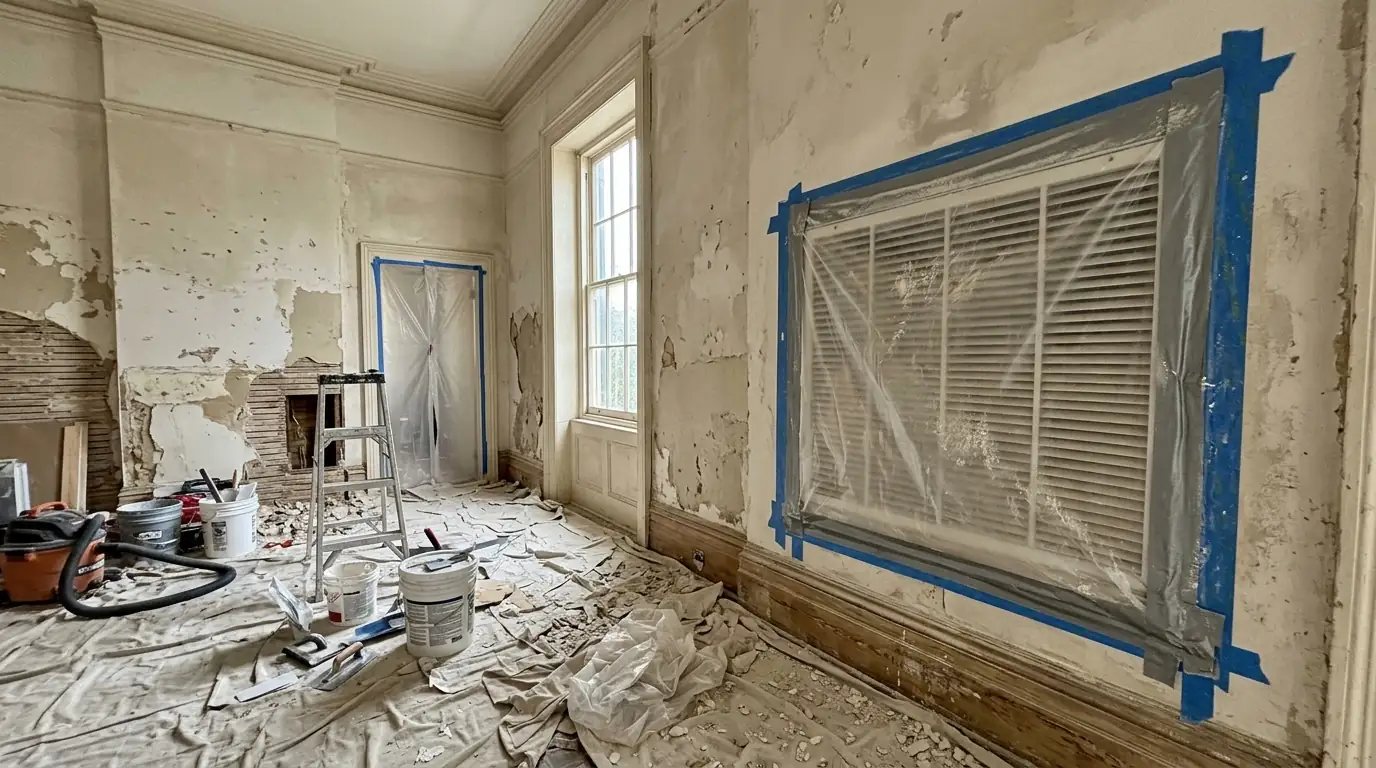
Sanding plaster, cutting drywall and sawing trim fill the air with fine dust, and a running system pulls it into the returns and spreads it through every duct. The fix starts before the work: seal the returns and supply grilles, and change the filter often while work goes on. If that did not happen, cleaning afterward removes dust that would otherwise keep settling on furniture for months. We clean the returns, supplies, blower and coil, then fit a fresh filter sized properly for the return.
Cleaning after a flood or storm
Floodwater leaves silt and moisture behind, and wind-driven rain can soak attic ducts through a damaged roof. Rigid metal ducts that got wet can sometimes be cleaned and dried, but flex duct and duct board that held water usually cannot be made right and should be replaced. We inspect each run, clean and sanitize what can be saved, and tell you plainly which sections need to come out. The air handler and coil get the same inspection, since standing water there causes its own problems.
Old houses, renovations and dust
Gretna's historic district shows why renovation dust so often ends up in ducts here: shotgun houses make up about 54 percent of its building stock, and most of its bungalows sit a few feet above grade. Older homes like these tend to be renovated room by room, often with plaster coming down while the AC keeps running. Sealing the returns before work starts prevents most of the mess; when that did not happen, a source-removal cleaning clears what is left.
How a duct cleaning runs
- InspectWe look at ducts, blower and coil to confirm cleaning is worth it.
- Set up negative pressureVacuum on the trunk, grilles sealed.
- Clean run by runBrushes and air whips push debris to the vacuum.
- Clean blower and coilThe parts that hold the most dirt.
- Check and refitGrilles reopened, new filter fitted, airflow checked.
What duct cleaning usually costs
- Number of runs. More supply and return runs mean more time.
- Duct type. Metal, flex and duct board are cleaned differently.
- Debris. Renovation dust, flood silt and pest debris take different work.
- Access. Tight attics and crawlspaces slow the job.
- Blower and coil. A caked blower wheel or coil adds cleaning time.
Planning range: about $450 to $1,000 for a ductwork cleaning (source: homeadvisor.com). It is a market range, not our price; we quote after we see the system.
What homeowners can do themselves
Safe to do yourself
- Change filters on schedule and size them right
- Vacuum the grilles and the register boots you can reach
- Seal returns with plastic during renovation work
Leave to a technician
- Cleaning trunk lines and branch runs
- Blower and coil cleaning
- Deciding whether wet or damaged ducts can be saved