Short answer
Most AC repairs in New Orleans fall into a few groups: electrical parts like capacitors and contactors, airflow problems such as clogged filters and frozen coils, drain clogs that trip the float switch, and refrigerant leaks. A technician checks the thermostat call, the electrical parts, airflow and refrigerant pressures in that order, then quotes the repair before any work starts.
Signs your AC needs repair
How we find the fault
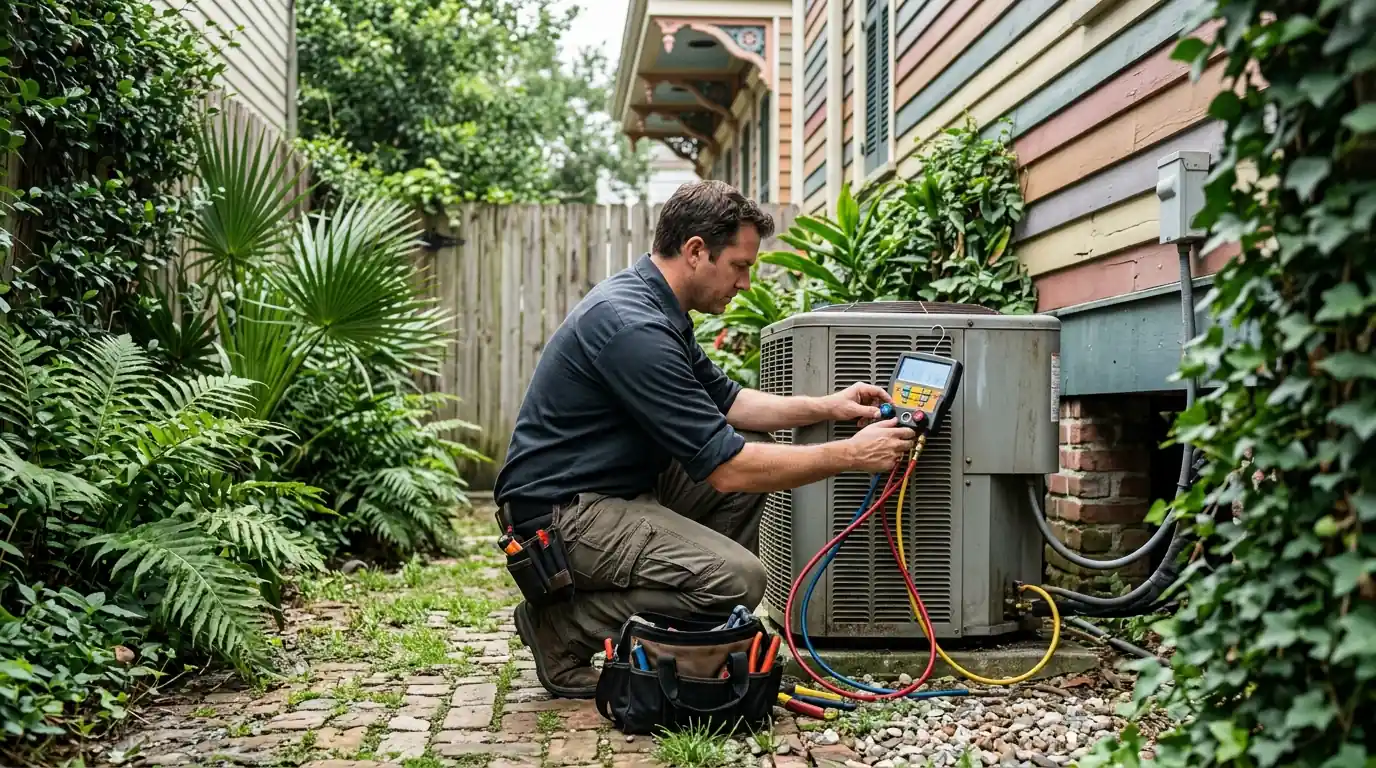
An air conditioner is a chain: thermostat, control board, contactor and capacitor, compressor and fan, coil, refrigerant and ducts. When it fails, we work down that chain with meters and gauges instead of guessing, because the part that looks bad is not always the one that failed.
That order also keeps the cost down. Electrical parts are checked before refrigerant, and airflow before any charge is added. We repair Carrier, Trane, Lennox, Goodman, Rheem and Daikin systems, and when an older unit is not worth fixing, we say so and price an AC replacement alongside the repair.
AC blowing warm air
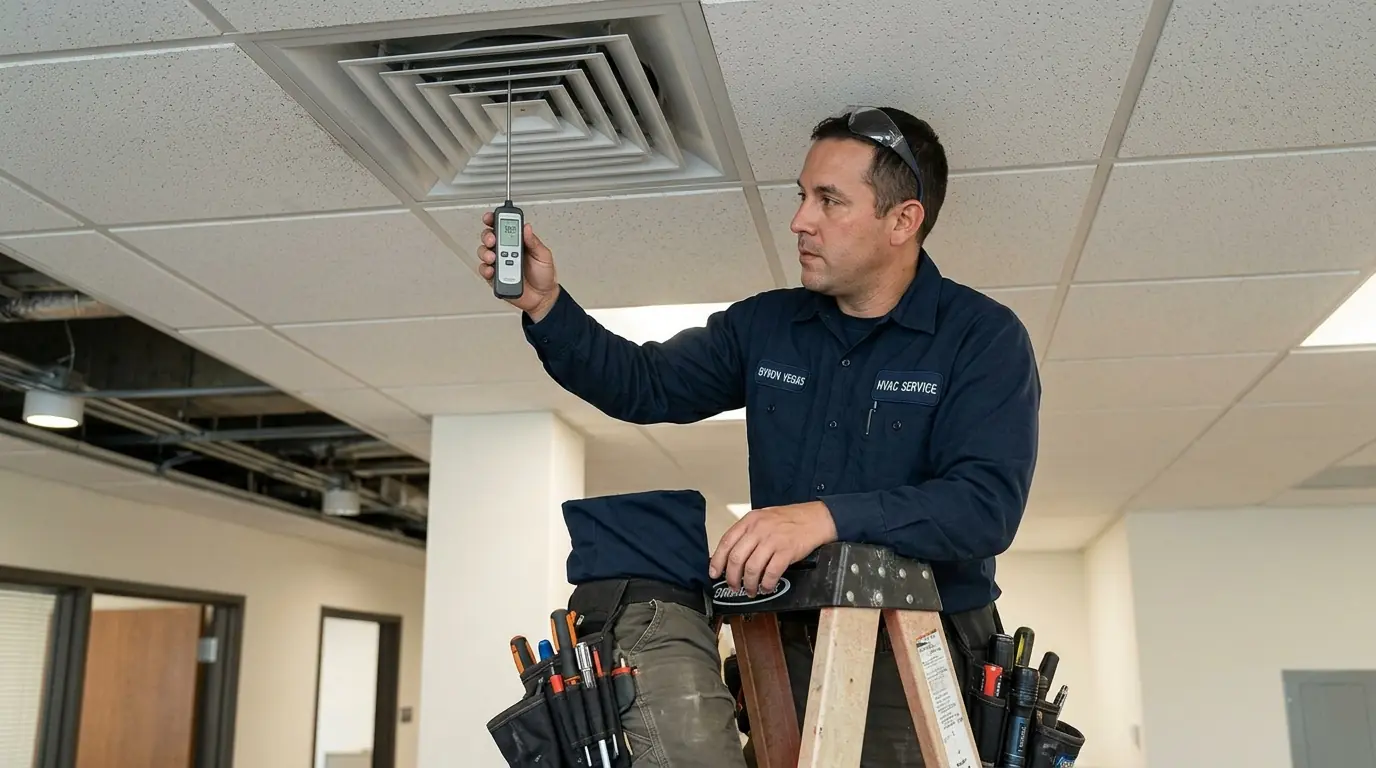
Warm air with the system running has a short list of causes. If the outdoor unit is silent, the contactor, the capacitor or a tripped breaker is usually to blame. If it runs but the air is barely cool, look at airflow and refrigerant: a clogged filter, a frozen coil, a dirty outdoor coil, or a leak that has dropped the charge. We check the outdoor unit first, then measure the temperature split and pressures. Refrigerant is added only after a leak is found and fixed.
AC that keeps starting and stopping
Short cycling, where the system runs a few minutes, stops and starts again, wears parts fast and leaves the house damp. Common causes are an oversized system, a thermostat mounted near a supply vent, a dirty filter tripping a limit, low refrigerant tripping a pressure switch, or a failing contactor. We watch a full cycle, check the safety switches and the thermostat's location, and fix the cause. If the system is simply too big for the house, that is a sizing problem, and we explain the options.
Loud, grinding or rattling outdoor unit
A new noise from the outdoor unit usually tells you where to look. Grinding or squealing points to fan motor bearings; a rattle can be a loose panel, a bent fan blade or debris in the grille; a loud hum with no start points to a capacitor; and a harsh clatter on start-up can mean a struggling compressor. Turn the system off if the noise is metallic or getting worse. We find the source, replace the worn parts and check that the compressor starts cleanly.
AC tripping the breaker
A breaker that trips once on a scorching afternoon may just be tired. One that trips again and again is warning of a fault: a compressor drawing too much current, a shorted fan motor, a failing capacitor, burnt wiring at the disconnect, or a breaker worn out by years of heavy load. Do not keep resetting it. We check the breaker size against the unit's nameplate, measure each motor's current, and look for heat damage in the wiring before restoring power for good.
How long a typical repair takes
Electrical parts such as capacitors and contactors, drain clears and airflow fixes are usually finished on the first visit. Refrigerant leaks, compressor and coil replacements take longer, because the leak has to be found or the part ordered, and we tell you that, with the price, before any work starts.
What long outages do to air conditioners
During Hurricane Ida's outage, a collapsed transmission tower darkened New Orleans and the east bank of Jefferson Parish, and heat index values reached 106 in the days that followed. When power returned, air conditioners that had sat idle for days restarted all at once, and weak capacitors, sticky contactors and clogged drains showed up together. Long outages still bring that pattern, which is why we check the electrical parts first on any post-storm no-cool call.
How an AC repair visit runs
- Ask what changedWhen it started, what it sounds like, what the thermostat shows.
- Check the call and electricalThermostat, board, contactor, capacitor and breaker.
- Check airflow and coilFilter, blower, coil and drain.
- Measure refrigerantPressures and temperatures on a clear coil.
- Repair and retestQuote first, then fix and run a full cycle.
What AC repairs usually cost
- Type of part. Electrical parts cost less than refrigerant or compressor work.
- Refrigerant type. Older R-22 systems cost more to recharge than newer ones.
- Access. Tight attics and rooftop units take longer to reach.
- System age. Older units may need related parts replaced at the same time.
- Parts warranty. A part still under the maker's warranty can lower the bill.
Planning range: most common central AC repairs run about $150 to $650; compressors, coils and leak repairs cost more (source: thisoldhouse.com). It is a market range, not our price; we quote after we see the system.