Short answer
For an emergency AC repair in New Orleans, call the line, which is answered around the clock, and tell us what the system is doing. We walk you through safe checks while a technician is arranged, such as the thermostat, breakers and the float switch. Calls involving elderly people, infants or medical needs during extreme heat go first. Most urgent failures are electrical parts, drains or frozen coils.
When to treat it as an emergency
What counts as an AC emergency
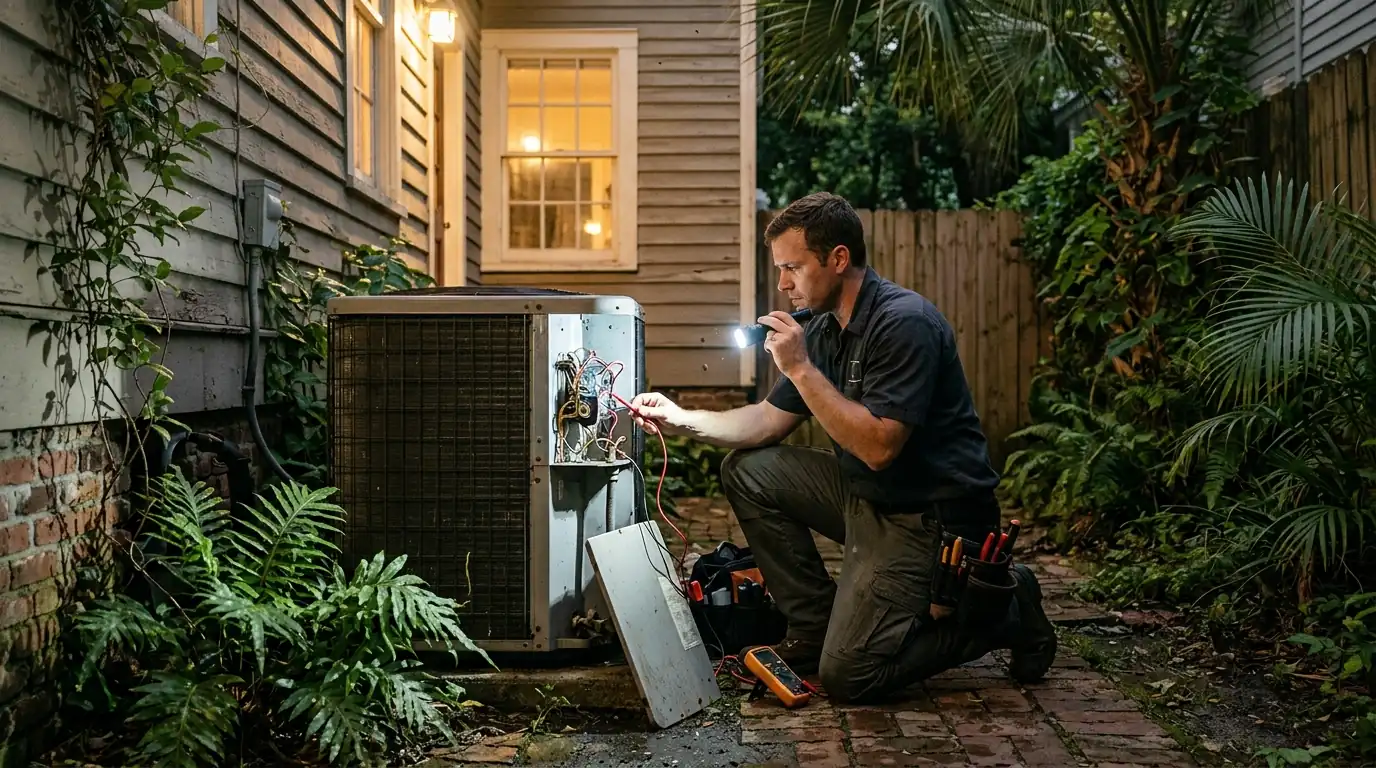
Any loss of cooling during extreme heat is urgent when someone in the house is vulnerable to it. Water pouring from an air handler or through a ceiling is urgent too, as is a burning smell, a breaker that keeps tripping, or a unit that hums without starting, since running it can damage the compressor.
Many emergencies have simple causes a technician can fix on the spot: a failed capacitor or contactor, a tripped float switch, a frozen coil or a blown control fuse. Bigger failures are diagnosed, priced and scheduled. Daytime work is covered under AC repair.
Breakdowns at night and on weekends
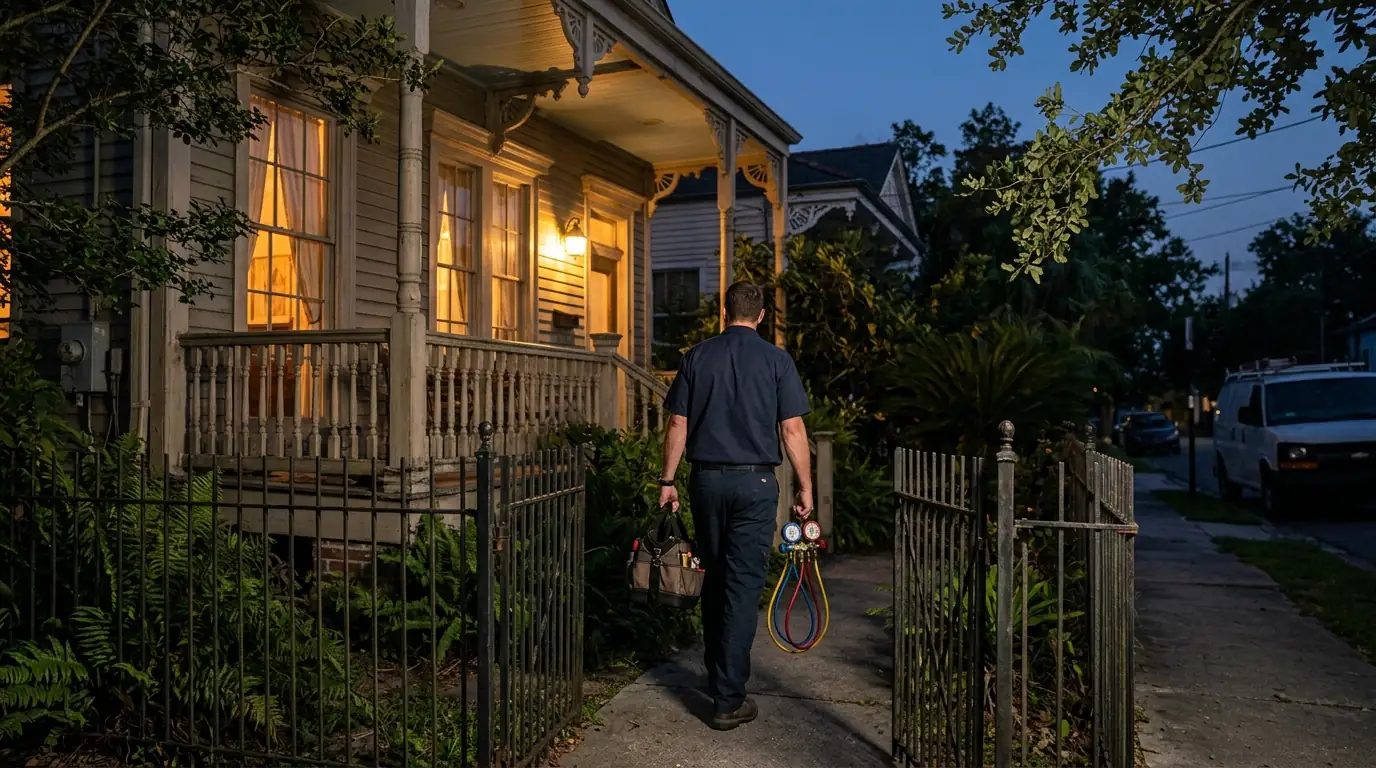
Systems fail when they work hardest, which means late afternoons, evenings and weekends in July and August. When you call after hours, a person picks up, asks what the system is doing, and talks you through checks that might restore cooling or protect the equipment: thermostat settings, breakers, the outdoor disconnect, the filter and the drain pan. If it needs a technician, we arrange one and tell you what to expect, including the visit cost, before anyone heads your way.
AC out during a heat advisory
When the AC fails during a heat advisory, the first job is keeping people safe while the repair is arranged. Move everyone to the coolest room on the lowest floor, close blinds on sunny windows, run fans, drink water, and keep an eye on older family members, infants and anyone with a medical condition. If someone shows signs of heat illness, call 911. Tell us about vulnerable people when you call; those calls go to the front of the line.
Water pouring from the air handler
Water coming through a ceiling or pooling around an air handler usually means a clogged condensate drain with a missing or failed float switch, a rusted-through drain pan, or a frozen coil thawing all at once. Turn the system off at the thermostat, put buckets and towels down, and if water is near light fixtures or outlets, switch off that circuit. We clear the drain, check the pans and float switch, deal with any ice, and get the system running without the water.
What an AC emergency means in this region
After Hurricane Ida, a collapsed transmission tower left New Orleans and the east bank of Jefferson Parish in the dark while heat index values reached 106, and more than 100,000 Cleco customers around Slidell and Covington lost power too. Days like those show what an AC emergency really is in this region: heat that is dangerous, not just uncomfortable. It is why our line is answered around the clock, every day of the year.
How an emergency call runs
- Call the lineAnswered 24/7 by a person, not a voicemail.
- Safe checks by phoneThermostat, breakers, disconnect, drain pan.
- Technician visitArranged with what to expect, including the visit cost.
- Repair or stabilizeFixed on the spot, or made safe and scheduled.
- Follow-upBigger repairs priced and booked.
What emergency repairs usually cost
- Type of failure. Electrical parts cost far less than compressors or coils.
- Parts needed. Common parts versus model-specific ones.
- Refrigerant work. Leaks and recharges add time and material.
- Water damage. Drain and pan repairs after an overflow.
- System age. Older systems may need related parts at the same time.
Planning range: most common central AC repairs run about $150 to $650; compressors and coils cost more (source: thisoldhouse.com). It is a market range, not our price; we quote after we see the system.
What to do while you wait
Safe to do while you wait
- Set the thermostat to cool and check its batteries
- Check the breakers and the outdoor disconnect
- Turn the system off if it leaks water or hums without starting
Leave to a technician
- Opening electrical panels or touching capacitors
- Clearing a frozen coil by chipping ice
- Restarting a unit that trips its breaker repeatedly