Short answer
An HVAC inspection for a home buyer in New Orleans checks the age and model of every unit, runs cooling and heating, measures temperature split and refrigerant pressures, inspects the coil, drain, ducts and electrical parts, and notes signs of past water or storm damage. You get plain findings on what is sound, what is aging and what needs repair, in time to ask the seller for repairs or credits.
What a trade-level inspection adds
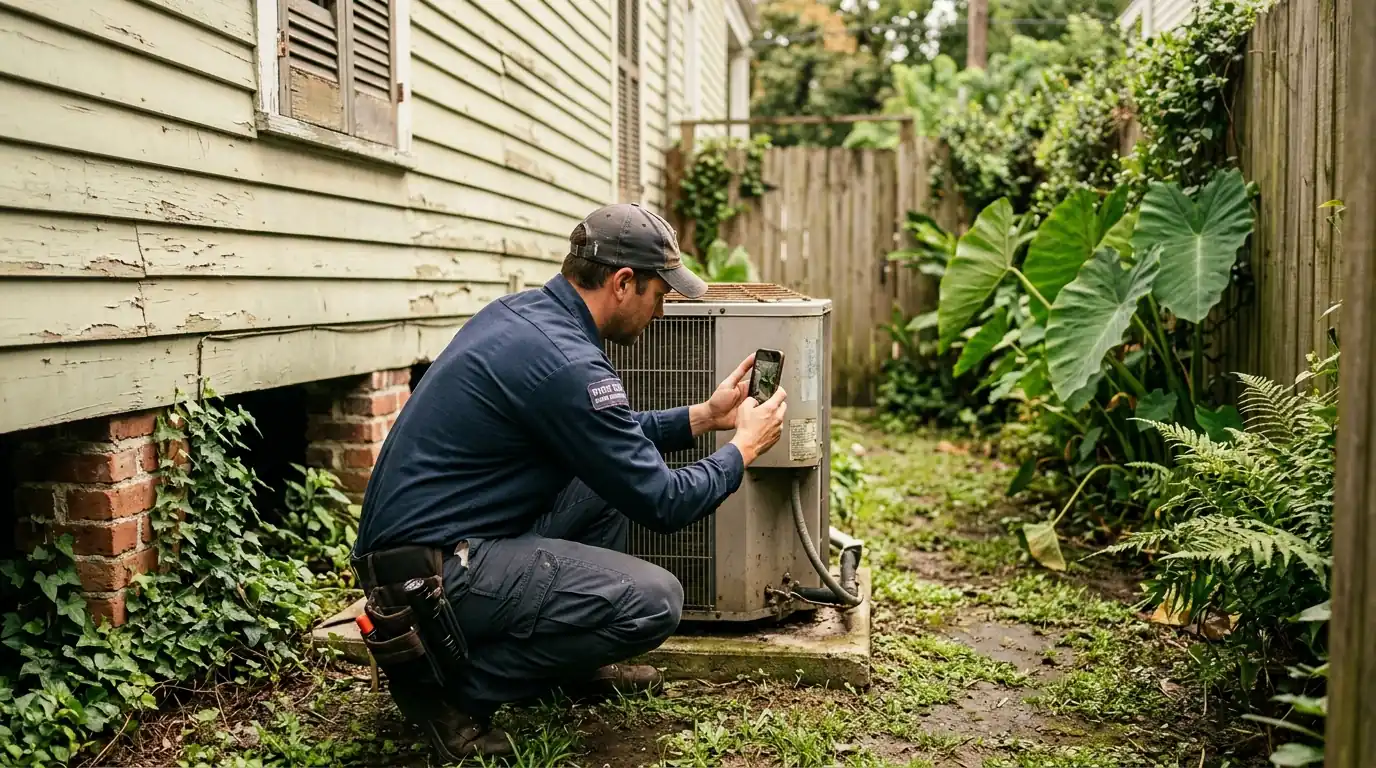
Home inspectors cover a whole house in a few hours, so the HVAC section is usually a quick check that the system responds. We look deeper: data plates for age and refrigerant type, the coil and drain pan, duct condition in the attic or under the floor, the electrical parts, and how the system performs under load.
The goal is a clear picture, not a sales pitch. If the system is old but healthy, we say so. If it is an R-22 unit with a leak, or the ducts sat in floodwater, you will know before you sign. Repairs found can be quoted for the seller's account or yours; see AC repair.
What a buyer inspection covers
- Age, size and refrigerant of every unit
- Cooling and heating run tests
- Temperature split and refrigerant pressures
- Coil, drain pan and float switch check
- Electrical parts and disconnect inspection
- Duct condition in the attic or crawlspace
- Signs of past flood or storm damage
Reading the system's age and condition
The data plate on each unit gives its manufacture date, size and refrigerant, and that alone answers big questions: is it R-22, is it near the end of its usual life, are the indoor and outdoor units a matched pair. Then we run it. We measure the temperature split across the coil, check pressures, listen to the compressor and fans, look at the coil and drain pan for rust or slime, and check the electrical parts for heat damage. Findings come back as plain notes for each unit.
Following up on the general inspection report
Many buyers call us after the home inspector flags the HVAC: an old unit, a rusty drain pan, a system that was not cooling well on inspection day. We go back to the items flagged, confirm what is really wrong, and price the fix. That gives you a specific number to take to the seller instead of a vague concern. If the inspector's note turns out to be minor, we tell you that too, which can keep a deal from stalling over a non-issue.
What we look for depends on the house
Older homes in New Orleans were built on piers about three feet high, so their ducts often run under the floor, where moisture and floodwater do damage, while much of New Orleans East went up as 20th-century slab homes with ducts in the attic. Most of Jefferson Parish was built after 1950, so buyers there are usually looking at attic systems and the age of their latest replacement. We adjust the inspection to the house you are buying.
How a buyer inspection runs
- Book before your deadlineTell us the closing timeline and access details.
- Inspect each unitData plates, cabinets, coils, drains and wiring.
- Run the testsCooling and heating under load, readings taken.
- Write the findingsPlain notes on what is sound and what is not.
- Price repairsItemized quotes, if you want them for the seller.
What decides the cost of an inspection
We have no sourced local range for buyer inspections, so here is what moves the price.
- Number of systems. Each unit is inspected and run separately.
- Access. Tight attics and crawlspaces take longer.
- Heat type. Gas furnaces add combustion and venting checks.
- Under-floor ducts. Crawlspace duct runs take time to inspect.
- Repair pricing. Itemized repair quotes add time to the report.