AC and heating, New Orleans, LA
AC repair and heating for New Orleans homes, any hour
When the vents blow warm in August or the heat quits in a January freeze, a person answers the phone. We diagnose, repair and replace air conditioners, heat pumps, furnaces and ductwork across New Orleans and the parishes around it.
Answering 24/7 from our Monticello Ave office in New Orleans
- Raised houses and attic systems
- Mini-splits and small-duct systems
- Homes and businesses
Repair it or replace it?
Two numbers give you a fair first read on an older AC.
Age times the repair price above $5,000 usually points to a replacement.
Rule of thumb from Sears Home Services. Most central systems last 15 to 20 years.
Before you call
What usually goes wrong, and what we do about it
Short answer
Most AC breakdowns in New Orleans trace to four faults: a failed capacitor, a clogged condensate drain, a refrigerant leak, or a coil frozen by weak airflow. A technician can usually confirm which one on the first visit, and capacitors, drains and frozen coils are often sorted the same day. Leaks and older systems take a closer look before anyone quotes.
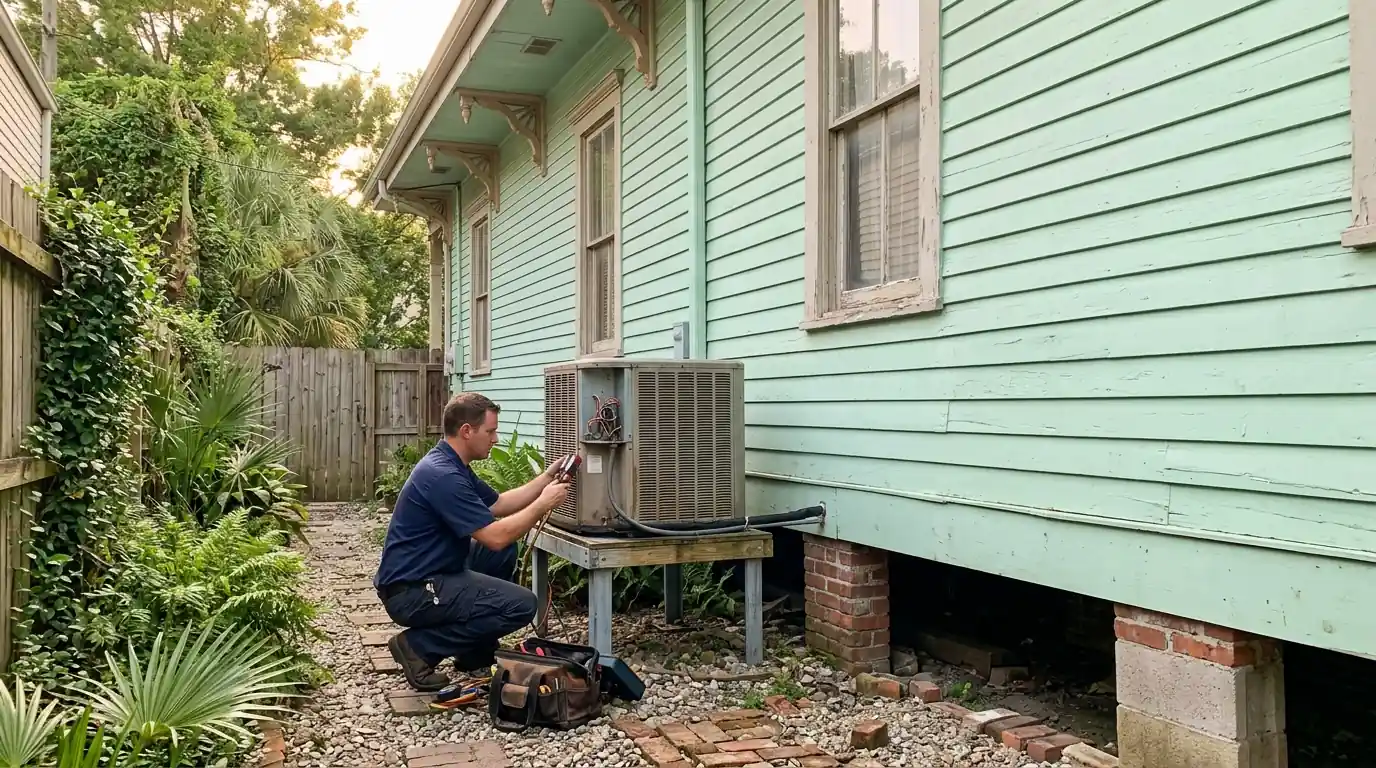
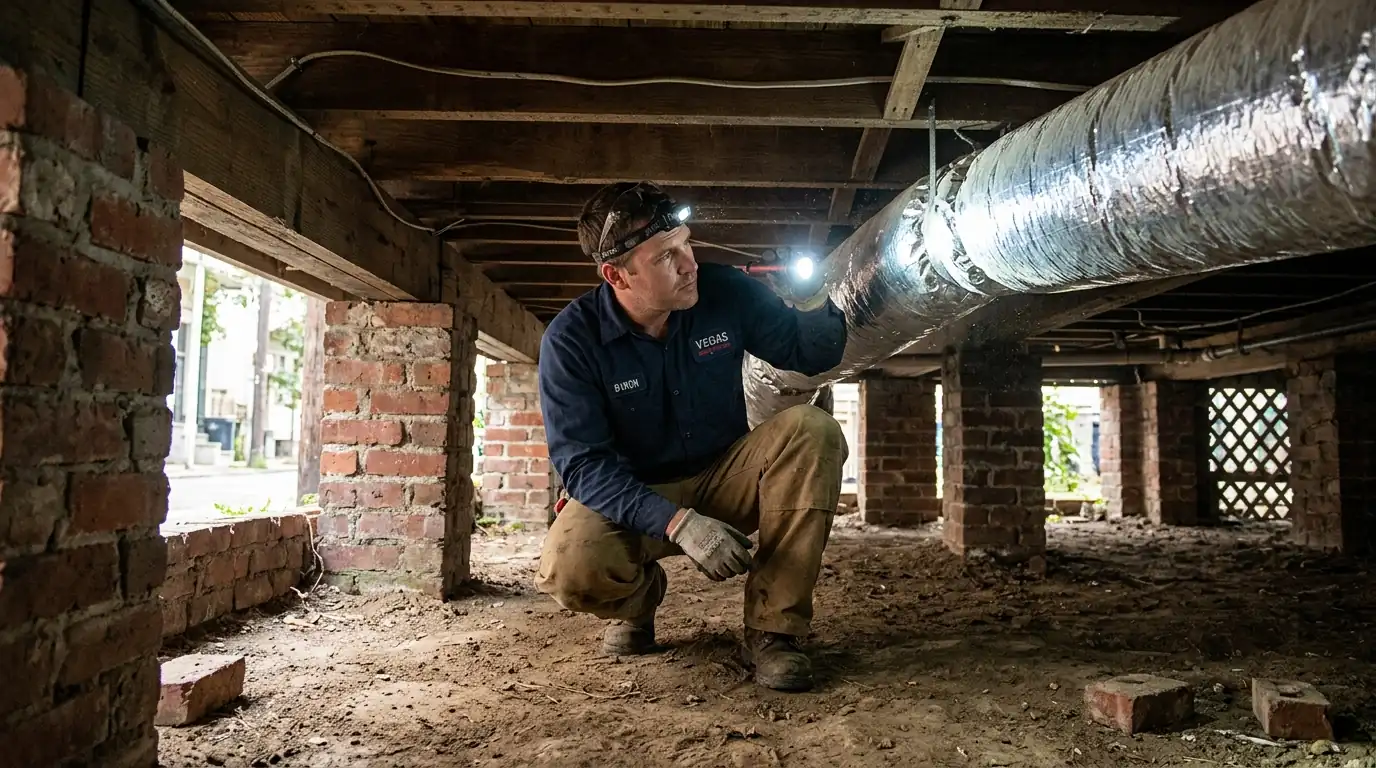
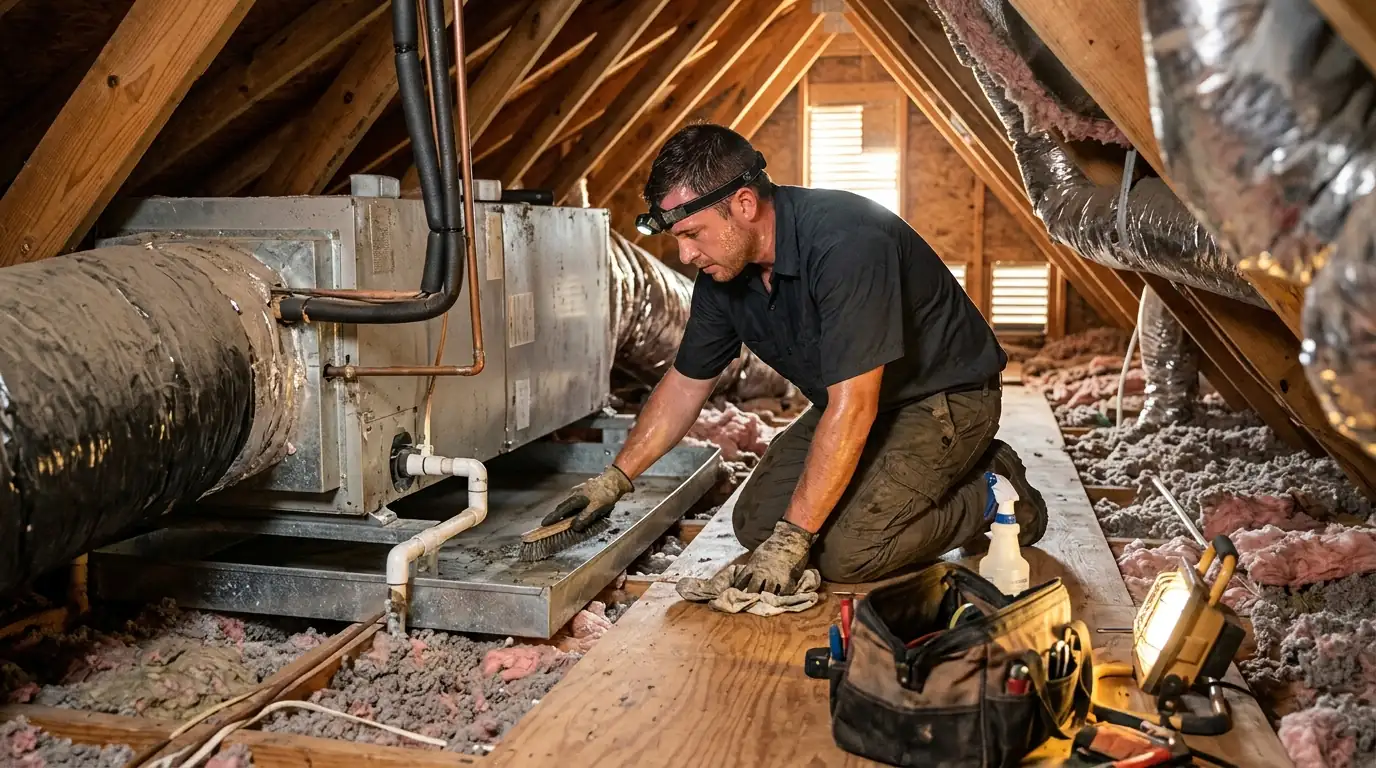
Byron Vegas works out of a service office on Monticello Ave, and most of our day is spent in attics, crawlspaces and side yards across the city. The calls follow the weather. From June into September they are about warm air, ice on the copper line and water where it should not be; in the cold snaps they are about heat pumps stuck in emergency heat and furnaces that will not light.
We work on the equipment New Orleans already has: split systems with the air handler in the attic, units on raised stands behind shotgun houses, ductless heads added to camelbacks, and rooftop units on Uptown and Mid-City storefronts. Carrier, Trane, Goodman and Rheem make up much of what we open, and many simple fixes, such as a failed capacitor or a clogged drain, are finished on the first visit.
Not sure what you need? Start with AC repair, or call and tell us whether the outdoor fan spins and the pan holds water.
What we work on
Pick the problem, find the job
46 services, grouped the way the trouble usually shows up. Each one has its own page with what the work involves, what drives the price and what to ask.
AC repair
13 servicesWarm air, ice on the copper line, water at the air handler or a unit that will not start.
- Emergency AC Repair
- AC Repair
- Refrigerant Leak Detection & Repair
- AC Capacitor & Contactor Replacement
- Condenser Fan Motor Replacement
- Blower Motor Repair & Replacement
- Frozen AC Coil Repair
- AC Drain Line & Float Switch Repair
- AC Compressor Replacement
- Evaporator Coil Replacement
- Condenser Coil Replacement
- Thermostat Repair & Installation
- Ductless Mini-Split Repair
AC and heat pump installs
8 servicesNew systems, matched replacements, ductless heads and small-duct systems for older homes.
Heating
5 servicesGas furnaces, heat pumps and the electric heat strips many air handlers carry as backup.
Ducts and indoor air
11 servicesLeaky or sweating ducts, musty vents, humidity control and cleaner air.
Tune-ups and storm work
4 servicesSeasonal tune-ups, buyer inspections and the repairs that follow a hurricane.
Commercial HVAC
5 servicesRooftop units, PTACs and refrigeration for restaurants, offices and hotels.
New Orleans conditions
Why systems here work harder than the label says
Sizing charts are written for average weather. Ours is not average, and it shows up in the parts that fail.
Heat is only half of it. In the worst weeks of summer the dew point sits in the upper 70s, so an air conditioner spends much of its effort pulling water out of the air. That is why drains overflow and why an oversized system leaves rooms cold and sticky at once.
The houses add their own twist. Shotgun houses were built by the thousands from the 1880s to the 1920s, often of cypress and usually raised on piers, so ducts often run under the floor where they sweat and pull loose. Later neighborhoods went the other way: slab homes in eastern New Orleans and the 1960s and 1970s ranches of Metairie keep their ducts in hot attics.
Then there are the storms. After Ida in 2021 the whole city lost power for days, and units that took a surge or sat in water failed at restart. That work falls under hurricane and flood HVAC repair.
Upper 70s
Dew points in the worst stretch of summer, mid-July to mid-August
About 10 days
How long Entergy said it would take to restore most of the city after Ida
Source: Boston Globe
How a visit runs
What happens after you call
Every visit follows the same loop, whether it is a capacitor in July or a frozen heat pump in January.
- 1
A person picks up
Day or night you reach a person. Tell us what the system is doing, how warm the house is and who is home.
- 2
Urgent calls go first
No cooling with an elderly parent at home, or water coming through a ceiling, moves ahead of routine work.
- 3
Diagnosis before parts
The tech checks the electrical parts, refrigerant pressures, airflow and drain before naming a fix.
- 4
Price, then work
You see the repair price, and on older systems a replacement range, before anything is opened up.
- 5
Test and clean up
We run the system, check the supply air and the drain, and leave the attic and yard as we found them.
We service and install the brands already sitting in New Orleans attics and side yards, from Carrier, Trane and Lennox to Goodman, Rheem and Mitsubishi Electric mini-splits.
Brands we service and install: Carrier, Trane, Lennox, Rheem, Goodman, American Standard, Daikin, Mitsubishi Electric, Fujitsu, Bryant, Ruud, York, Amana, Honeywell.
Where we work
Greater New Orleans, parish by parish
From the Monticello Ave office into city neighborhoods, both banks of Jefferson, the river parishes and across the lake. See every area.
New Orleans neighborhoods
Our approach
How we work in New Orleans houses
Raised houses are normal work
Ducts under the floor, tight attics, condensers on stands. We plan around how the house was built.
Repair first, when it is honest
If a part fixes it, we fix the part. Replacement comes up when the system's age and the size of the repair say it should.
Humidity is part of the job
Comfort here is moisture as much as heat, so we check coil airflow and drain flow every visit.
Ready for storm season
We raise and strap condensers before the season and check flooded units before restart.
From our guides
HVAC advice for New Orleans homeowners
Plain answers on costs, leaks, humidity and storms, written by Ward Teague. All HVAC advice.
AC repair or replace? A New Orleans rule of thumb
How system age, repair price and R-22 status decide whether a fix is worth it.
Read the guideWater leaking from your air handler: what to do first
Float switches, clogged drains and rusted pans, in the order to check them.
Read the guideAC running but the house still feels humid
Why a cold house can still feel clammy here, and which fixes help.
Read the guideStraight answers
Questions people ask before they call
Yes, 24 hours a day, including holidays and storm weeks. Homes with no cooling and a health risk, and active leaks, go first.
Multiply the system's age by the repair quote. Past about $5,000, replacement usually makes more sense. Try the calculator at the top of this page.
Usually an oversized system short cycling, a dirty coil or a blower set too fast. A whole-house dehumidifier helps when the AC alone cannot keep up.
Turn the system off at the thermostat, put a bucket under the drip and call us. It is usually a clogged condensate line or a rusted pan, which we cover under drain line and float switch repair.
Yes. Under-house ducts sweat, sag and pull loose, and we repair, seal and insulate them. See ductwork repair.
New Orleans neighborhoods from Lakeview to Algiers, plus Jefferson, St. Bernard, Plaquemines, St. Charles, St. John the Baptist and St. Tammany parishes. The full list is on our Greater New Orleans page.
Yes. Do not run a unit that sat in water. We check the electrical parts first; see hurricane and flood repair.
Warm air at 2 p.m. or no heat at 2 a.m., call the same number
Tell us what the system is doing and where the house is, and we will tell you what happens next.