Short answer
A whole-house dehumidifier is a ducted unit, usually in the attic, a crawlspace or a closet, that pulls air from the house, removes moisture and sends dry air back through the supply ducts. It runs on a humidistat, separately from the thermostat, and drains to the condensate line. In New Orleans it suits houses that feel clammy with the AC on, homes with oversized systems, and tight new construction.
Why a cool house can still feel damp
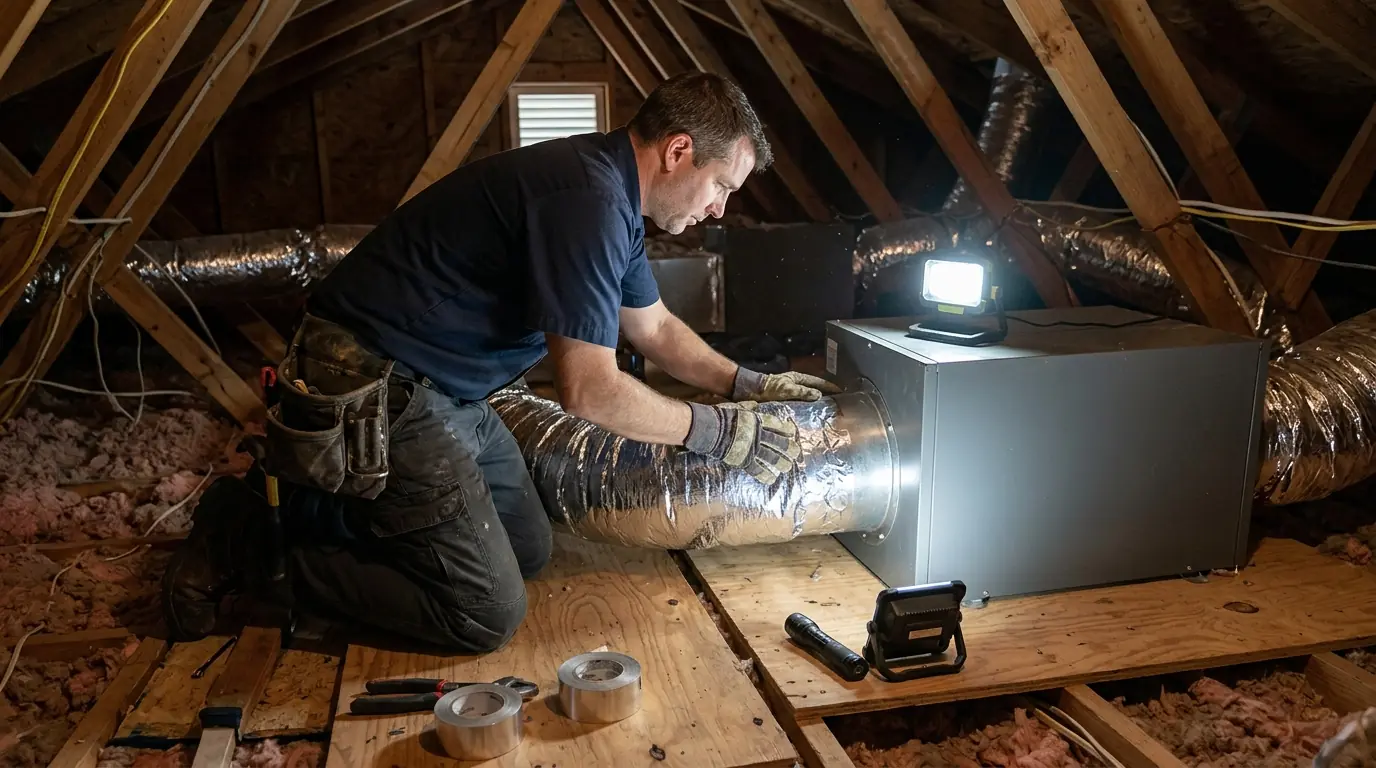
An AC dries the air as a side effect of cooling. When the house is already cool, as on a mild, muggy spring night, the AC stops and moisture builds. Oversized systems make it worse by cooling the air fast and shutting off before the coil has pulled much water out.
A dehumidifier separates the two jobs, so indoor humidity can be held around 45 to 50 percent whatever the temperature. We size it to the house, duct it so dry air reaches every room, and drain it properly. We install Aprilaire, Santa Fe and Honeywell units. Fresh air for tight houses is covered under fresh-air ventilation.
What decides the cost of a dehumidifier
We have no sourced local range for whole-house dehumidifiers, so here is what moves the price.
- Unit capacity. Sized by house size and moisture load.
- Location. Attic, crawlspace or closet changes the install.
- Duct tie-in. Supply and return connections or a dedicated return.
- Drain routing. A trapped drain to the condensate line.
- Electrical. A dedicated circuit or outlet near the unit.
What a dehumidifier install includes
- Indoor humidity and system run times measured
- Unit sized to the house
- Ducted tie-in to supply and return
- Condensate drain with its own trap
- Dedicated humidistat set up
- Filter and access for service
- Humidity checked again after start-up
Clammy rooms with the AC running
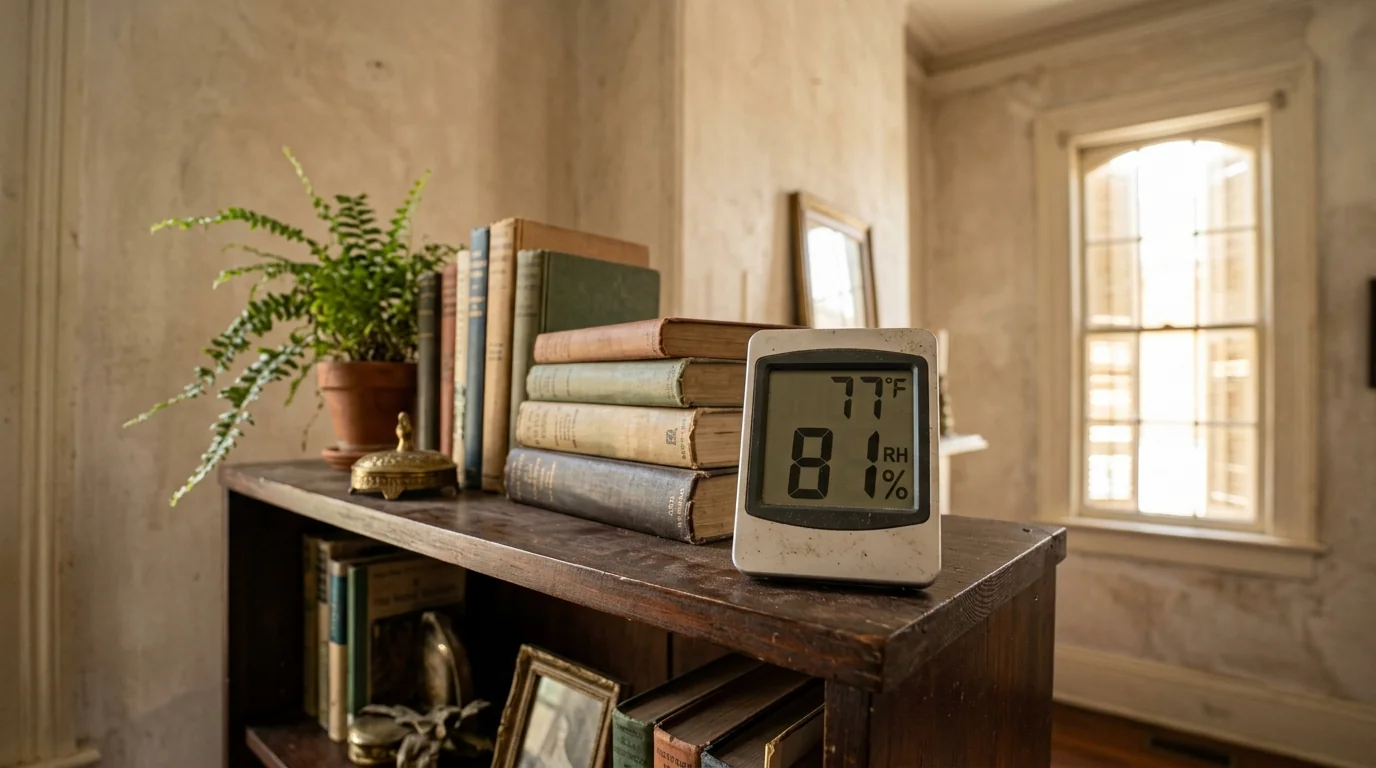
If the thermostat says 74 but the house feels sticky, the air is cool but not dry. Common causes are an oversized AC that short-cycles, a blower left in fan-on mode that re-evaporates water from the coil, leaky ducts pulling in humid attic air, and mild muggy weather when the AC barely runs. We measure indoor humidity, check the system's run times and fan setting, and fix what we can first. If the house still runs damp, a dehumidifier is the reliable answer.
How a ducted dehumidifier ties in
Most installs pull return air from the house, dry it, and push it into the supply side of the existing ducts, so dry air reaches every room through the grilles you already have. Some designs use a dedicated return or bring in fresh air for tight homes. The unit sits in the attic, a crawlspace or a closet, drains to the condensate line through its own trap, and runs on a humidistat. We set the controls so it works with the AC rather than against it.
The muggy shoulder seasons
New Orleans springs and falls bring long stretches of warm, muggy days when the air is damp but not hot enough to keep the AC running. Those are the weeks when a house can feel clammy, closets smell musty and windows fog, even with a healthy system. A dehumidifier earns its place in exactly that season, and in tightly built or renovated homes that hold moisture in all year.
How a dehumidifier install runs
- MeasureIndoor humidity, run times and fan settings.
- Fix the basicsFan mode, duct leaks and system sizing first.
- Size the unitMatched to the house and its moisture load.
- Install and ductTie-in, drain, power and controls.
- Set and verifyHumidistat set and humidity checked again.