Short answer
A mini-split deep cleaning in New Orleans means protecting the wall, removing the head's covers and filters, washing the coil and the barrel-shaped blower wheel with a bag-and-spray kit that catches the runoff, flushing the drain pan and line, and checking the outdoor unit. It fixes musty smells, black specks blowing from the vents and many dripping heads, and it restores airflow lost to buildup.
Why mini-split heads get dirty
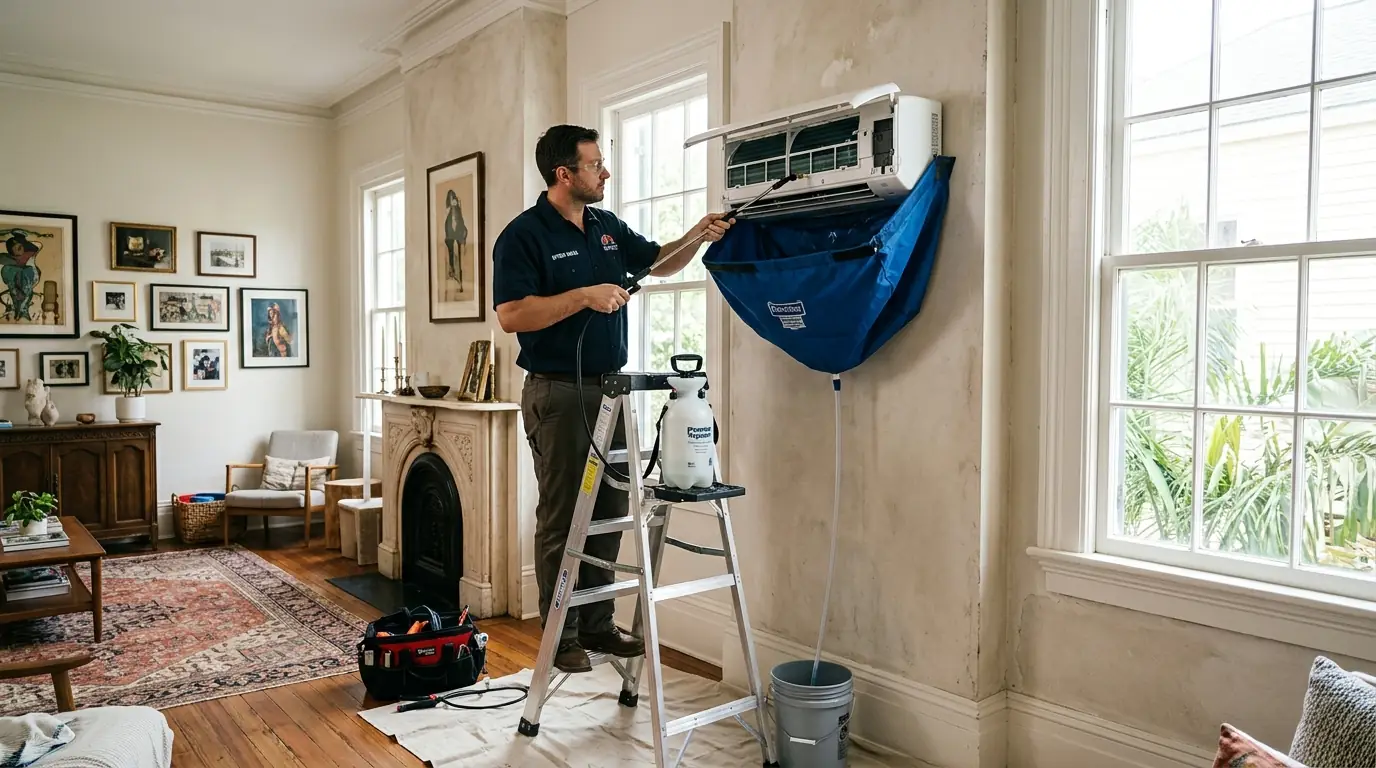
The indoor head's coil runs wet all summer, and its blower wheel sits right behind it in the damp air. Dust that slips past the thin filter sticks to both, and mold and bacterial slime grow in it. The washable filters most people rinse stop only part of that.
A deep clean goes past the filters. We protect the wall and floor, remove covers and vanes, wash the coil and blower wheel with a catch bag so the runoff goes into a bucket rather than down the wall, then flush the drain pan and line. On heads with heavy buildup the blower wheel comes out for cleaning on the bench.
What a deep clean includes
- Wall and floor protected
- Covers, vanes and filters removed
- Coil washed with a catch bag
- Blower wheel cleaned in place or on the bench
- Drain pan and line flushed
- Outdoor coil rinsed
- Test run and drain check
Mold and slime in the blower wheel
Shine a flashlight up into the head's air outlet and you can often see black spots on the blower wheel's blades. That growth is where the musty smell comes from, and it is what throws black specks onto the wall below. Spraying a cleaner from outside does not reach it. We wash the wheel in place with a pump sprayer and coil-safe cleaner, or remove it for cleaning when buildup is heavy, then rinse until the runoff runs clear. Once the wheel is clean, the smell usually goes with it.
Mini-split heads that drip water
A head that drips down the wall usually has a clogged drain pan or line, a slime-blocked drain outlet, or a coil so dirty that condensate blows off it. Less often the unit is out of level, or low on refrigerant and icing up. We clear and flush the drain path, check the pump if the head uses one, clean the coil and confirm the head is level. If a drip continues after cleaning, we check the refrigerant side through our mini-split repair service.
Why heads grow slime fast here
With July highs near 91 degrees and nights that rarely cool much below 75 in New Orleans, mini-split heads run for long stretches through most of the year, and their coils stay wet for months at a time. That constant moisture is why heads here grow slime faster than the same models do in drier places, and why a yearly deep clean, ideally in spring before the long run starts, keeps the smell and the drips away.
How a deep clean runs
- Protect the roomWall and floor covered under the head.
- Take the head apartCovers, vanes and filters removed.
- Wash coil and wheelCatch bag in place, rinsed until clear.
- Flush the drainPan, line and any pump cleared.
- Reassemble and testRun the head and confirm it drains.
What decides the cost of a mini-split cleaning
We have no sourced local range for this service, so here is what moves the price.
- Number of heads. Each indoor head is cleaned separately.
- Head type. Wall heads are quickest; cassettes take longer.
- Buildup. Heavy growth means removing the blower wheel.
- Drain pump. Heads with pumps need the pump and reservoir cleaned.
- Outdoor unit. A dirty outdoor coil is rinsed during the visit.