Short answer
Ductwork replacement makes sense when ducts are widely damaged, flooded, badly undersized for the equipment, or made of materials that have broken down. A proper replacement starts with each room's airflow needs, then a design with trunks, branches and returns sized to deliver it. In most New Orleans homes the new system goes in the attic or under a raised floor, sealed with mastic and fully insulated.
When replacing beats repairing
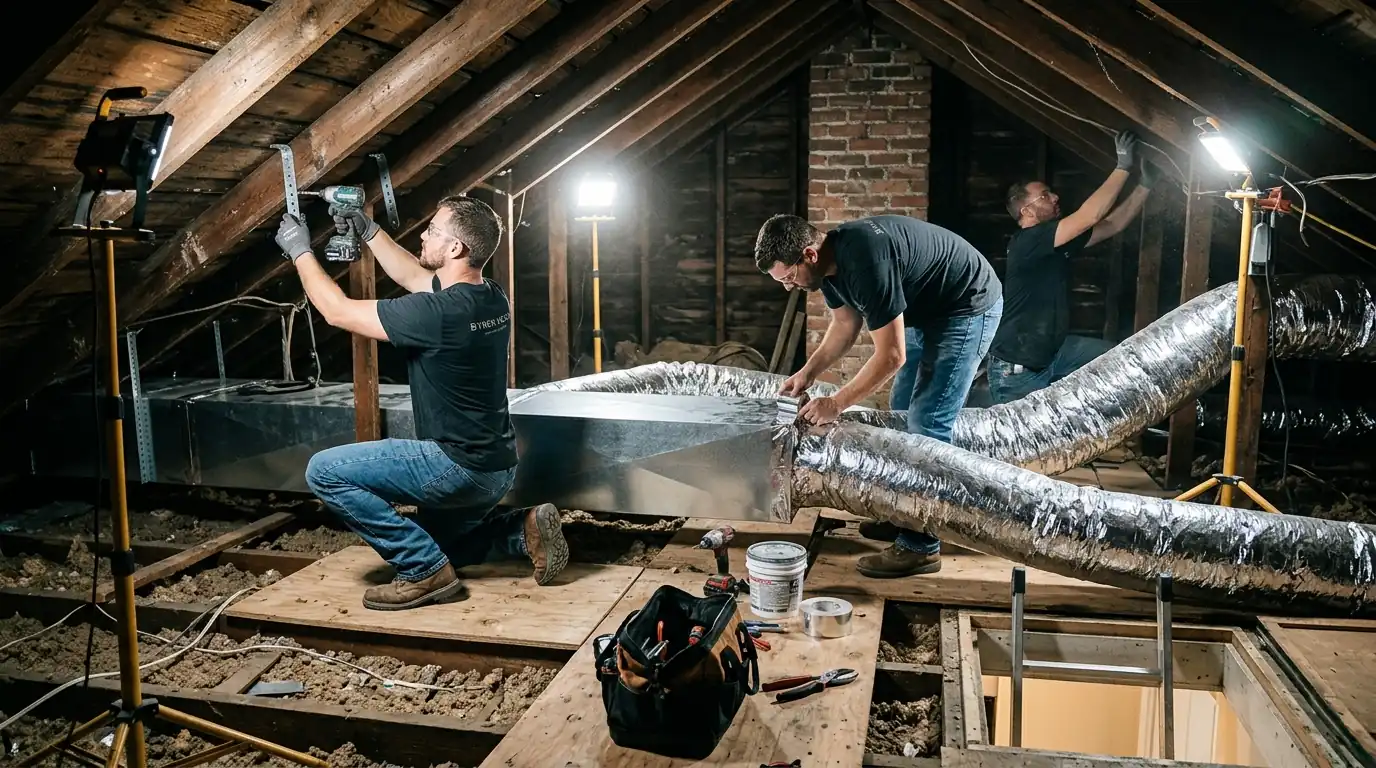
Most duct problems can be repaired: a loose joint, a crushed run, a torn boot. Replacement makes sense when the damage is everywhere, when ducts sat in floodwater, when the old system was never sized right, or when a new heat pump or AC needs more airflow than the old trunk can carry.
A replacement is also the one chance to fix layout problems: add a return to a back bedroom, straighten long runs, move ducts away from the hottest part of the attic. We design it room by room, seal every joint with mastic and test airflow at every grille. Smaller fixes stay under ductwork repair.
What duct replacement usually costs
- House size and runs. More rooms mean more branches and returns.
- Access. Tall attics are quicker than tight crawlspaces.
- Added returns. New returns fix comfort problems but add work.
- Materials. Sheet metal trunks cost more than all-flex systems.
- Insulation level. Attic and crawlspace runs need the right insulation.
Planning range: about $1,450 to $8,000 on average, with a full range of $250 to $12,000 (source: thisoldhouse.com). It is a market range, not our price; we quote after we see the system.
What a duct replacement includes
- Room-by-room airflow requirements
- Trunk, branch and return sizing
- Removal and disposal of the old ducts
- New boots and grilles where needed
- Mastic-sealed joints throughout
- Insulation suited to the attic or crawlspace
- Airflow test at every grille
Full duct system replacement
A full replacement removes the old trunks, branches, boots and returns and installs a new system designed for the house. We start with a load calculation to learn how much air each room needs, choose trunk and branch sizes to deliver it at a sensible velocity, and add returns where rooms lack them. Old duct board and brittle flex come out and are hauled away. New runs are sealed with mastic at every joint, insulated to suit the attic or crawlspace, supported properly and tested at the grilles before we leave.
Resizing ducts for a new heat pump or AC
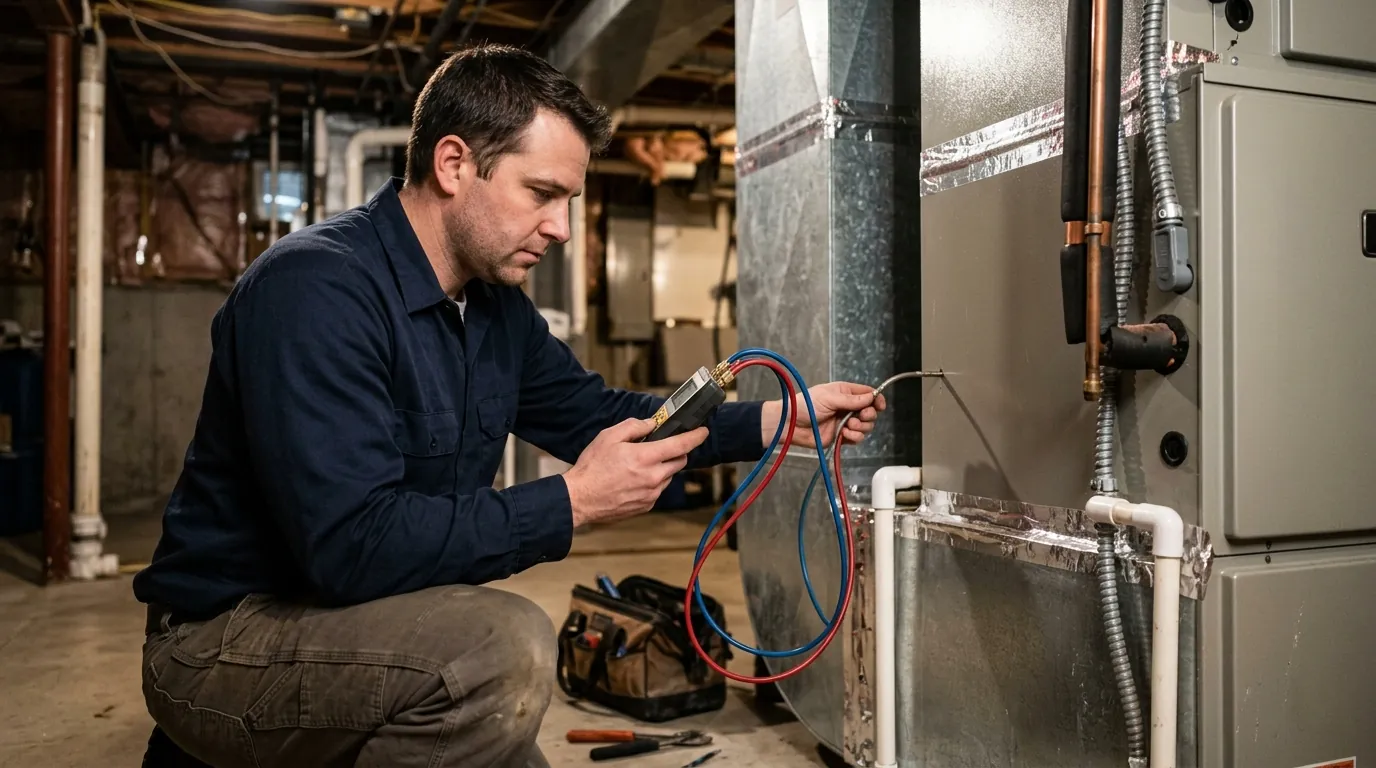
New systems, variable-speed ones in particular, depend on the ducts delivering the airflow they were designed for. Old ducts are often undersized, so the blower strains, the system gets noisy and the coil can freeze. When a new system is going in, we measure static pressure on the old ducts and check their sizes against the new equipment's airflow. Sometimes only the return side needs enlarging; sometimes the main trunk must grow. We tell you which, and price the duct work alongside the equipment.
Duct systems from the 1960s and 1970s
Most housing in Jefferson Parish was built after 1950, and suburban growth on the West Bank in Harvey, Marrero, Terrytown and Westwego came mainly in the 1960s and 1970s. Homes from those decades may still carry duct systems laid out for the equipment of their day, often in attics that run far hotter than the house. When those ducts leak everywhere or cannot move the air a new unit needs, replacement is usually the better spend.
How a duct replacement runs
- AssessMeasure the old system, static pressure and room needs.
- DesignTrunks, branches and returns sized room by room.
- Remove the old ductsOld runs, boots and duct board taken out.
- Install the new systemSealed joints, insulation and proper support.
- Test and balanceAirflow measured and adjusted at every grille.
How long the house is without air
The system stays off while the old ducts come out and the new ones go in, so we plan the work for mild weather where we can and tell you the expected downtime before we start. When a new heat pump or AC is going in at the same time, we coordinate both jobs so the house goes without cooling only once.