Short answer
A condenser coil problem in New Orleans shows as high bills, a system that cannot keep up on hot afternoons, a leak at the outdoor coil, or fins flattened by debris or yard equipment. Often a thorough cleaning and fin straightening restores most of the lost performance. A leaking or badly corroded coil can be replaced, though on older units a new outdoor unit is usually the better buy.
What goes wrong with outdoor coils
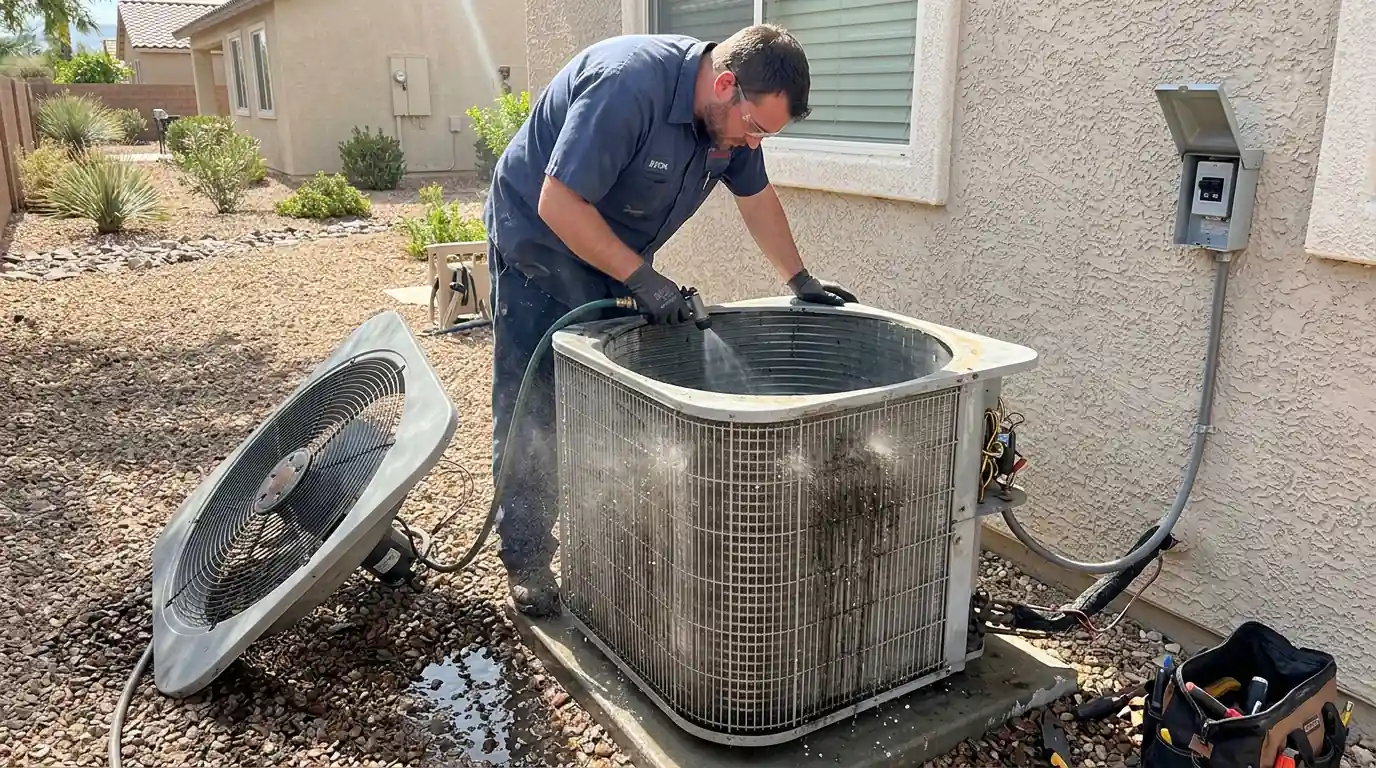
The condenser coil is a block of thin aluminum fins wrapped around copper or aluminum tubing. Dirt, grass clippings and leaves mat the fins; mowers and string trimmers flatten them; corrosion eats the fins and eventually the tubing. Each step cuts airflow and raises the pressure the compressor has to fight.
Most coils need cleaning long before they need replacing. When a coil does leak, the decision depends on the unit's age and refrigerant. On a newer unit a coil replacement can make sense; on an older or R-22 unit, the money usually belongs in an AC replacement.
Clean the coil, replace the coil, or replace the unit
| Clean the coil | Replace the coil | Replace the outdoor unit | |
|---|---|---|---|
| When it fits | Dirty or matted fins | Leak or heavy damage on a newer unit | Leak or damage on an older or R-22 unit |
| Cost | Lowest | Middle | Highest |
| Refrigerant work | None | Recover, vacuum, recharge | New charge |
| Efficiency after | Most lost performance restored | As designed | New rated efficiency |
What decides the cost of coil work
We have no sourced local range for condenser coils, so here is what moves the price.
- Clean or replace. Cleaning costs a fraction of a new coil.
- Coil availability. Some units have coils in stock; older ones may not.
- Refrigerant work. Replacement means recovery, vacuum and recharge.
- Unit age. On older units the money may be better spent on a new one.
- Access. Tight side yards and rooftop units take longer.
What a coil service covers
- Pressure and temperature readings before work
- Power off and fan assembly lifted
- Coil cleaned from the inside out
- Fins combed where bent
- Leak check at the coil and joints
- Readings repeated after cleaning
- A plain repair-or-replace recommendation
Corroded fins near open water
Units close to open water, and units that take a lot of storm-driven rain and spray, tend to show fin corrosion sooner: fins turn chalky, crumble when touched and stop shedding heat well. Corrosion that stays in the fins hurts efficiency; corrosion that reaches the tubing causes leaks. We inspect the coil closely, clean it with a cleaner suited to the coil metal, and tell you how far the damage goes. Coated coils and careful placement help replacement units last longer in exposed spots.
Cleaning a coil or replacing it
A matted coil can often be brought back with a proper cleaning: power off, fan and top removed, a coil cleaner applied from the inside out, then a low-pressure rinse and a fin comb on bent sections. If performance comes back and there is no leak, that is the end of it. Replacement makes sense when the coil leaks, fins have corroded away over large areas, or impact damage has crushed the tubing. We measure pressures and temperatures before and after cleaning, so the decision rests on readings rather than looks.
Tight side yards and long run hours
Outdoor units in New Orleans run long hours through a hot, humid season, often in narrow side yards where airflow is tight and lawn debris piles up against the coil. That combination is why so many coils here lose performance to dirt and bent fins well before anything is truly broken, and why a spring cleaning of the outdoor coil is one of the cheapest ways to keep a system from struggling in August.
How we handle a coil problem
- MeasurePressures and temperatures before any work.
- CleanInside out, then rinse and comb the fins.
- InspectCorrosion, impact damage and leaks.
- DecideClean, repair, replace the coil or the unit.
- Repair or replaceThen readings repeated to confirm.