Short answer
Heat strips are coils of resistance wire inside the air handler that warm the air when a heat pump cannot keep up or is defrosting. When they fail you get cool air in emergency heat, a burning smell or a breaker that trips. A technician tests each element, the sequencer or relay and the limit switches, then replaces the failed part rather than the whole kit.
Signs your heat strips need attention
How heat strips fail
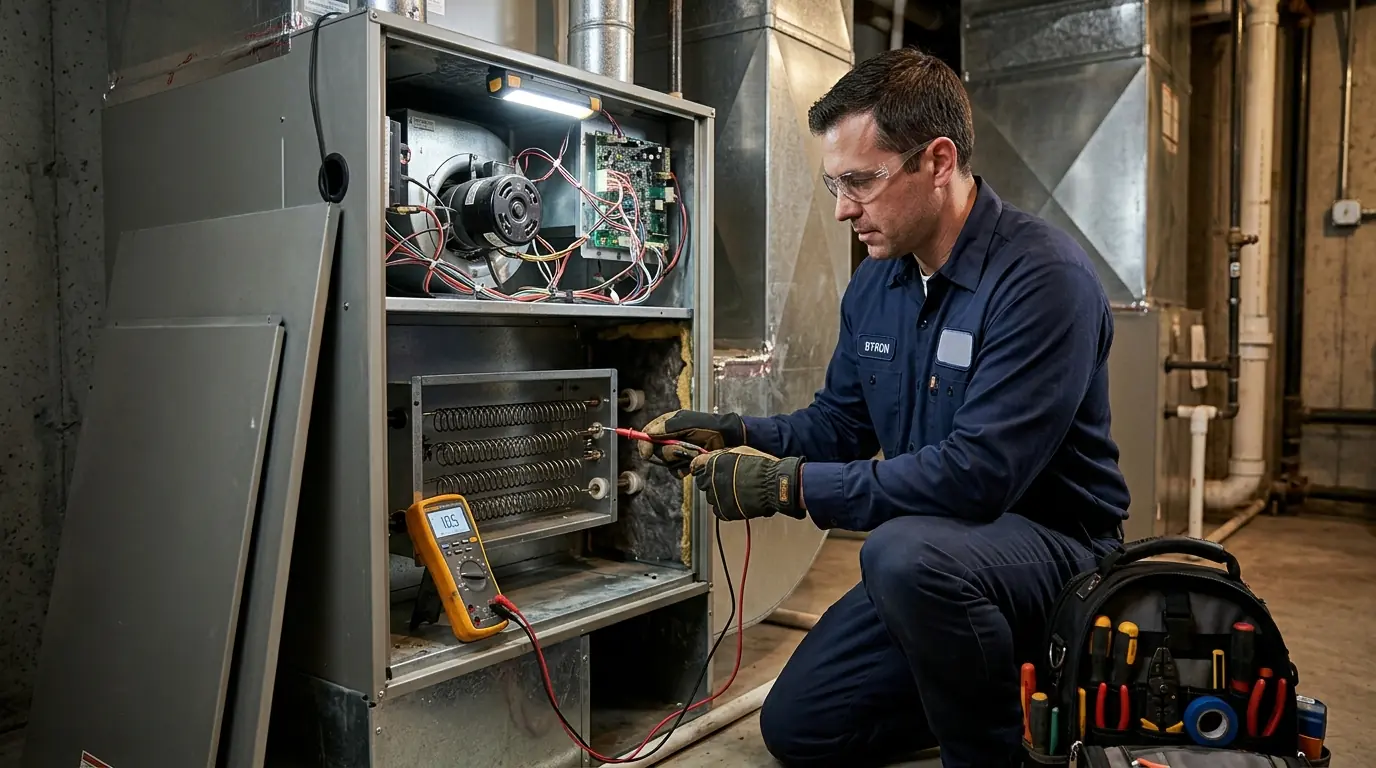
A heat strip kit is a set of nichrome coils, each switched by a sequencer or relay and protected by a high-limit switch and often a fuse link. The strips pull heavy current, so the breaker, lugs and wiring that feed them carry a big load the few days a year they run.
Dust settles on idle coils all summer, and the first cold morning burns it off with a smell that fades within the hour. A scorched odor that keeps returning, or a breaker that trips each time the heat starts, is a real fault. Weak airflow is a frequent cause: strips overheat when a clogged filter or a failing blower motor cannot carry the heat away.
Burning smell when the heat comes on
A light dusty smell on the first cold day is normal and clears quickly. A sharp electrical or scorched smell is not. It can come from a coil that has sagged and touched the frame, a wire insulation jacket cooking at a loose lug, or a strip running hot because airflow is weak. Shut the heat off at the thermostat and call. We open the heater compartment, look for discolored terminals and melted insulation, measure each element, and check that the blower is moving enough air before turning anything back on.
Heat strips tripping the breaker
A breaker that trips the moment the strips energize usually means a shorted element, a damaged wire or a breaker that has weakened after years of heavy load. Resetting it again and again is risky, because every trip means a fault current flowed somewhere. We check the breaker size against the heater nameplate, look at the lugs for heat damage, and test each element and wire for a short to ground. A worn breaker is replaced; a shorted element is replaced; loose lugs are cleaned and torqued properly.
Sequencer and limit switch failures
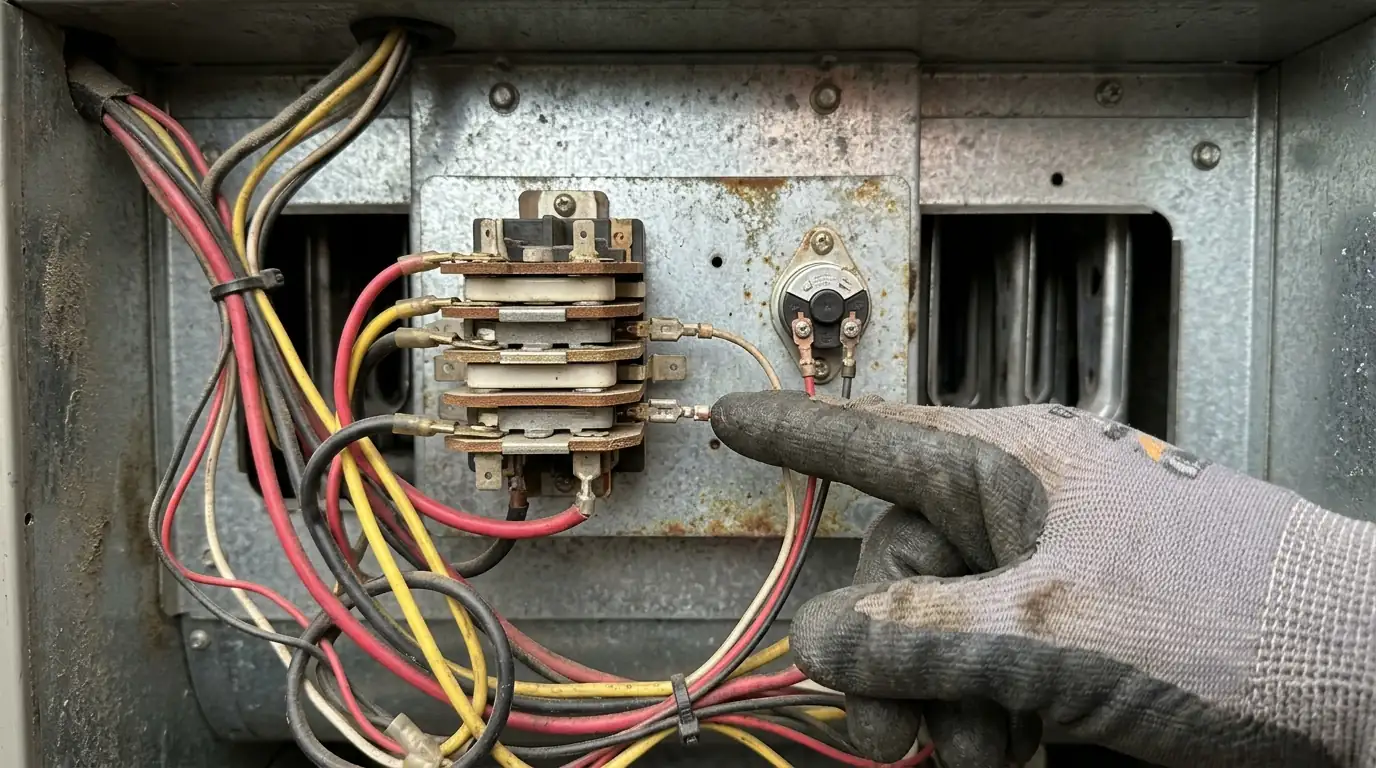
Sequencers and relays bring the strips on in steps so they do not all hit the circuit at once. When one sticks open, part of the heat never comes on and the house warms slowly. When one sticks closed, a strip can keep running after the blower stops. High-limit switches cut a strip off when it overheats, and a limit that trips again and again is telling you airflow is short. We test each switch under load, replace the failed ones, and fix the airflow problem that made them trip.
Why heat strips get tested all at once here
Winters in New Orleans are short, with only a handful of freezing days in most years, so heat strips can go a year with barely a run. Then a night like January 21, 2025 arrives, when eight inches of snow fell at the airport and lows dropped into the teens and 20s, and every heat pump in the city leans on its strips at the same time. That is when weak sequencers and loose lugs show themselves, which is why a fall check pays off.
How we repair heat strips
- Shut down safelyWe kill power at the breaker and confirm it is off before opening the heater section.
- Inspect the compartmentWe look for scorched terminals, sagging coils and melted wire insulation.
- Test every partEach element, sequencer or relay and limit switch is measured, not guessed at.
- Repair and correct airflowWe replace failed parts and fix the filter or blower issue that stressed them.
- Run it in emergency heatWe run the strips alone, measure supply air temperature and watch the breaker.
What decides the cost of a heat strip repair
Most repairs replace one part, not the whole kit. With no sourced local range, we list what moves the price instead.
- Which part failed. A sequencer or limit switch costs less than a full element or heater kit.
- Wiring and breaker. Heat-damaged lugs, wire or a worn breaker add parts and time.
- Airflow repairs. If a failing blower caused the trip, that repair comes first.
- Access. An air handler in a tight attic takes longer than one in a hall closet.
- Kit matching. Older air handlers may need a matched replacement kit rather than one element.
What you can check before we arrive
Safe to check yourself
- Replace a dirty filter and open closed grilles
- Check the thermostat is on heat, above room temperature
- Reset a tripped breaker once; if it trips again, leave it off
Leave to a technician
- Opening the heater section; it carries 240 volts
- Replacing elements, sequencers, relays or limit switches
- Any breaker that trips repeatedly or looks heat-damaged