Short answer
A small-duct high-velocity (SDHV) system uses a compact air handler, usually in the attic or a closet, feeding flexible supply tubes that end in round outlets a few inches across. The tubes run through wall and floor cavities with little demolition, so it suits historic New Orleans homes. It removes humidity well, but it costs more than a conventional ducted system and needs careful layout.
How a small-duct system works
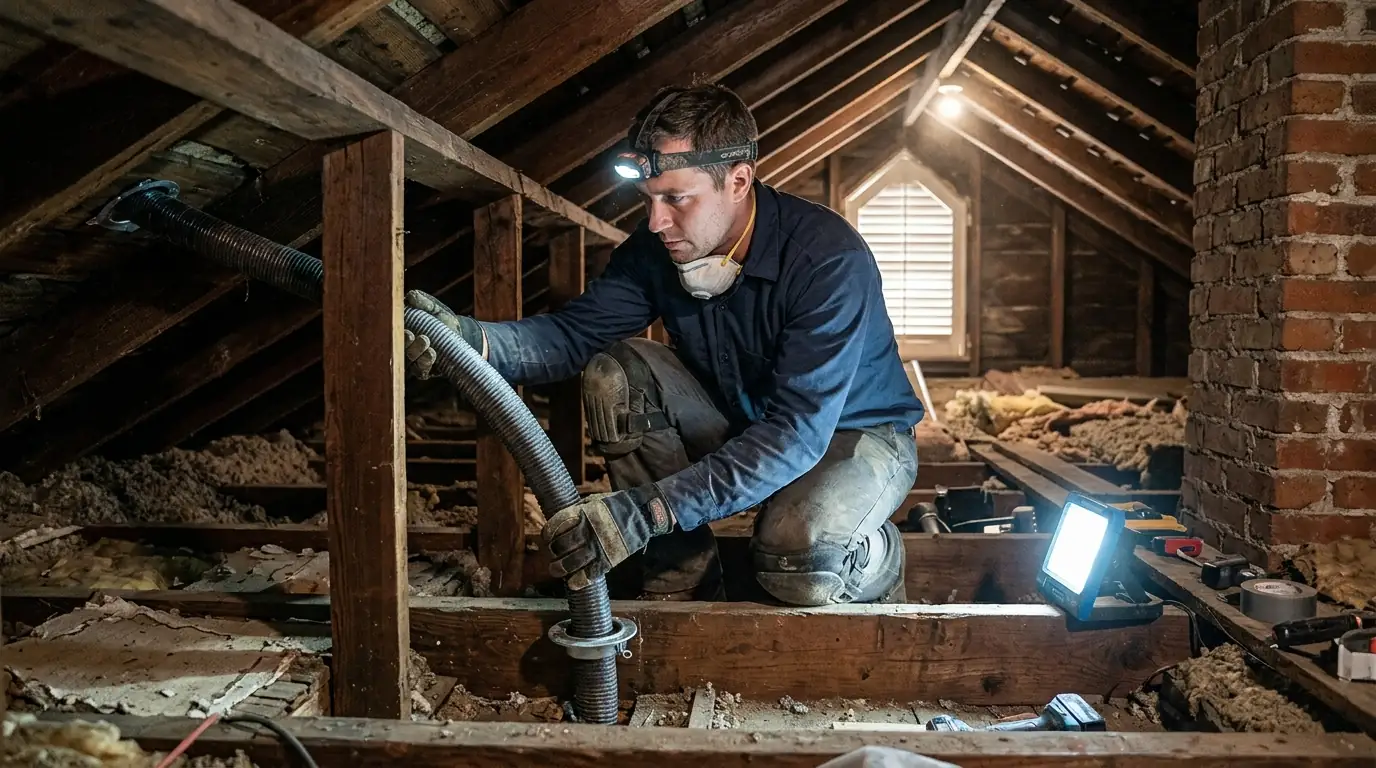
Instead of large supply ducts, an SDHV system pushes air at higher speed through flexible tubes and mixes it gently into the room through round outlets. The air handler pulls more moisture out of the air than many conventional systems, which suits our humid summers. Unico and SpacePak are the best-known makers.
Layout is the real work. Each room needs enough outlets to cool it quietly, the tubes need sensible lengths and bends, and the return has to be sized right. We plan the routes through attics, closets and floor cavities before quoting. Where only a few rooms need cooling, ductless mini-splits may cost less.
Small-duct, ductless or conventional ducts
| Small-duct high-velocity | Ductless mini-split | Conventional ducts | |
|---|---|---|---|
| Visible indoors | Small round outlets | Wall or ceiling heads | Standard grilles |
| Demolition | Minimal | Minimal | Can be heavy in old homes |
| Humidity removal | Strong | Good with inverter units | Varies with sizing |
| Up-front cost | Highest | Varies with zones | Lowest where ducts fit |
What decides the cost of a small-duct system
We have no sourced local range for small-duct systems, so here is what moves the price.
- Number of outlets. More rooms mean more tubes and outlets.
- Tube routes. Easy cavities cost less than tight, crooked runs.
- Air handler location. Attic and closet placements differ in work.
- Outdoor unit. Size and efficiency set the equipment cost.
- Plaster touch-up. Small patches around outlets in older walls.
What a small-duct install includes
- Room-by-room outlet layout
- Compact air handler in the attic or a closet
- Flexible supply tubes routed through cavities
- Sized return air path
- Matched outdoor unit on a raised stand
- Condensate drain, pan and float switch
- Airflow and noise check at every outlet
Central air for historic homes with plaster walls
Old plaster walls, decorative ceilings and tall rooms are hard to fit with conventional ducts without visible soffits or damage. Small-duct tubes thread through existing cavities, between joists and up through closets, so most of the work happens in the attic and under the floor, with small round outlets in each room. We place outlets away from medallions and crown molding where we can, keep the outdoor unit on a raised stand out of sight lines, and route the condensate drain carefully with a pan and float switch.
Cooling a second floor with no duct chase
Many two-story and camelback homes have no chase for ducts to reach the upstairs, which is why the second floor runs hot. Small-duct tubes can climb through a closet corner or a wall cavity, so an attic air handler can serve the upstairs without boxing in a chase. The same approach can add cooling to rooms the main system never reached. We map where the tubes can climb before quoting, since that decides how many rooms the system can reach cleanly and where the outlets will sit.
Historic houses like Gretna's
Gretna's historic district shows the kind of house these systems are made for: shotgun houses make up about 54 percent of its building stock, and most of its bungalows sit a few feet above grade. Homes like these were built with plaster walls and few places to hide a duct. Small flexible tubes can run under the raised floor and up through wall cavities, which keeps the plaster and the character of the house intact.
How a small-duct install runs
- Survey the houseAttic, crawlspace, closets and wall cavities.
- Lay out the outletsRoom by room, placed to stay quiet.
- Run the tubesThrough cavities with minimal openings.
- Set the equipmentAir handler, outdoor unit, drain and wiring.
- Balance and testAirflow and noise checked at every outlet.