Short answer
An energy recovery ventilator (ERV) exhausts stale indoor air and brings in the same amount of fresh outdoor air, passing both streams through a core that swaps heat and some moisture between them. In New Orleans that matters, because outside air brought in raw adds humidity the AC then has to remove. An ERV is usually ducted into the existing system and runs on a timer or a sensor.
What an ERV does in a humid house
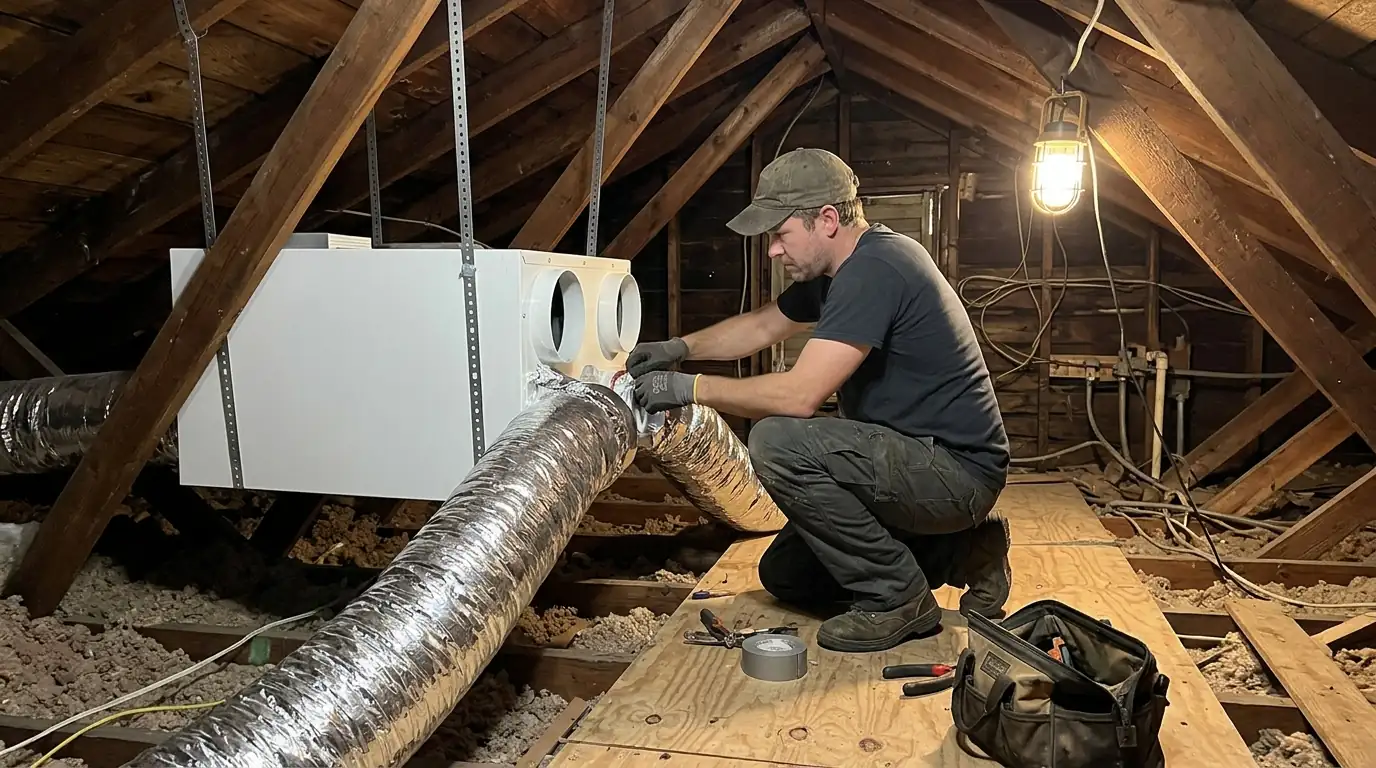
Older houses here leaked enough air that fresh air was never a question. New builds and heavily sealed renovations do not, and that is where stale air, lingering odors and shower moisture start to build up. A ventilator gives that air a planned way out and replaces it with filtered outdoor air.
In our climate the core matters. A heat recovery ventilator passes heat but not moisture, which suits cold, dry places. An ERV also passes moisture, so in summer it hands much of the incoming humidity back to the exhaust stream. We size the unit to the house and balance it so supply and exhaust match.
ERV, HRV or a fresh-air duct
| ERV | HRV | Fresh-air duct on the return | |
|---|---|---|---|
| Moves moisture | Yes, both directions | No | No, brings it in |
| Suits | Humid summers like ours | Cold, dry climates | Mild, dry climates |
| Energy use | Small fans, recovers heat | Small fans, recovers heat | Runs the main blower |
| Cost | Highest | Similar to an ERV | Lowest |
What decides the cost of an ERV
ERVs are priced per house. We have no sourced local range to publish, so these are the factors that move it.
- Unit size. Larger homes need more airflow and a bigger core.
- Duct layout. A dedicated duct system costs more than tying into the return.
- Controls. Timers cost least; humidity and CO2 sensors add parts.
- Hoods and penetrations. Wall or roof hoods must be sealed and screened.
- Electrical. Some installs need a new circuit or outlet near the unit.
What an ERV install includes
- Sizing from floor area and bedrooms
- Mounting in the attic, a closet or utility space
- Screened intake and exhaust hoods
- Sealed, insulated supply and exhaust ducts
- Balancing so supply matches exhaust
- Timer, humidity or CO2 control
- A walkthrough of filter and core care
Ventilation for tight new homes and sealed renovations
Builders now seal houses far tighter than the old cypress shotguns ever were, and spray-foam attics in renovated homes close the last gaps. The result is a house that holds its temperature well and holds its odors and moisture too. Signs include windows that fog, a smell that lingers after cooking and a stuffy feeling by evening. We size the ERV to the home's floor area and bedrooms, deliver fresh air to the return or to bedrooms, pull exhaust from bathrooms or a central return, and set it to run on a schedule.
ERV filter and core maintenance
An ERV only helps while its filters and core are clean. Clogged filters cut airflow until the unit moves almost nothing, and a dirty core loses its ability to pass heat and moisture. Most units need filter cleaning or replacement every few months and a core cleaning on the maker's schedule. We check airflow on both streams, clean or replace filters, inspect the core and its drain path, clear the outside hoods of debris and wasp nests, and confirm the controls still run the schedule you want.
Why fresh air needs care in New Orleans
Summer humidity in New Orleans averages about 76 percent, which is why we rarely suggest bringing outside air in raw. Every cubic foot of muggy air pulled in through a plain fresh-air duct becomes water the coil has to remove, and in July that can push a marginal system past what it handles. An ERV's core sends part of that moisture back out with the exhaust, and a dehumidifier covers the rest on mild, damp days.
How an ERV install runs
- Look at the houseWe check how tight it is, where moisture builds and where the system sits.
- Size and planFloor area and bedrooms set the airflow; we plan supply and exhaust paths.
- Mount and ductThe unit goes in the attic or a closet with sealed, insulated ducts.
- Hoods outsideIntake and exhaust hoods are set apart and screened.
- Balance and set controlsWe match supply to exhaust and program the schedule.