Short answer
Most duct problems in New Orleans homes are one of three: a run that has separated at a joint and blows into the attic, flex duct crushed or torn by storage or foot traffic, or under-floor ducts that sweat and sag in humid crawlspaces. A technician traces the system, checks airflow at the grilles, and repairs each run with proper fittings, mastic and insulation rather than tape.
How ducts fail in New Orleans houses
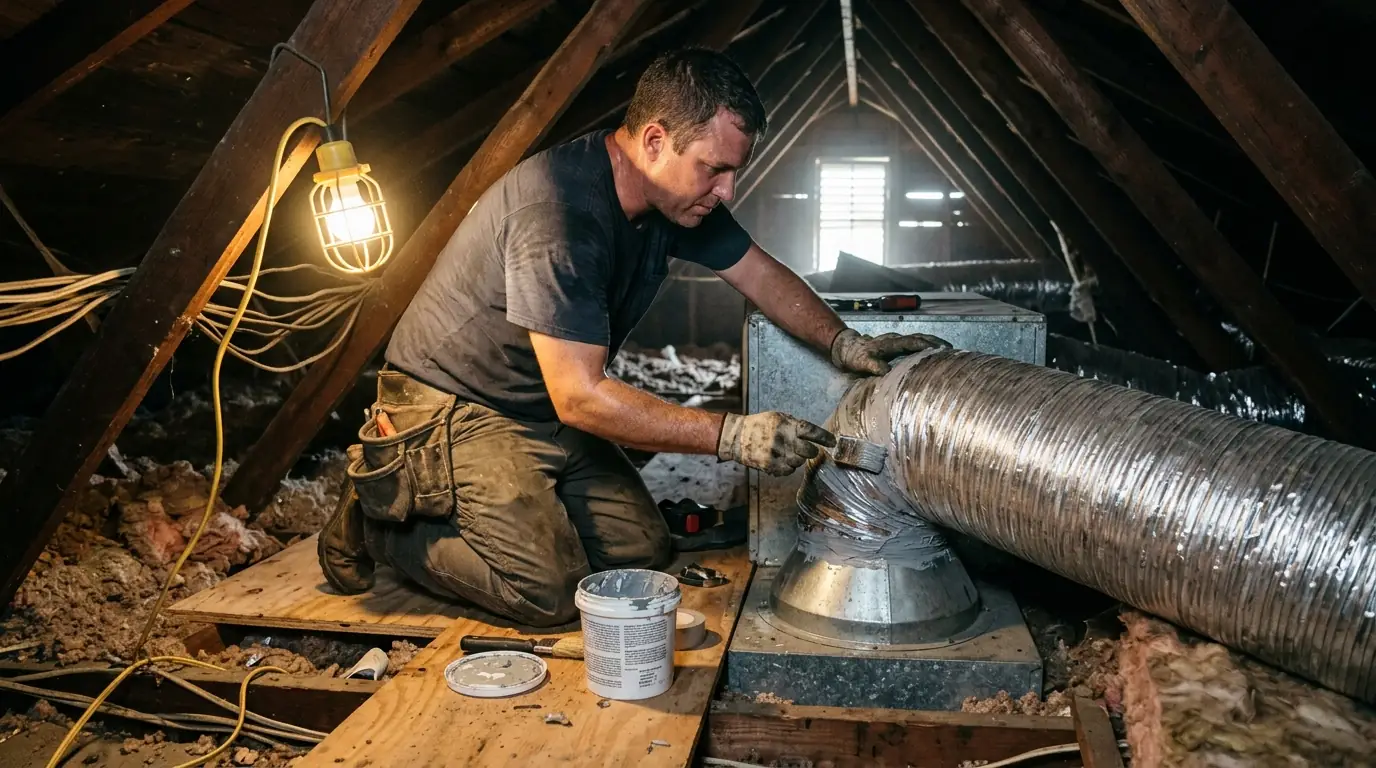
Ducts are out of sight, so they fail quietly. Joints held with cloth tape let go after a few summers of attic heat, flex duct sags until it kinks, and someone steps on a run during other work. The symptom shows up somewhere else: one bedroom that never cools, a higher bill, dust at the grilles.
Raised houses add their own problems. Ducts under the floor sit in damp air warmer than the air inside them, so poorly insulated runs sweat and drip, and wet insulation drags them down. Whole-system sealing is covered under duct sealing and insulation.
What decides the cost of a duct repair
Duct repairs vary too much by house for an honest single figure, so here is what moves the price.
- Access. A tall attic is quick; a tight crawlspace takes longer.
- Number of runs. One loose joint is a short job; a dozen damaged runs is not.
- Insulation. Wet or torn insulation adds material and time.
- Flood damage. Runs that sat in water are usually replaced, not repaired.
- Boots and grilles. Leaking boots at ceilings and floors are resealed or replaced.
What a duct repair covers
- Run-by-run trace from plenum to grilles
- Airflow check at each grille
- Joints reattached with collars and clamps
- Mastic sealing at repaired joints
- Damaged flex replaced at the correct size
- Insulation repaired or replaced
- Runs strapped and supported properly
Disconnected and leaking attic ducts
A run that pulls off its collar at the plenum or a boot can blow a room's supply straight into the attic. You notice one room that never cools, a grille that barely moves air, or a hot hallway near the air handler. We follow each run from the plenum to the grille, reattach separated joints with proper collars and clamps, seal them with mastic and rewrap the insulation. While we are up there we check the ceiling boots, which often leak attic air back into the room around the grille.
Crushed, kinked and torn flex duct
Flex duct is easy to damage. Boxes stored on top of it, a step during other attic work, or long unsupported spans can flatten it until it carries a fraction of the air it should. Rodents and sharp framing tear the outer jacket, and wet insulation then hangs heavy. We replace damaged sections with new insulated flex of the correct size, pull runs tight and straight, support them with wide straps at proper spacing, and reroute runs that were kinked around framing in the first place.
Ductwork under raised houses
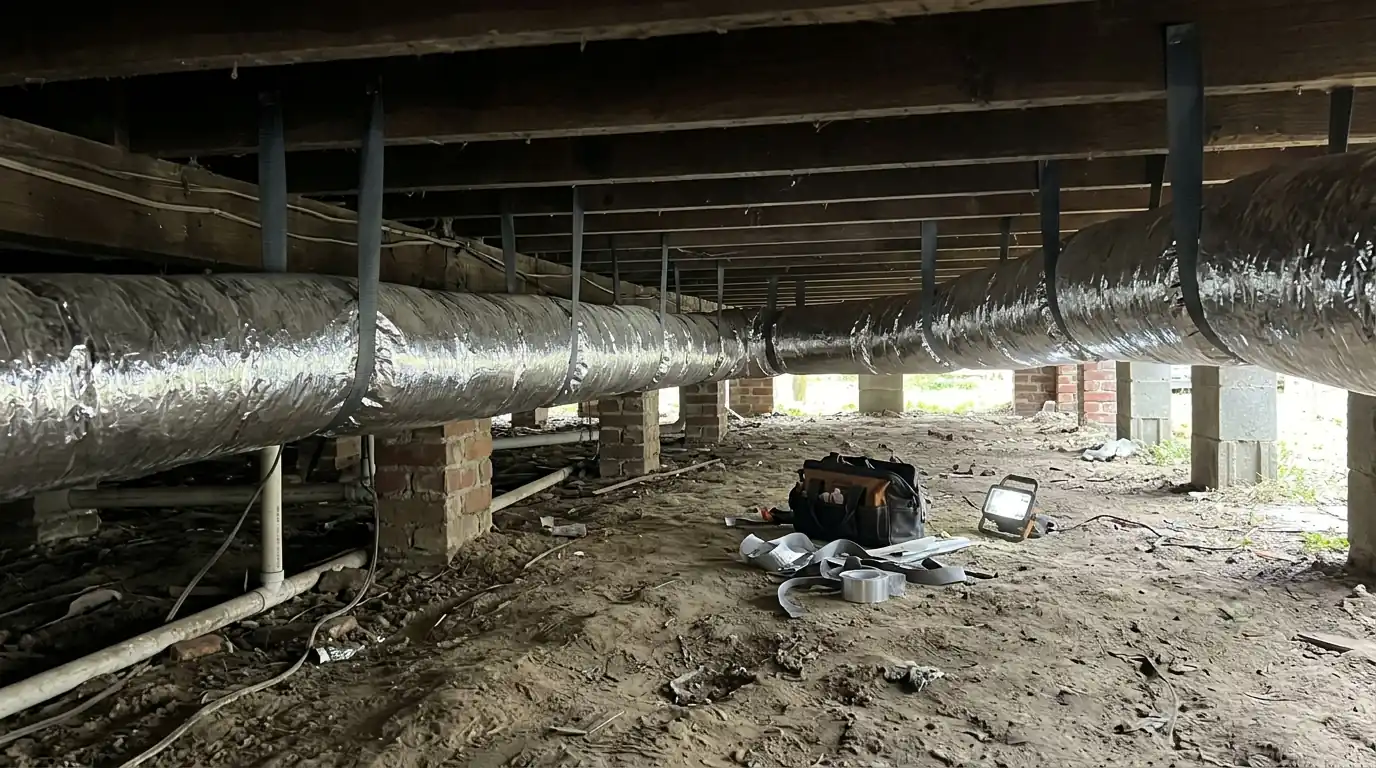
Under-floor ducts are the norm in raised houses, and the crawlspace is a hard place for them: damp, sometimes flooded, and visited by animals. Uninsulated or torn runs sweat in summer, drip onto the ground and slowly sag. We reconnect and seal joints, replace waterlogged insulation, lift and strap sagging runs back into place, and fix the boots at the floor registers. Where ducts sat in floodwater, replacement is usually the honest answer, and we will tell you so before any work starts.
Why so many ducts run under the floor here
Bywater shows why under-floor ducts are so common in New Orleans. About 90 percent of its buildings are single story, virtually all are raised, and shotgun houses make up 61 percent of the stock. Homes like these, popular here from the 1880s to the 1920s, had no ducts when they went up, so systems added later often run beneath the floor, where the crawlspace's damp air is the main thing working against them.
How a duct repair visit runs
- Ask where it hurtsWhich rooms lag, where grilles drip, what changed.
- Trace and measureWe follow every run and check airflow at the grilles.
- Repair joints and runsCollars, clamps and mastic; damaged flex replaced.
- Insulate and supportInsulation restored, runs strapped tight and level.
- Recheck the roomsAirflow is measured again so you can feel the difference.