Short answer
Most mini-split repairs in New Orleans start with an error code, a dripping indoor head, or a system that runs but does not cool. Common causes are clogged drains and dirty coils, failed sensors or fan motors, communication faults between the indoor and outdoor units, and refrigerant leaks at flare fittings. A technician reads the code, tests the indicated part and repairs it, then checks pressures and drainage.
Signs your mini-split needs repair
How mini-splits fail
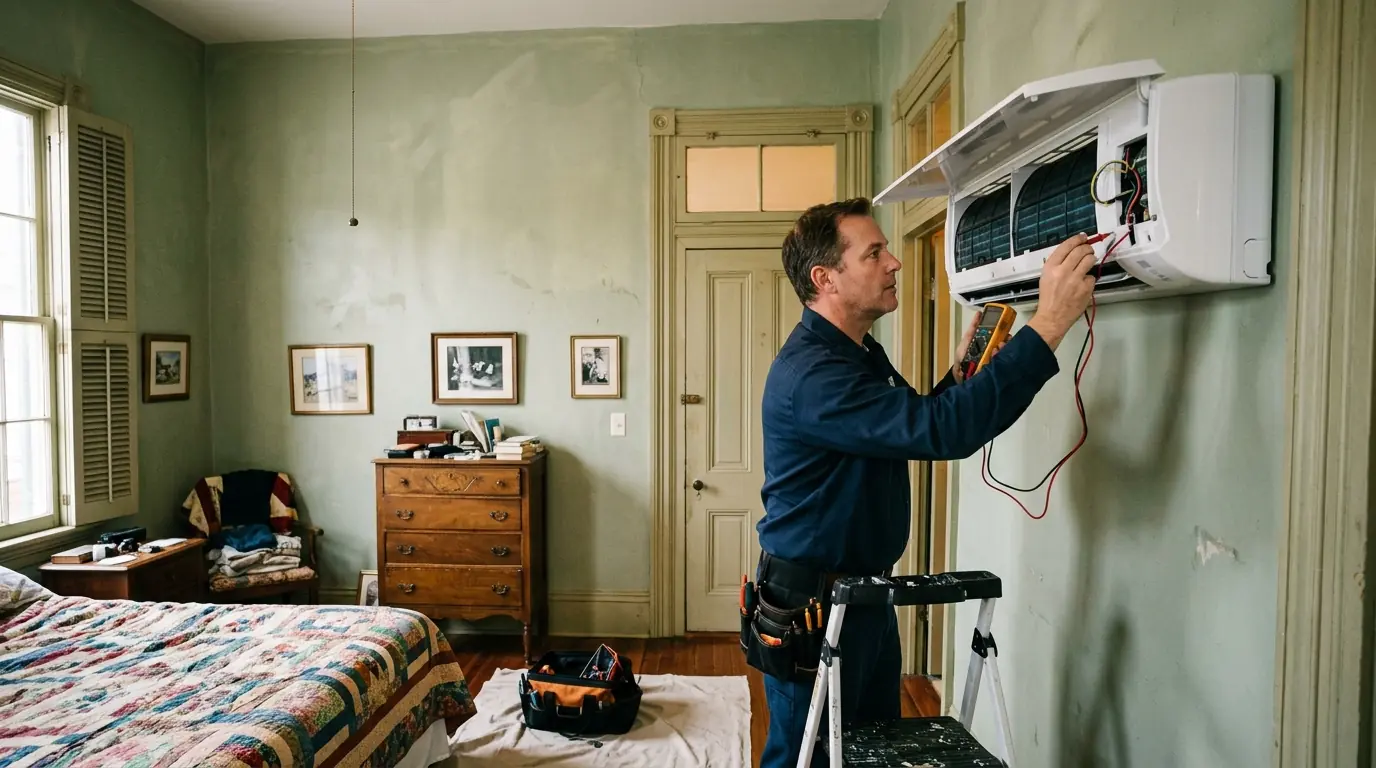
Mini-splits are reliable, but their parts are compact and model-specific: each indoor head has its own fan motor, coil, sensors and drain, and the outdoor unit has an inverter board that drives a variable-speed compressor. Flare fittings at the line set connections are a common leak point, and drains clog with the same slime that plagues central systems.
Error codes narrow things down, but they point to a circuit, not always the exact part, so we test before replacing. We repair Mitsubishi Electric, Daikin, Fujitsu, Carrier and other ductless brands, and when a head simply needs a thorough wash, see mini-split deep cleaning.
Indoor head leaking water down the wall
Water running down the wall below a head usually means a clogged drain pan or line, a slime-blocked drain outlet, a head mounted out of level, or a coil so dirty that condensate blows off it. Less often, low refrigerant ices the coil and the meltwater overflows. We clear and flush the drain, check the pump on heads that use one, confirm the head is level, and inspect the coil. If icing is the cause, we check the charge and look for leaks at the flare fittings.
Error codes and blinking lights
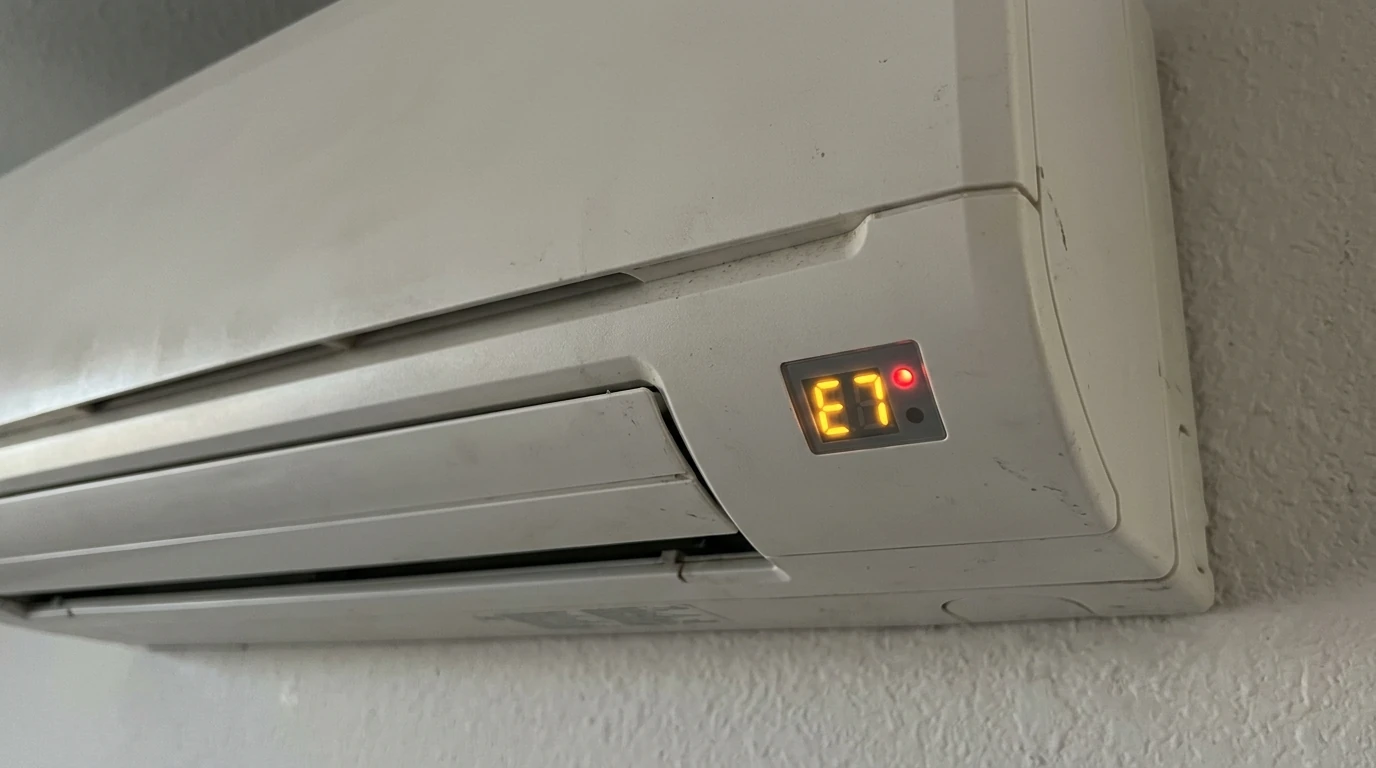
Each brand has its own code list, shown on the head's display or as a pattern of blinking lights. Codes point to a sensor, a fan motor, a communication fault between the indoor and outdoor units, high or low pressure, or an inverter problem. We note the code, look it up for that model, and test the circuit it names, since a communication fault can be a loose wire rather than a dead board. Tell us the code when you call; it helps us bring the likely part.
Remote, thermostat and sensor faults
Some mini-split problems are not mechanical at all. A dead remote, a mode left on dry or fan, a schedule set by accident, or a wall controller that lost its pairing can make a healthy system look broken. Real sensor faults happen too: a room or coil thermistor that reads wrong makes the head short cycle or stop. We check the settings, schedule and controller first, then test each sensor's resistance against the maker's chart and replace only the faulty one.
Repair or replace, with rebates in view
In New Orleans, Energy Smart has offered up to $500 when an ENERGY STAR mini-split heat pump replaces electric strip heat. That matters when an older mini-split needs a major repair such as an inverter board or a compressor: a new, more efficient unit with a rebate may come closer to the repair price than you would expect. We price both options so you can compare them side by side before deciding.
How a mini-split repair runs
- Read the codeDisplay or blink pattern, looked up for the model.
- Check the settingsMode, schedule, remote and controller.
- Test the circuitSensor, fan, wiring, board or pressures.
- RepairThe failed part, matched to the model.
- Test and check the drainCooling, airflow and drainage confirmed.
What decides the cost of a mini-split repair
We have no sourced local range for mini-split repairs, so here is what moves the price.
- Part type. Sensors and drains cost far less than boards or compressors.
- Refrigerant work. Flare repairs mean recovery, vacuum and recharge.
- Head access. High wall heads and cassettes take longer.
- Brand parts. Some boards and motors are model-specific.
- Number of heads. Multi-zone systems may need more than one head checked.
What you can check before calling
Safe to check yourself
- Rinse the head's filters and check the remote batteries
- Make sure the mode is cool, not dry or fan
- Note the error code or blink pattern
Leave to a technician
- Opening the head or the outdoor unit
- Refrigerant work at flare fittings
- Board, sensor or fan motor replacement