Short answer
Duct sealing in New Orleans means closing the leaks at duct joints, boots and plenums with mastic or rated foil tape, and insulating runs so they stop sweating in humid attics and crawlspaces. It suits systems whose ducts are sound but leaky. A technician finds the leaks by tracing the runs and checking airflow, seals each joint, and replaces wet or missing insulation.
Why ducts leak and sweat here
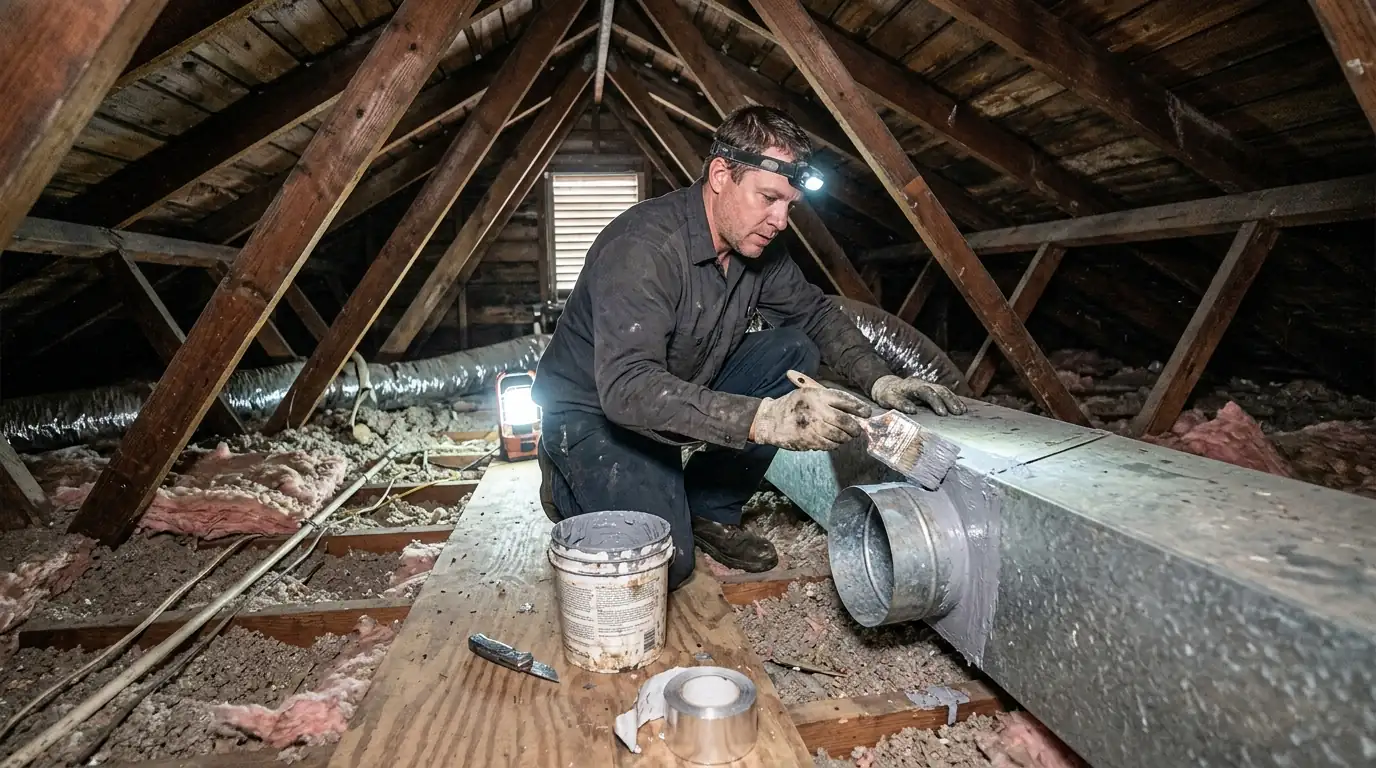
Duct joints are often held with cloth tape that dries out and lets go after a few attic summers, and boots at ceilings and floors are rarely sealed to the drywall. Every gap leaks cool air out or pulls hot, humid attic air in, and the system runs longer to make up for it.
Humidity adds sweating. A cold supply duct with thin, torn or missing insulation sits in air warmer and wetter than it is, so water condenses on it, drips onto ceilings or crawlspace soil and soaks what insulation is left. Sealing and insulating together fix both; damaged runs fall under ductwork repair.
Sealing by hand or aerosol sealing
We seal by hand. Aerosol sealing from inside the ducts suits some houses better, and we will tell you when.
| Mastic and tape by hand | Aerosol sealing from inside | |
|---|---|---|
| Reaches | Joints you can get to | Hidden leaks inside the ducts |
| Gap size | Any size | Small gaps only |
| Insulation work | Done at the same visit | A separate job |
| Best for | Accessible attics and crawlspaces | Ducts buried in walls or ceilings |
What decides the cost of duct sealing
We have no sourced local range for sealing alone, so here is what moves the price.
- Number of joints and runs. More runs mean more sealing and wrapping.
- Access. Tall attics are quick; tight crawlspaces take longer.
- Insulation replacement. Wet or torn wrap adds material.
- Boots and grilles. Leaking boots are resealed at each register.
- Testing. A duct leakage test before and after adds time.
Sweating supply ducts and dripping grilles
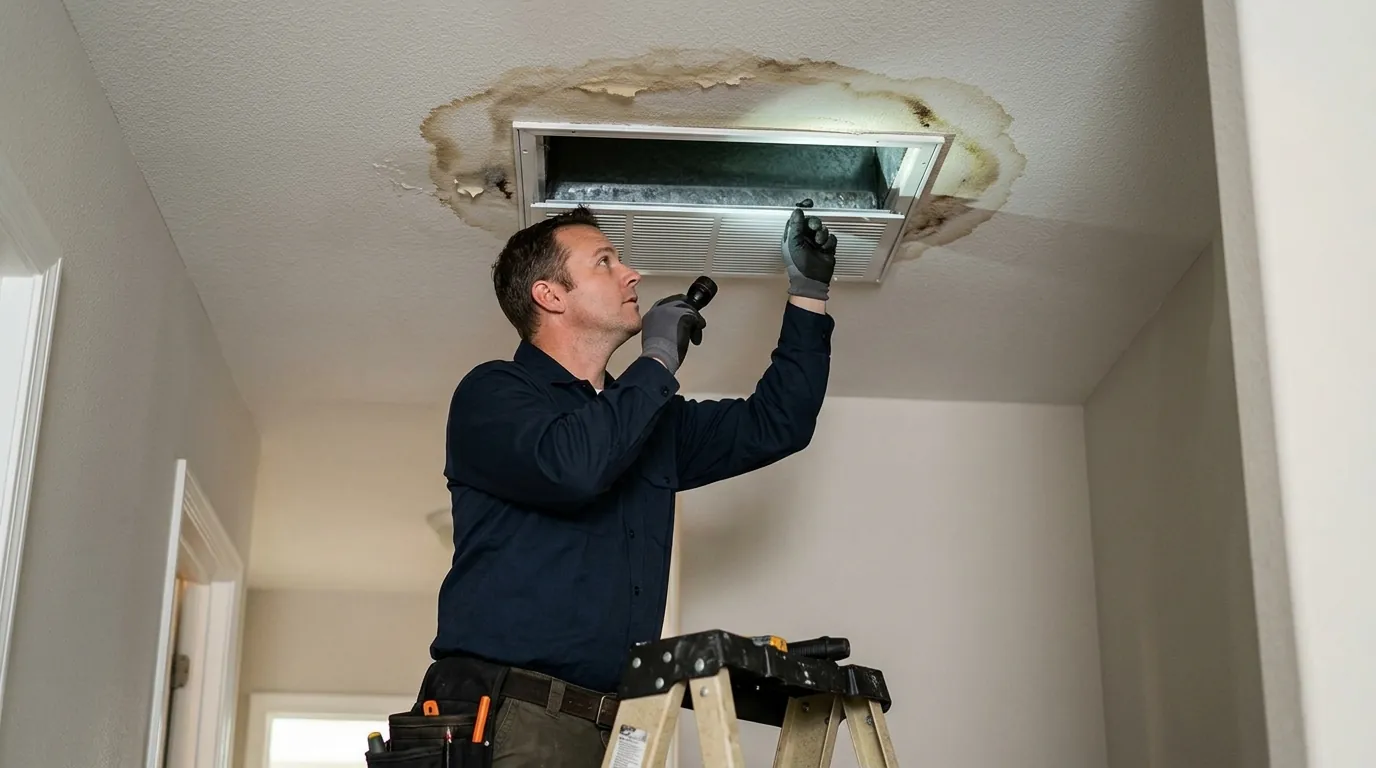
A supply duct sweats when its outer surface drops below the dew point of the air around it. In a humid attic or crawlspace that happens wherever insulation is thin, torn or compressed, and at the boots where the duct meets the grille. The signs are water stains around ceiling grilles, damp insulation and drips under raised floors. We find the cold spots, replace or rewrap the insulation with a continuous vapor jacket, seal its seams, and seal the boots to the ceiling or floor so moist air cannot reach the cold metal.
Mastic sealing at duct joints
Mastic is a thick, brush-on sealant that stays flexible and does not dry out the way cloth tape does. We seal every joint we can reach: the plenum where it meets the air handler, takeoffs on the trunk, collars where flex connects, and the boots. Larger gaps get fiberglass mesh tape bedded in the mastic, and foil tape rated for ducts goes where mastic will not work. Sealing is done before insulation goes back over a joint, so nothing is hidden under a wrap that only looks finished.
Insulating ducts under raised houses
Ducts under a raised floor live in damp crawlspace air, and many were hung with thin insulation that has since torn, sagged or been pulled loose by animals. Bare spots sweat all summer and drip onto the soil, and wet insulation drags the run down. We replace damaged insulation with a properly rated, vapor-jacketed wrap, tape the seams, and strap the runs back into place with wide supports. Where runs are crushed or waterlogged beyond saving, we replace the section rather than wrap over the damage.
Raised floors and damp crawlspaces
Raised houses are the rule in many neighborhoods here. In Bywater about 90 percent of buildings are single story and virtually all are raised, and in Gretna's historic district shotgun houses make up about 54 percent of the stock, with most bungalows a few feet above grade. Under-floor ducts in homes like these sit in crawlspace air all summer, so continuous insulation and sealed boots decide whether they stay dry or drip.
How we seal and insulate ducts
- Trace the systemEvery run from plenum to grille.
- Find leaks and cold spotsAirflow checks and a look at every joint.
- Seal the jointsMastic and mesh, rated foil tape where needed.
- Insulate and jacketContinuous wrap with sealed seams.
- Recheck the roomsAirflow measured again at the grilles.
What homeowners can do
Safe to do yourself
- Seal a loose register boot to the ceiling with caulk
- Keep storage boxes off attic ducts
- Change filters on schedule so the system is not starved
Leave to a technician
- Crawling attic or crawlspace runs to seal joints
- Replacing insulation on sweating ducts
- Anything near the air handler's electrical parts