Short answer
Commercial HVAC installation in New Orleans usually means one of two jobs: replacing a worn rooftop unit on an existing curb, or designing and installing a new system for a tenant build-out. Both start with a load calculation based on how the space is used, since a full restaurant dining room and an office of the same size need very different capacity. Planning the shutdown is the other half of the job.
What changes when the building is a business
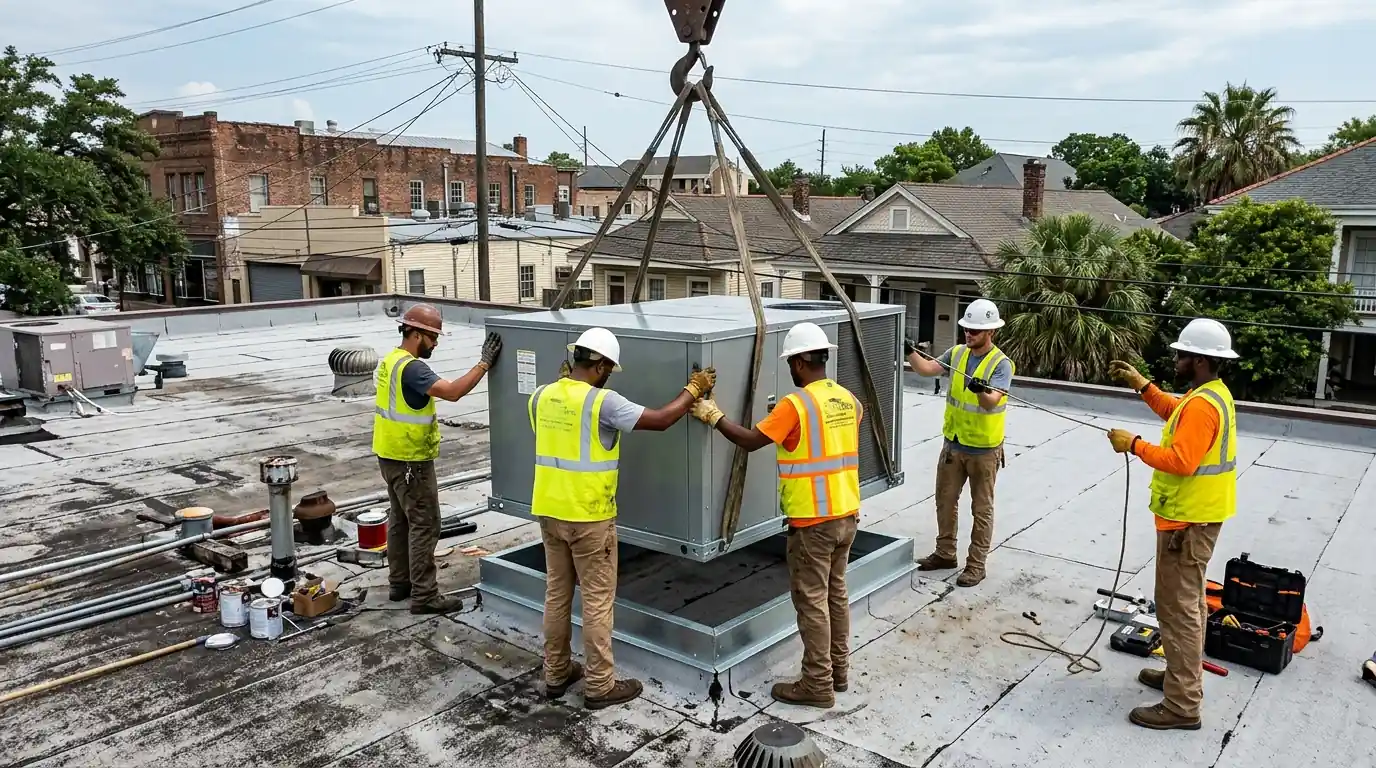
Commercial systems are sized for people, equipment and doors that open all day, not just floor area. A kitchen, a bank of display coolers or a wall of west-facing glass can outweigh the square footage. We look at the space on a busy day, read the existing equipment, and size from the load rather than the old unit's label.
The other difference is downtime. A dark rooftop unit can close a dining room. We order equipment before anything is removed, confirm curb dimensions or the adapter needed, book the lift, and schedule the swap for your slowest hours. We install rooftop and split equipment from Carrier, Trane, Lennox, York and other major lines.
Rooftop package unit or split system
| Rooftop package unit | Split system | |
|---|---|---|
| Where it sits | All in one cabinet on the roof | Outdoor unit plus indoor air handler |
| Floor space | None inside | Needs a closet or ceiling space |
| Service access | Roof access needed | Indoor parts reachable inside |
| Typical use | Retail, restaurants, single-story offices | Small offices and mixed-use buildings |
What sets the cost of a commercial install
Commercial work is quoted from a site visit, so we do not publish a figure. These are the main drivers.
- Tonnage and type. Unit size, efficiency and gas or electric heat set the equipment cost.
- Curb and roof work. A curb adapter, new curb or roof repair adds material and labor.
- Crane and access. Building height, street access and lift time affect the day.
- Controls. Economizers, thermostats and building controls vary by job.
- Ductwork changes. Build-outs often need new runs, diffusers and returns.
Rooftop unit replacement
Most commercial calls are a worn rooftop package unit that is costing more to repair than it is worth. The new unit often will not match the old curb exactly, so we measure and order a curb adapter where needed, and check that the roof deck and the gas and electrical connections suit the new equipment. On the day, the old unit comes off by crane, the new one goes on, connections are made and the system is started and tested. Economizers and controls are set up before we leave.
HVAC for tenant build-outs
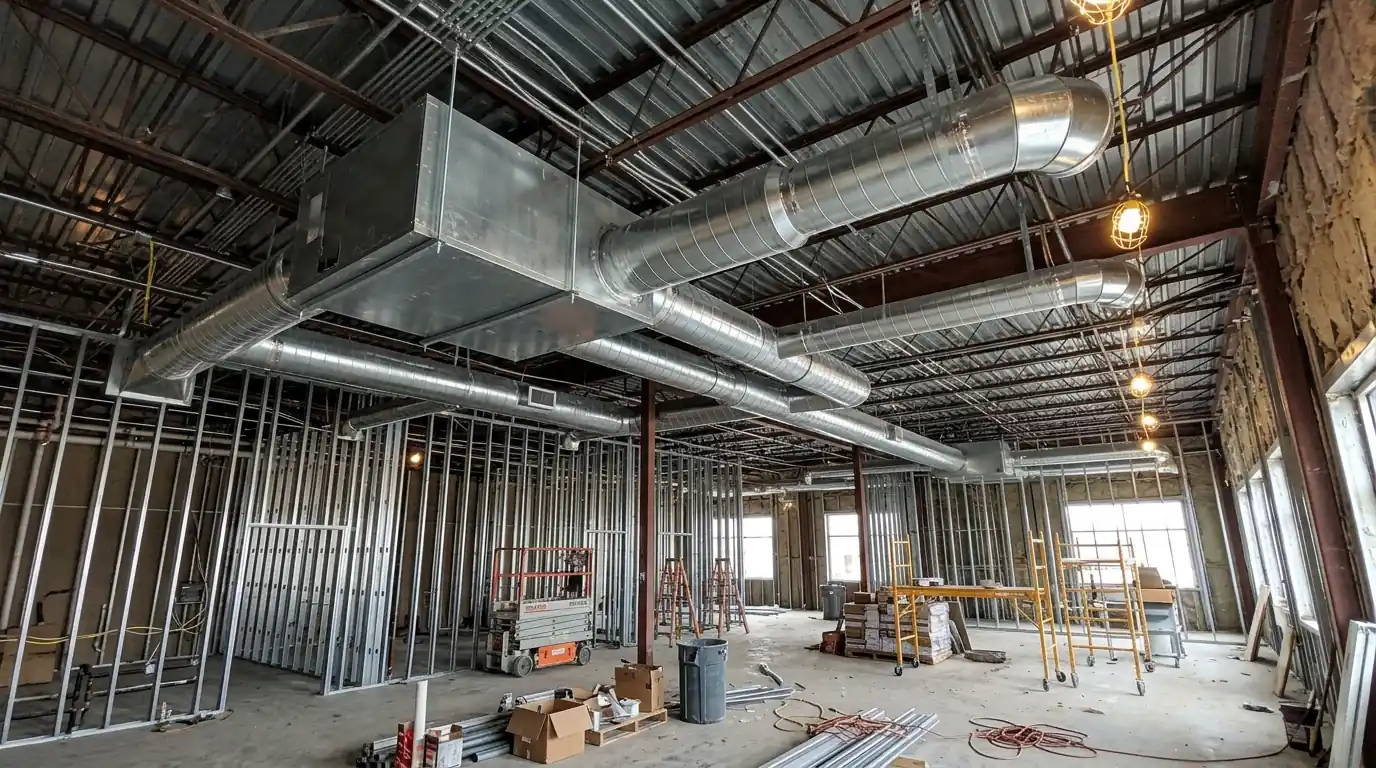
A new tenant in an old space usually inherits equipment sized for someone else's business. We start from the new floor plan and use: seating, kitchen equipment, occupancy and hours. From there we decide whether the existing units can be reused, resized or zoned, design the ductwork for the new layout, and coordinate with the general contractor on ceiling heights, chases and inspection dates. Getting this right before the ceiling grid goes up avoids rework, and a missed inspection, that can delay an opening.
Sizing for a New Orleans summer
New Orleans averages a July high near 91 degrees, and nights rarely cool much below 75, so commercial equipment here runs long hours with little recovery time overnight. Kitchens, glass storefronts and full dining rooms stack their own heat on top of that. We size a commercial system for the space as it is actually used on a Saturday in August, with the doors opening all afternoon, not for an empty room on a mild spring day.
How a commercial install runs
- Site visitWe see the space in use, measure curbs and read the existing equipment.
- Load and proposalWe size from the load and quote equipment, curb and controls.
- Order and plan the dayEquipment arrives before removal; the lift and shutdown are booked.
- Install and connectOld unit out, new unit set, gas, power and ducts connected.
- Start-up and handoverWe test, set controls and show your manager what to watch.
How long the space is without cooling
A like-for-like rooftop swap on a matching curb can often be finished in a day once the lift is booked, which is why we order and stage everything first. A curb adapter, roof repair or electrical upgrade can add time, and build-outs follow the general contractor's schedule. We give you the expected shutdown window before the date is set.