Short answer
A single-zone ductless mini-split in New Orleans is usually a one-day install: one indoor head, a line set through a small hole in the wall, and an outdoor unit on a pad or stand. Multi-zone systems take longer because every head needs its own line run. Head size matters more than brand, since an oversized head cools fast and leaves the room damp.
What goes into a mini-split install
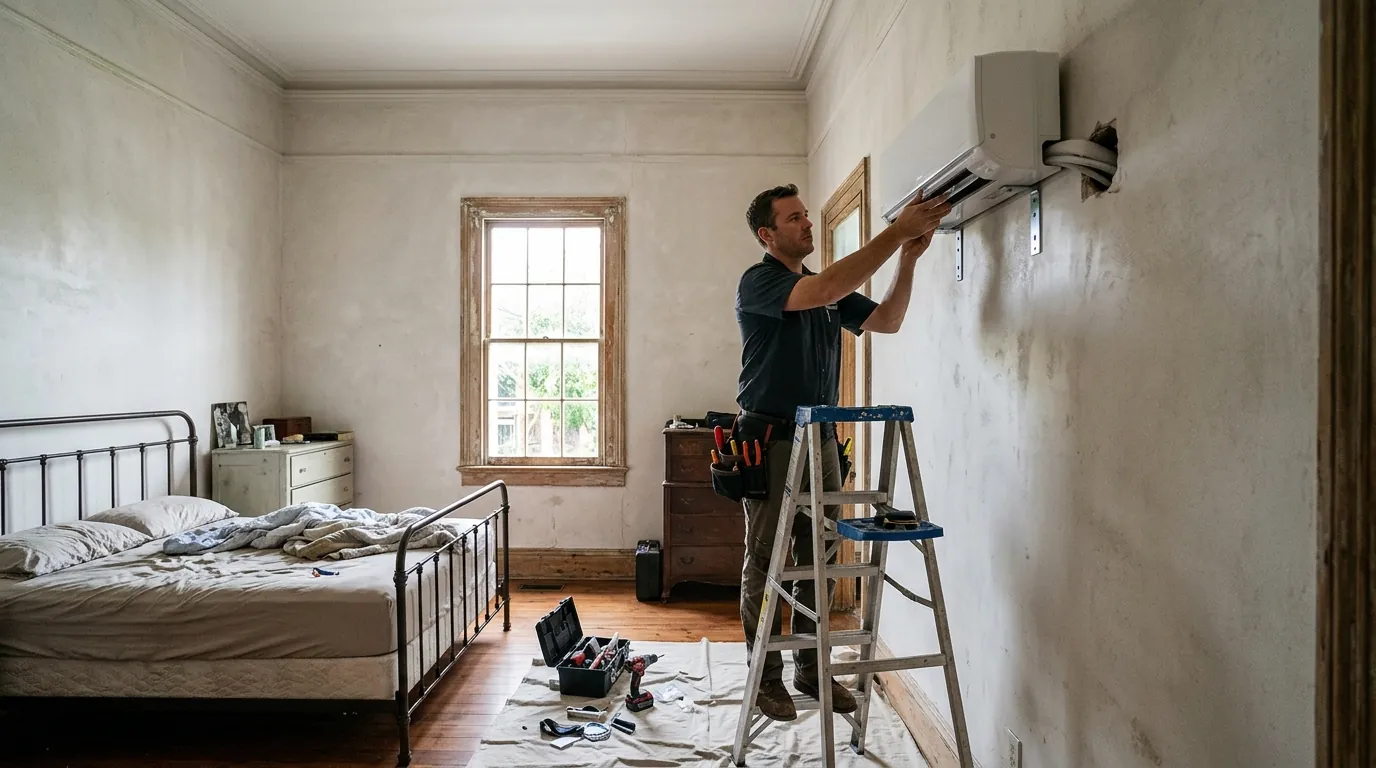
A mini-split is a heat pump split into an outdoor unit and one or more indoor heads, joined by a copper line set, a control wire and a condensate drain. Nothing is ducted, so the wall opening is only a few inches across, which is why it suits camelbacks, converted garages and the back bedroom of a shotgun.
What decides how well it runs is invisible on install day: sizing each head to its room, pitching the drain, and pulling a deep vacuum before refrigerant is released. We install Mitsubishi Electric, Daikin and Fujitsu heads.
Mini-split, window unit or extending the ducts
| Mini-split | Window unit | Extend central ducts | |
|---|---|---|---|
| Noise in the room | Quiet; compressor sits outside | Loud; compressor in the window | Quiet if the duct is sized right |
| Moisture removal | Good with an inverter at low speed | Fair, cycles on and off | Depends on the main system |
| Disruption | Small wall hole, one day per zone | None | Attic or crawlspace work |
| Best for | Rooms the ducts never reached | Short-term or renters | Rooms next to existing trunks |
What sets the price of a mini-split
- Number of zones. Every head adds equipment, a line run and labor.
- Head style. Wall heads cost least; cassettes and slim ducted units need ceiling or attic work.
- Line route. Long runs under a raised floor or up a two-story wall add copper and time.
- Electrical. Most systems need a dedicated circuit, and an older panel may need space.
- Efficiency. Higher-rated units cost more up front and less each summer.
Planning range: about $2,000 to $7,000 per zone installed (source: bryant.com). It is a market range, not our price; we quote after we see the system.
What a mini-split install includes
- Load sizing for each room
- Outdoor unit on a pad, bracket or raised stand
- Insulated line set with a wall cover
- Condensate drain to daylight or a pump
- Dedicated circuit and disconnect
- Vacuum test before refrigerant release
- Start-up test and remote setup
Single-room mini-splits for additions and back rooms
The most common call is one room that never cools: a shotgun's back bedroom, a camelback upstairs, a garage turned into an office. A single-zone system pairs one outdoor unit with one head, so it runs on its own schedule and switches off when the room is empty. Sizing is the real job. A room under a sun-baked roof needs more capacity than its floor area suggests, and an oversized head chills the air without pulling out moisture, so we check the windows and roof before choosing.
Multi-zone systems for whole floors
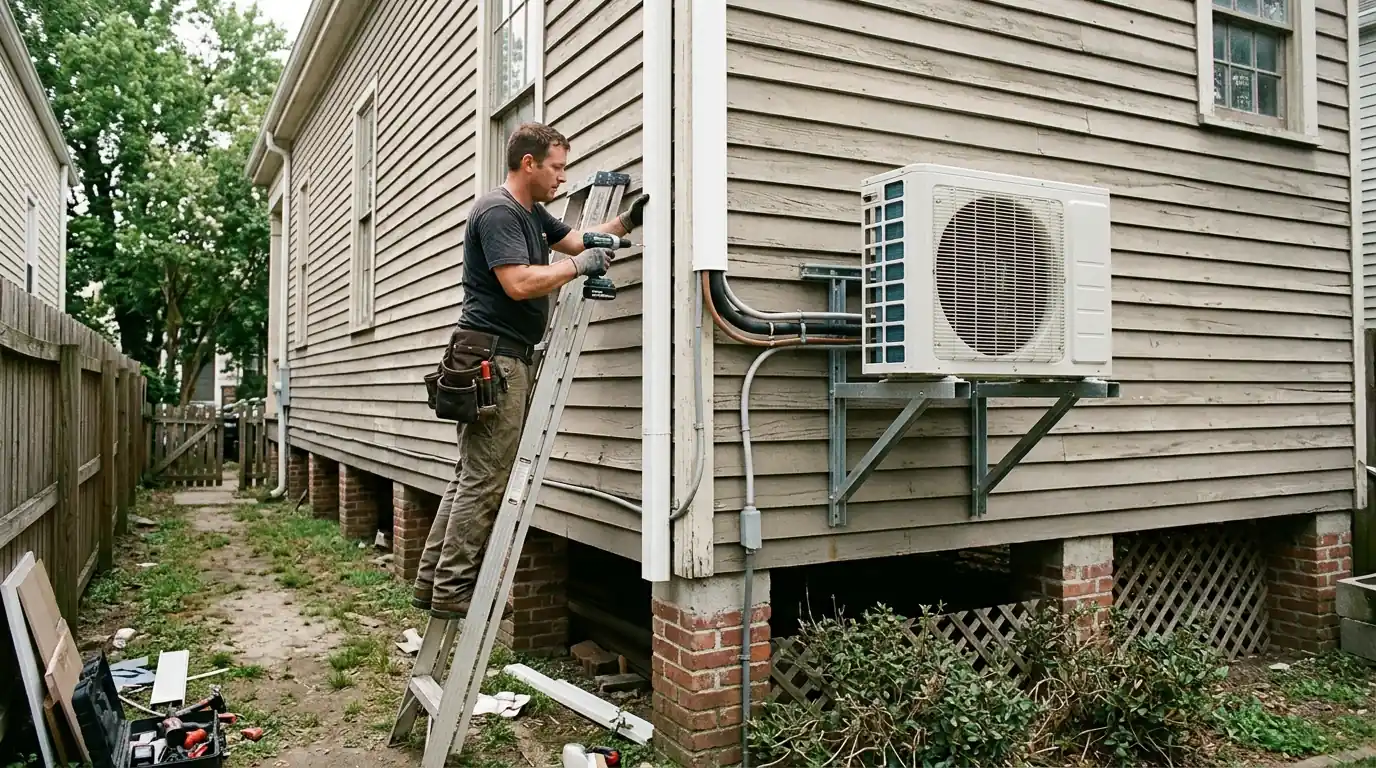
One outdoor unit can feed several heads, each with its own thermostat. It suits homes with no ductwork, or a second floor the attic system cannot reach. The trade-off is that the outdoor unit is shared, so one failure takes every zone down, and line runs get long in a deep house. For a full shotgun or raised cottage we compare a multi-zone layout against a small-duct high-velocity system before quoting, since the answer depends on how many rooms need cooling.
Ceiling cassettes and slim ducted heads
If a wall head would spoil a room, there are two quieter options. A ceiling cassette sits flush in the ceiling and throws air four ways, which suits kitchens and open rooms with attic space above. A slim ducted unit hides in a closet or attic and feeds two or three short runs. Both cost more than a wall head and put the condensate drain overhead, so we pitch it carefully and add a float switch that shuts the unit off before water can reach the ceiling.
Why ductless fits so many New Orleans houses
Shotgun houses were most popular here from the 1880s to the 1920s, often built of cypress and usually raised on piers, which means they went up decades before central air. Running a ductless line set under a raised floor is often cleaner than cutting plaster for new ducts. The money side matters too: Entergy New Orleans' Energy Smart program has offered up to $500 when an ENERGY STAR mini-split heat pump replaces electric strip heat, so we note what heats the room today before you buy.
How a mini-split install day runs
- Measure the roomsSize, windows, roof exposure and use set each head size.
- Plan the line routeA tidy path for copper and drain that spares plaster you care about.
- Set the outdoor unitOn a pad, bracket or raised stand, clear of standing water.
- Vacuum and chargeA deep vacuum must hold before refrigerant is released.
- Start-up and walkthroughWe test each head and drain, then show you the remote.