Short answer
When a heat pump in New Orleans blows cool air in heat mode, runs only on emergency heat, or ices over and stays iced, the cause is usually a stuck reversing valve, a failed defrost board or sensor, low refrigerant, or a thermostat set up wrong. A technician checks the thermostat call, defrost operation and pressures in both modes, then repairs the part that failed.
Signs your heat pump needs repair
How heat pumps fail in winter
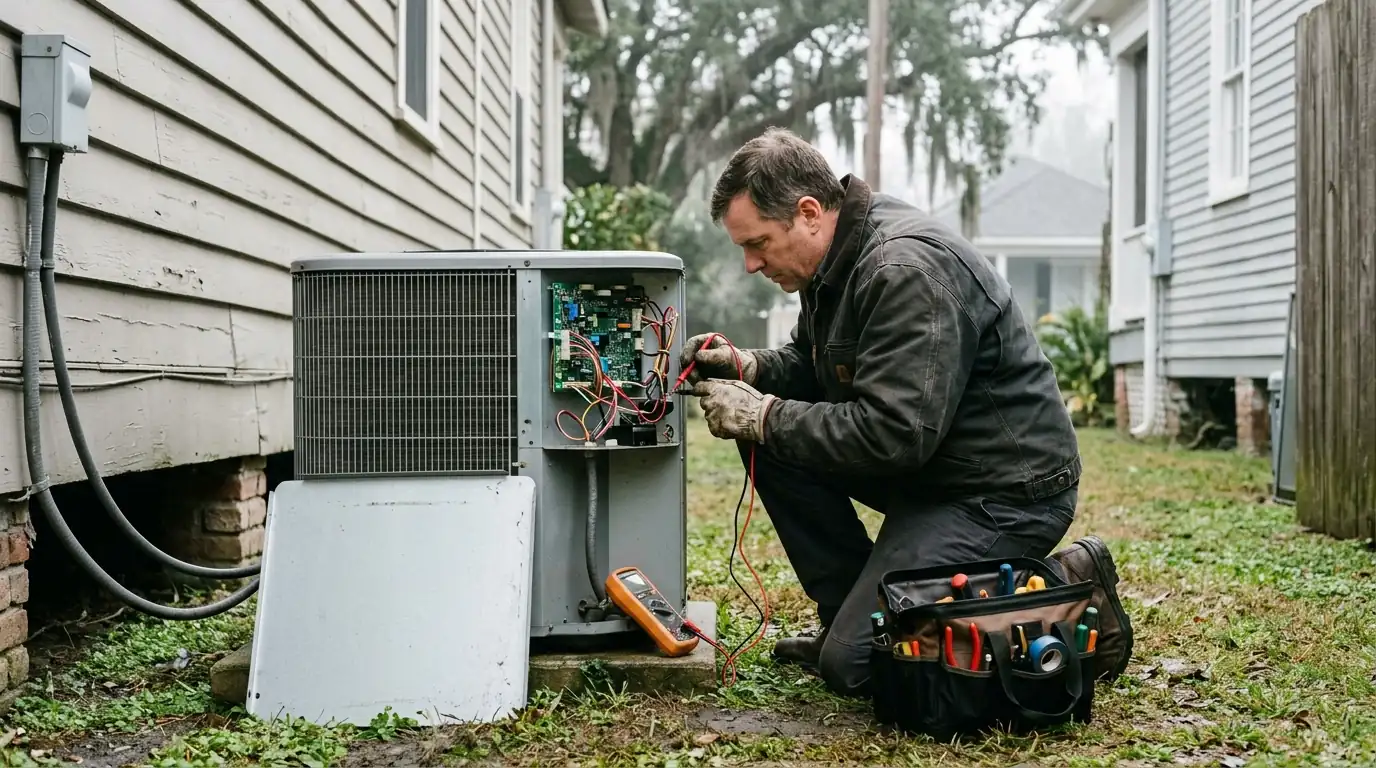
In heating mode the reversing valve flips the refrigerant flow so the outdoor coil absorbs heat and the indoor coil releases it. On cold, damp days the outdoor coil frosts, and the defrost control briefly reverses the system to melt it. A failure in the valve, the defrost board or its sensor stops that cycle.
Backup heat hides many of these failures: the strips keep the house warm while the heat pump does nothing and the bill climbs. A bill that jumps in a mild winter can mean the system is running on backup heat alone. We repair Carrier, Trane, Lennox, Goodman and Rheem heat pumps.
Heat pump stuck in emergency heat
If the thermostat shows emergency or auxiliary heat all the time, either someone switched it to emergency heat, or the heat pump has failed and the thermostat is leaning on the strips. Running on strips alone keeps the house warm but costs far more. We check the thermostat's settings and wiring, then test the outdoor unit in heating mode: is the compressor running, is the reversing valve shifting, is the charge right. Once the heat pump works again, the strips go back to being backup only.
Ice on the outdoor unit in winter
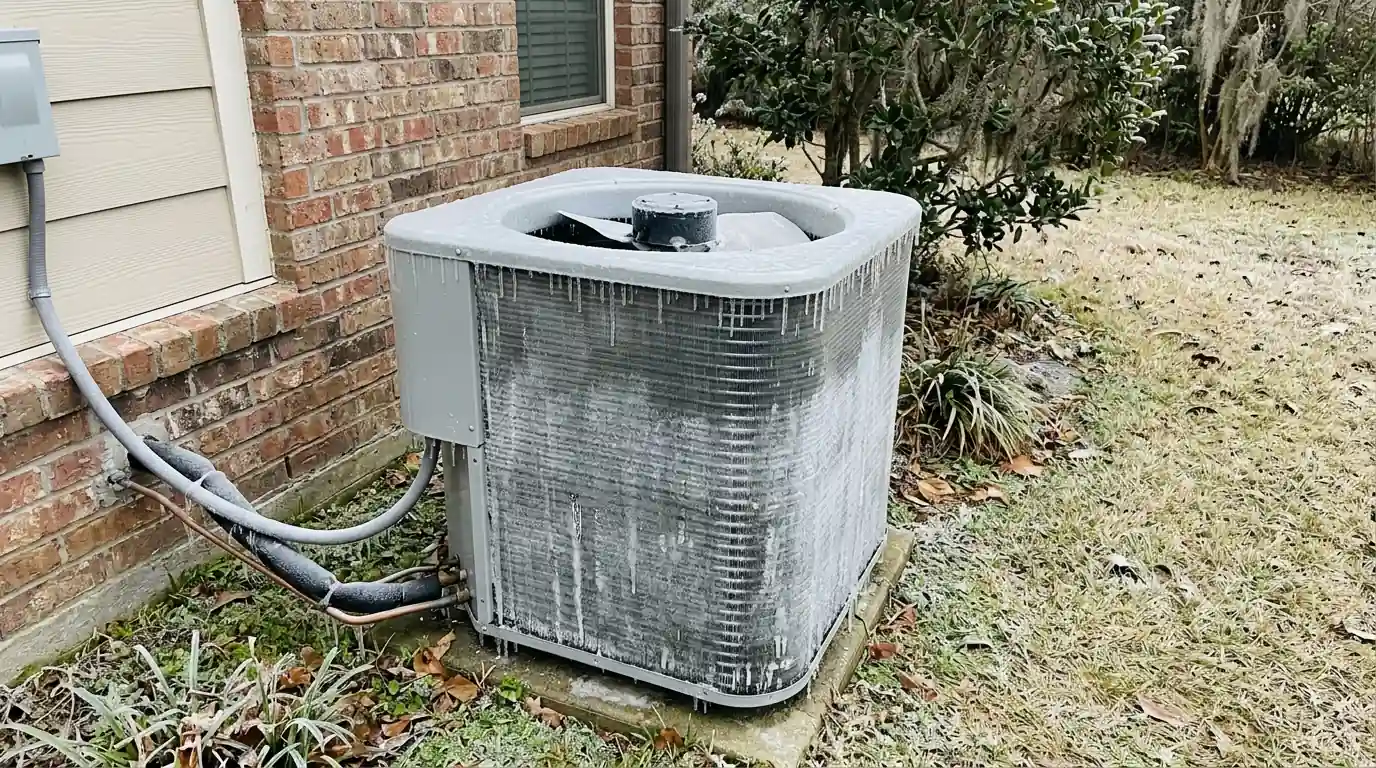
A thin layer of frost on the outdoor coil in cold, damp weather is normal; the defrost cycle clears it every so often, often with a puff of steam. A unit encased in ice that does not clear is not normal. Causes include a failed defrost board or sensor, low refrigerant, a stuck reversing valve, or water dripping onto the unit from a gutter. Do not chip the ice. Switch to emergency heat and call. We test the defrost cycle, sensor and charge, and fix the cause.
Reversing valve failures
The reversing valve is what lets a heat pump switch between heating and cooling. A valve can stick in one position, leak internally between ports, or lose its solenoid coil, which usually shows as a system that cools fine but blows cool air in heat mode, or the reverse. We first rule out the simple causes: the thermostat setting and the solenoid's power. If the valve itself has failed, replacing it means recovering the refrigerant, brazing in a new valve, then a vacuum and charge, so we price it against the system's age.
Defrost board and sensor problems
The defrost board decides when to melt frost off the outdoor coil, using a timer and a temperature sensor clamped to the coil's tubing. If the sensor fails or comes loose, the board may never start a defrost, and the coil ices over; if the board fails, defrost may run too often or not at all. We test the sensor's resistance, check that it is clamped in the right place, force a defrost cycle to watch the board respond, and replace whichever part has failed.
Mild winters, then a hard freeze
Most winters in New Orleans bring only a handful of freezing days, so a heat pump can spend months heating with little stress. Then a cold snap like January 21, 2025 arrives, when eight inches of snow fell at the airport in Kenner and lows dropped into the teens and 20s. Defrost controls, sensors and reversing valves that coasted through mild weather fail all at once, and many households learn the heat pump quit only when the strips cannot keep up.
How we repair a heat pump
- Check the thermostatSettings, wiring and emergency heat status.
- Test heating modeCompressor, valve shift and pressures.
- Watch a defrostBoard, sensor and coil behavior.
- Repair the faultValve, board, sensor, motor or leak.
- Test both modesHeating and cooling checked before we leave.
What decides the cost of a heat pump repair
We have no sourced local range for heat pump repairs, so here is what moves the price.
- Sensor or board. A defrost sensor costs less than a defrost board.
- Reversing valve. Valve work means recovering and recharging refrigerant.
- Refrigerant leak. Leaks are found and fixed before any charge is added.
- Outdoor fan motor. A failed fan motor stops heating and cooling alike.
- Thermostat setup. Sometimes the fix is a setting, not a part.