Short answer
PTAC repair in New Orleans usually means a through-wall unit that is blowing warm, leaking water into the room, tripping its breaker or making noise. Common causes are clogged filters and coils, a blocked drain in the sleeve, a failed fan motor or control board, or low refrigerant. A technician tests the unit in the room, then repairs it or swaps in a match that fits the existing wall sleeve.
Signs a PTAC needs service
How PTACs fail
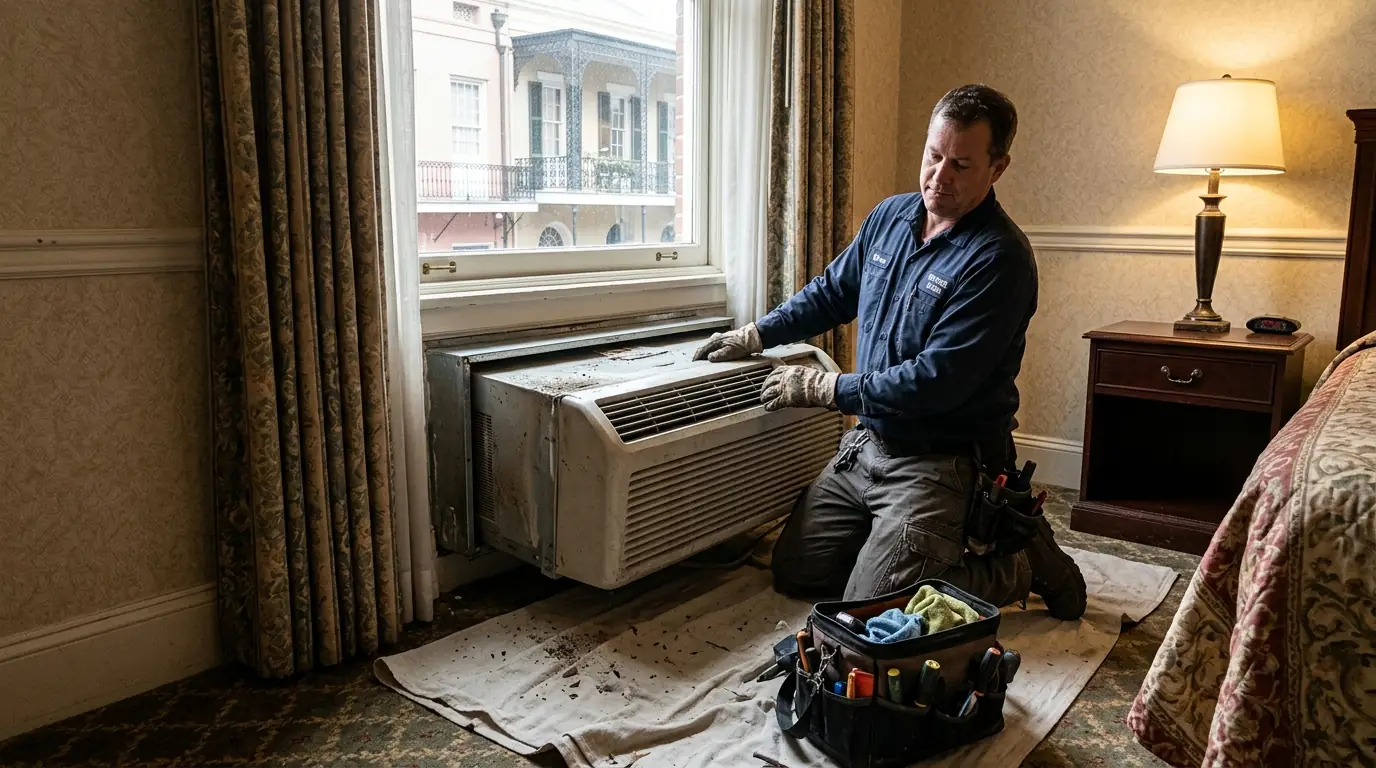
PTACs pack a compressor, two coils, fans and controls into one cabinet that slides into a wall sleeve. They run hard in hotel rooms and apartments, filters are often neglected, and the outdoor side faces weather and debris. Dirty coils and filters cause most warm-air and icing complaints.
Many leaks come from the sleeve rather than the unit: a sleeve sloped the wrong way, a blocked drain, or failed caulking around it. We check both before replacing anything, and replacements are matched to the existing sleeve and voltage so the wall does not need opening. We work on Amana, GE Zoneline, Friedrich and other PTAC brands.
PTACs in hotels and apartment buildings
In a building full of PTACs, the job is speed and consistency. We test the failed unit in the room, repair it on the spot when the part is a filter, coil, fan motor or control, and swap in a replacement when the compressor or sealed system has failed. For managers with many units, we can work through a list of rooms on one visit, note the condition of each, and flag units nearing the end so replacements can be budgeted instead of handled one emergency at a time.
PTAC sleeve and drain problems
Water on the floor under a PTAC usually points to the sleeve. The sleeve must slope slightly toward the outside so condensate drains out; if the building settled or the sleeve was set level, water runs back into the room. Drain holes clog with debris, and failed caulking lets rain in around the sleeve. We check the slope, clear the drain, reseal the sleeve to the wall, and confirm the unit sits correctly in it. A leak fixed at the sleeve often saves replacing a unit that was never the problem.
Through-wall units in a long cooling season
Hotels and apartment buildings in New Orleans run their PTACs through a long cooling season, with humidity that keeps coils wet and drains busy, and storm-driven rain that tests every sleeve seal. Units that face the street also collect dust and debris on their outdoor coils. That combination is why filter cleaning, coil cleaning and sleeve checks matter as much as repairs for any building with dozens of through-wall units.
How a PTAC service call runs
- Test in the roomRun modes, check airflow, filters and noise.
- Check the sleeveSlope, drain holes and the seal to the wall.
- Repair or swapFix the part, or fit a matching unit.
- ResealSleeve sealed and grille checked outside.
- TestCooling, heating and drainage confirmed.
What decides the cost of PTAC work
We have no sourced local range for PTAC work, so here is what moves the price.
- Repair or replace. Fans and controls cost far less than a new unit.
- Unit size and voltage. Larger and 265-volt units cost more.
- Sleeve condition. Reslope, reseal or replace the sleeve as needed.
- Number of rooms. Working through many rooms on one visit saves trips.
- Brand match. Some replacements need an exact sleeve and grille match.
What building staff can do
What staff can do
- Clean or replace the front filter on a schedule
- Keep curtains and furniture clear of the unit's front
- Reset a tripped power cord once; if it trips again, take the room out of use
Leave to a technician
- Opening the cabinet or testing controls
- Refrigerant and compressor work
- Pulling units from sleeves or resealing sleeves