Short answer
If a thermostat in New Orleans is blank, misreads the room or will not start the system, the cause is usually dead batteries, a float switch cutting power, a loose wire or a failed thermostat. A technician checks power at both ends first. Smart thermostats often need a common wire, or C-wire, and heat pumps need the right reversing valve and backup heat settings.
Thermostat problems often start somewhere else
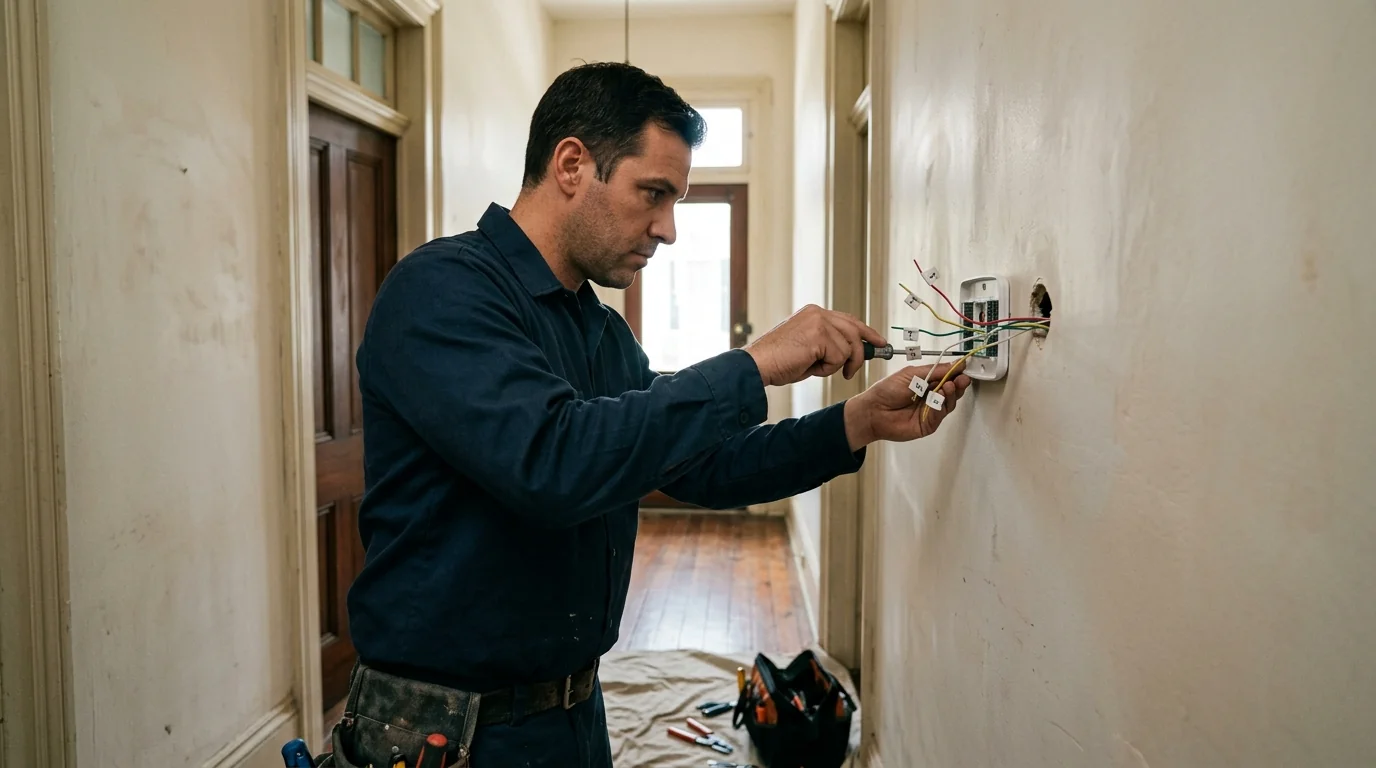
A blank thermostat sends many people shopping for a new one, but the thermostat is often fine. A float switch tripped by a clogged condensate drain cuts its power, and so does a blown fuse on the air handler's control board. We check power and wiring at both ends before replacing anything.
When a new thermostat is the answer, the wiring matters more than the brand. Smart models from Honeywell, ecobee and Google Nest need steady power, and heat pumps need the right terminals for the reversing valve and backup heat. Get those wrong and the system heats when it should cool, or runs the strips all winter.
Basic, programmable or smart
| Basic | Programmable | Smart | |
|---|---|---|---|
| Schedules | None | Set by hand | Learned or set by app |
| Needs a C-wire | Usually not | Sometimes | Usually |
| Humidity features | No | Rarely | Often |
| Best for | Simple systems and rentals | Steady routines | Changing schedules and heat pumps |
What decides the cost of thermostat work
We have no sourced local range for thermostat work, so here is what changes the price.
- Thermostat type. Basic, programmable and smart models differ widely.
- C-wire. A spare wire costs nothing; new cable or an adapter adds parts.
- System setup. Heat pumps and two-stage systems take more configuration.
- Zoning. Zoned systems need thermostats matched to the zone panel.
- Repairs found. A blown fuse, failed board or tripped float switch is fixed first.
Installing a smart thermostat
Smart thermostats learn schedules, adjust from your phone and show how long the system runs each day. Installing one means matching it to the equipment, confirming a C-wire or adding one, labeling and moving the wires, and setting it up for the system type. We configure stages, heat pump settings, fan behavior and any dehumidify features, then run each mode to prove it works. Done properly it takes the guesswork out of schedules; done wrong it can short-cycle the system or leave backup heat running.
Thermostat wiring and the C-wire
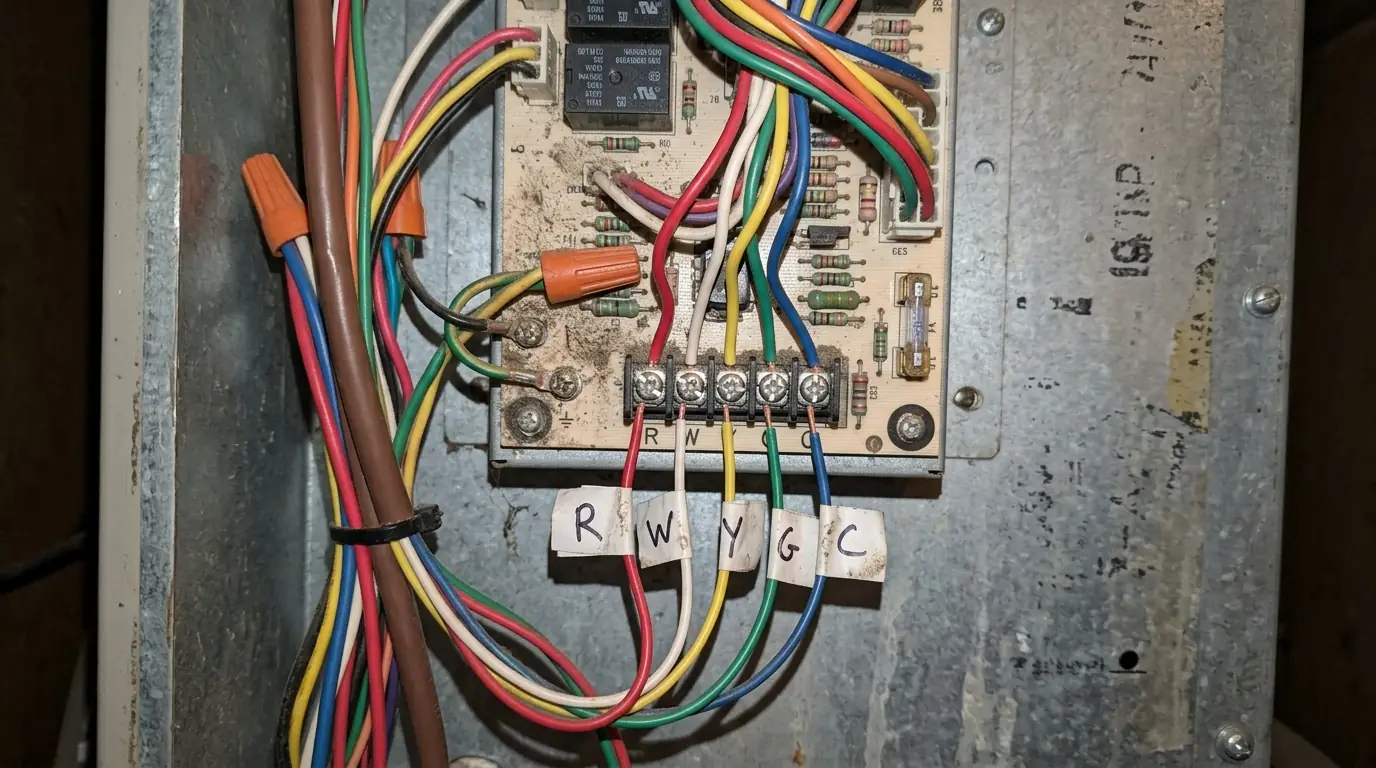
Older homes often have only two to four thermostat wires, enough for a basic thermostat but not for a smart one that needs constant power. Without a C-wire, some smart thermostats borrow power through other wires, which can cause chattering or random shutdowns. We use a spare conductor if one exists, run a new thermostat cable where the walls allow, or fit an add-on power adapter at the air handler. We also confirm the wiring at the control board matches what the thermostat expects.
Blank or unresponsive thermostats
A blank screen has a short list of causes: dead batteries, a float switch tripped by a clogged drain, a blown fuse on the control board, a tripped breaker, or a failed thermostat. An unresponsive one that shows the temperature but will not start the system points to wiring or a failed relay inside it. We test in that order, cheapest first, and replace the thermostat only after power and wiring check out. If the drain was the cause, we clear it so the screen does not go dark again.
Humidity settings matter here
In the worst stretch of a New Orleans summer, dew points sit in the upper 70s, so a thermostat's humidity settings matter as much as its temperature. Many smart models can slow the blower or run longer cycles to pull more moisture out of the air, and we set those features up on install. Energy Smart has also listed rebates of up to $100 for smart thermostats, so check the current terms before you buy one.
How we repair or install a thermostat
- Check power at both endsThermostat, control board, fuse and float switch.
- Inspect the wiringTerminals, conductors and the C-wire question.
- Repair or replaceFix the fault, or fit the right thermostat.
- Configure for the systemStages, heat pump, fan and humidity settings.
- Test every modeCooling, heating, fan and backup heat, one by one.
What you can try before calling
Safe to do yourself
- Replace the thermostat batteries
- Check the breaker and the switch at the air handler
- Look for water in the drain pan if the screen went blank
Leave to a technician
- Wiring changes at the air handler control board
- Heat pump and backup heat setup
- Adding a C-wire or power adapter