Short answer
A UV light for an air conditioner is a UV-C lamp mounted inside the air handler, aimed at the indoor coil and drain pan, that runs continuously to stop mold and bacterial slime from growing on those wet surfaces. It does not clean a dirty coil; it keeps a clean one cleaner. Lamps lose strength over time and are usually replaced about once a year.
What a coil UV lamp does, and does not do
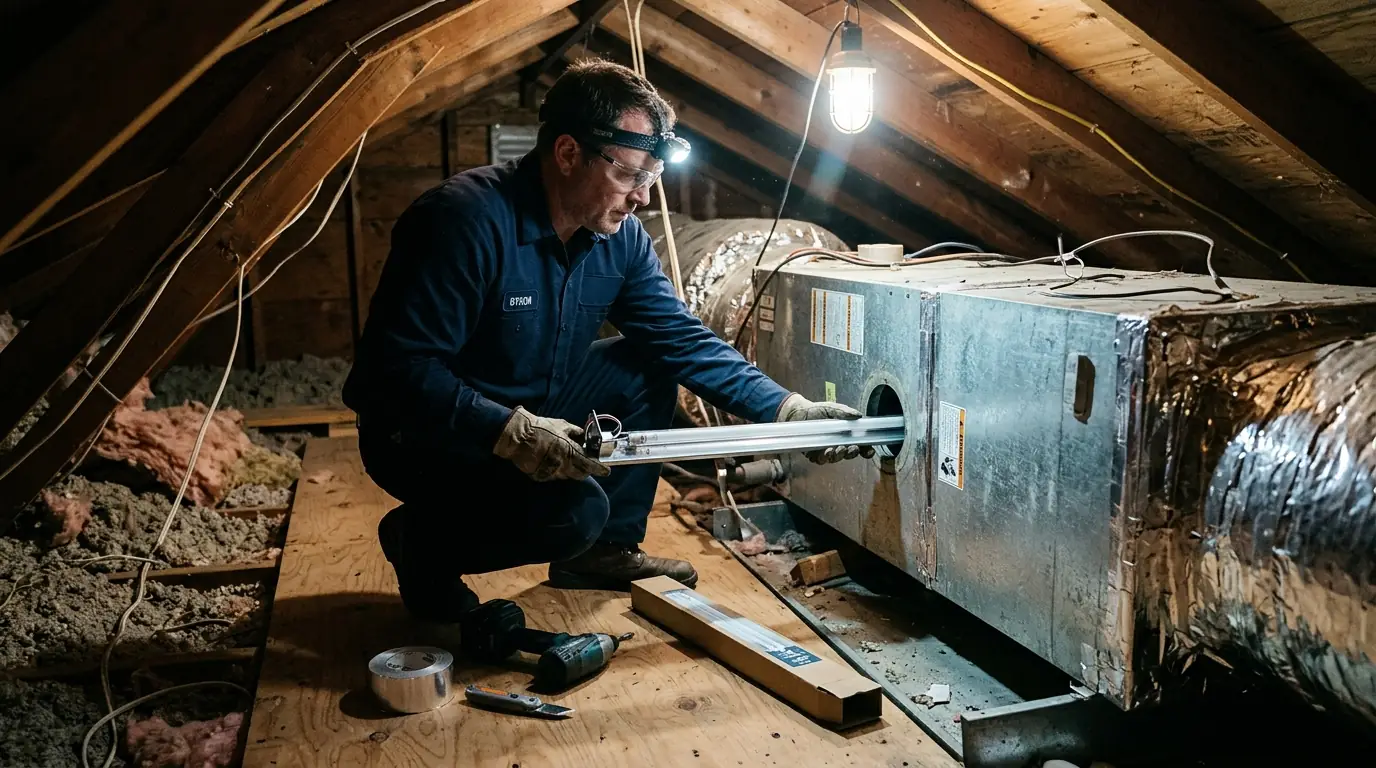
Coil lamps are the most useful kind of UV in an HVAC system. Because the lamp shines on the same surfaces all the time, it keeps biofilm off the coil fins and out of the drain pan, where it would otherwise build up, clog the drain, restrict airflow and smell.
It has limits. A lamp will not clean a coil that is already caked, so we clean it first. Air-stream lamps that try to treat moving air give it only a moment of exposure, so we are careful about promising air-quality gains. We install lamps from Fresh-Aire UV, Honeywell and other HVAC brands.
Coil lamp or air-stream lamp
| Coil UV lamp | Air-stream UV lamp | |
|---|---|---|
| Target | Coil and drain pan | Air passing the lamp |
| Exposure | Constant | A fraction of a second |
| Clear benefit | Cleaner coil and pan | Harder to measure |
| Upkeep | Lamp change about yearly | Lamp change about yearly |
What decides the cost of a UV lamp
We have no sourced local range for UV lamps, so these are the factors that move the price.
- Lamp type. Single and dual-lamp models differ in price.
- Mounting. Cabinet mounts are simpler than plenum mounts.
- Coil cleaning. A dirty coil is cleaned before a lamp goes in.
- Power. Some lamps need a new power connection or transformer.
- Replacement lamps. Yearly lamps vary by brand and model.
Installing a coil-sterilizing UV lamp
We mount the lamp through the air handler cabinet or the supply plenum so it shines across the coil face and into the drain pan, and wire it so it runs whenever the unit has power, or continuously if the model calls for it. Placement matters: too far from the coil and the exposure is weak, too close to plastic parts and they degrade over time. We clean the coil first if it is dirty, seal the mounting hole, and use a viewing port or interlock where the model provides one.
Replacing a UV lamp
UV-C lamps keep glowing long after they lose most of their output, so a lamp that still lights may no longer be doing much. Most makers call for a new lamp about once a year. We power down the unit, remove the old lamp with gloves so the new one stays clean, fit the correct replacement, check the ballast or power supply, and dispose of the old lamp properly, since many contain a small amount of mercury. It is a quick job that fits easily into a tune-up visit.
Why coil lamps earn their keep here
In New Orleans an indoor coil can stay wet for most of the year, because the AC runs well into spring and fall and the air it handles is humid. That steady moisture is what lets biofilm build up on coil fins and in drain pans, and it is why UV lamps earn their keep here more than in a dry climate. Even so, a lamp is a helper. Clean filters and a clear drain still do most of the work.
How we install a coil UV lamp
- Inspect the coilWe look at the coil, pan and drain first.
- Clean if neededA caked coil is cleaned before the lamp goes in.
- Mount the lampAimed across the coil face and into the pan.
- Wire and sealPowered correctly, mounting hole sealed.
- Test and labelLamp checked and the change date noted on the unit.
What you can do, and what you should not
Safe to do yourself
- Keep filters changed on schedule
- Use the viewing port, if your unit has one, to confirm the lamp is lit
- Keep the condensate drain clear
Leave to a technician
- Opening the air handler with the lamp on; UV-C harms eyes and skin
- Mounting or rewiring a lamp
- Handling a broken lamp, which may contain mercury