Short answer
A heating tune-up in New Orleans checks whatever heats the house: on a gas furnace, the igniter, flame sensor, burners, heat exchanger, venting and gas pressure; on a heat pump, the reversing valve, defrost controls and backup heat strips. The technician also checks the filter, tests the safety switches and runs a full heating cycle. Fall, before the first cold front, is the time to do it.
What a heating tune-up catches
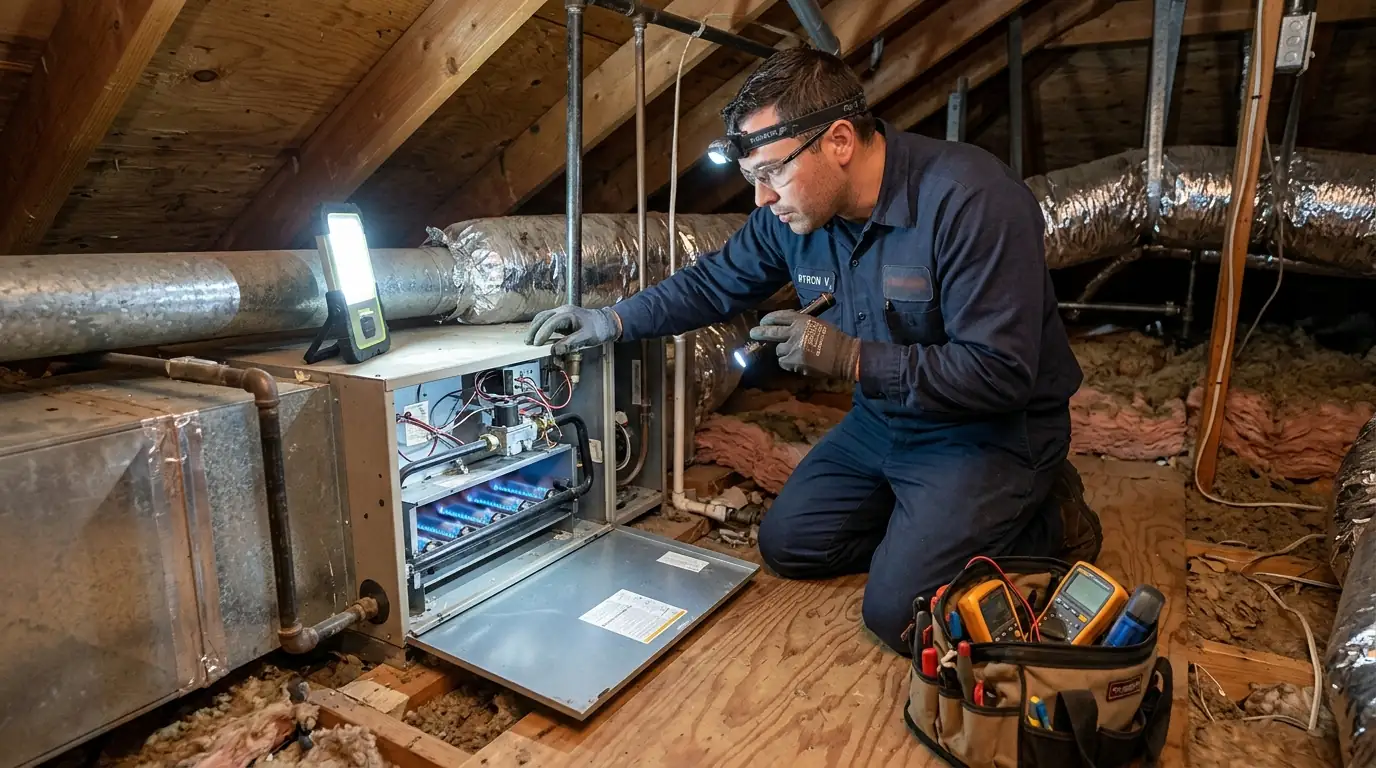
Most heating failures here are small parts that aged quietly through the summer: an igniter with a hairline crack, a flame sensor coated with oxidation, a defrost sensor that came loose, a sequencer that sticks. Each one is cheap to replace in October and miserable to discover at midnight in January.
Safety is the other half. Gas furnaces need their venting, heat exchanger and gas pressure checked, because a cracked exchanger or blocked flue can put carbon monoxide in the house. Heat strips need their wiring and limits checked, since they draw heavy current. Summer service is covered under the AC tune-up.
What a heating tune-up covers
- Filter checked or changed
- Thermostat calibration and heat call checked
- Igniter, flame sensor and burners inspected
- Heat exchanger, flue and gas pressure checked
- Heat pump reversing valve and defrost tested
- Heat strips, sequencers and limits tested
- Full heating cycle run and temperature rise measured
Gas furnace safety check
On a gas furnace we inspect the burners and flame, test the igniter and flame sensor, check gas pressure at the valve, and look at the heat exchanger for cracks or rust through the openings we can reach. We confirm the inducer motor and pressure switch work, the flue is clear and sloped correctly, and the condensate drain flows on high-efficiency models. We also test for carbon monoxide at the furnace and remind you to check the alarms in the house. Anything unsafe is shut down and explained.
Heat pump and heat strip check
On a heat pump we switch the system to heat and confirm the reversing valve shifts, check refrigerant pressures in heating mode, and test the defrost board and sensor so the outdoor coil will clear itself on frosty mornings. Then we check the backup heat strips: each element's resistance, the sequencers or relays, the limit switches and the wiring at the breaker. Finally we confirm the thermostat brings on backup heat only when it should, so a cold snap does not run up the bill.
Why fall service pays off here
When the January 2025 snow reached as far as Slidell, heating systems across the region were tested at the same time, and the ones that failed first were mostly those nobody had looked at since spring. A fall check costs far less than an emergency call on the coldest night of the year, and it is the easiest time to replace a tired igniter or sensor before it strands the house without heat.
How a heating tune-up runs
- Filter and thermostatFilter checked, thermostat heat call confirmed.
- Inspect the componentsIgniter, sensor, burners, strips or defrost parts.
- Safety checksVenting, heat exchanger, gas pressure and CO test.
- Test the controlsLimits, sequencers and backup heat staging.
- Run a full cycleTemperature rise measured, notes left for you.
What decides the cost of a heating tune-up
We have no sourced local range for heating tune-ups, so here is what moves the price.
- System type. Gas furnaces, heat pumps and strip-heat systems each get different checks.
- Number of systems. Each system is serviced separately.
- Access. Tight attics take longer to work in.
- Worn parts found. Igniters, sensors and filters replaced at the visit add to the bill.
- Combined visits. Booking heating and cooling together can save a trip.
What you can do before winter
Safe to do yourself
- Change the filter before the first cold night
- Test carbon monoxide alarms and replace dead batteries
- Clear storage away from the furnace and its vent
Leave to a technician
- Opening burner compartments or gas valves
- Testing heat strips and wiring
- Checking the heat exchanger for cracks