Short answer
When a gas furnace in New Orleans clicks but will not light, lights then shuts off, or blows cold air, the cause is usually a cracked hot surface igniter, a dirty flame sensor, a tripped limit switch or a pressure switch fault. A technician reads the control board's fault code, tests each step of the start-up sequence, and checks venting and gas pressure before the furnace goes back into service.
Signs the furnace needs a technician
How a furnace starts, and where it stops
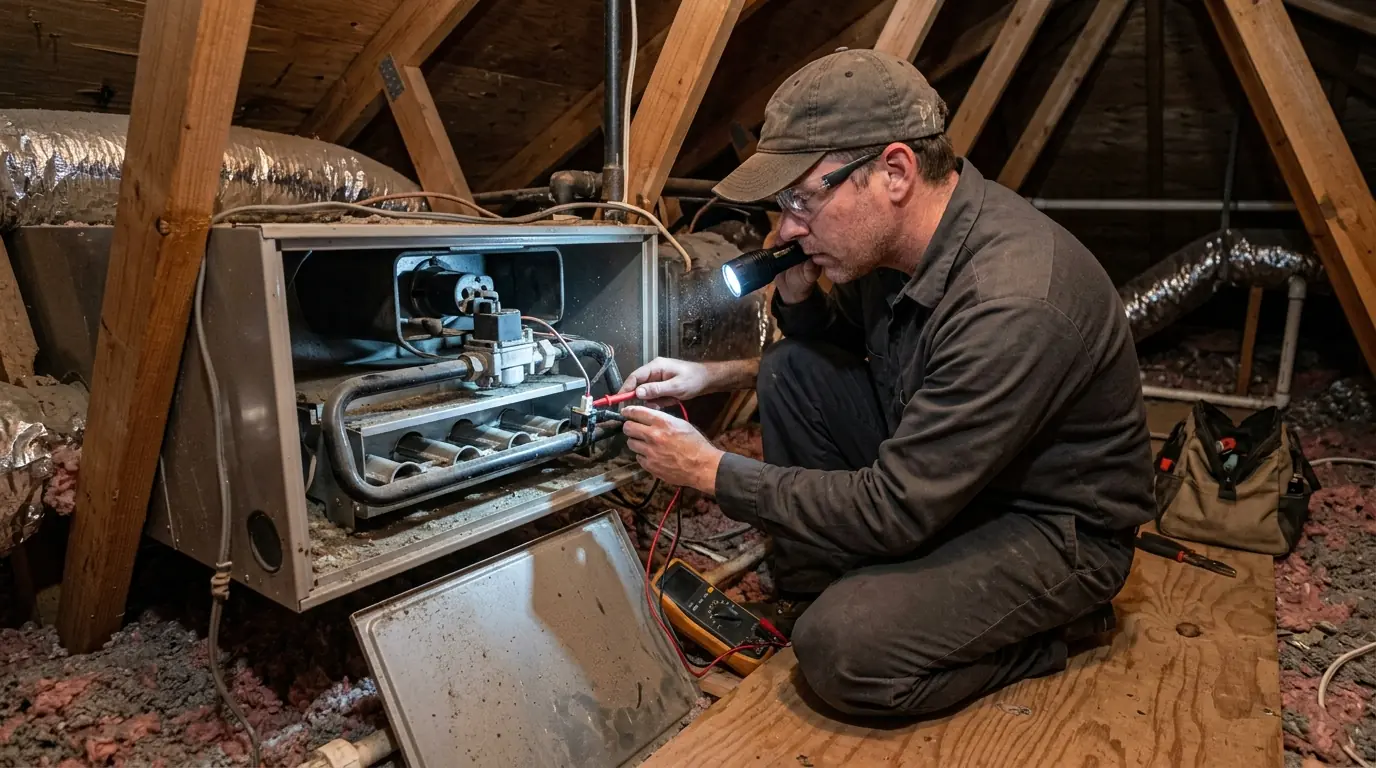
A modern furnace runs a set sequence: the inducer fan clears the burner box, a pressure switch confirms the vent is open, the igniter glows, the gas valve opens, and the flame sensor proves fire within seconds. If any step fails, the board shuts off the gas and usually flashes a code.
That sequence makes diagnosis orderly. We read the code, then watch the start-up to see which step fails. Safety comes first: we check for gas leaks, cracked heat exchangers and blocked vents, because carbon monoxide is the real risk with a furnace. We repair Carrier, Trane, Goodman, Lennox and Rheem furnaces.
Furnace not lighting
If you hear the inducer fan and a click but no burner flame, the igniter or the gas supply is usually at fault. Hot surface igniters are brittle and crack with age; sometimes you can see the hairline break. A closed gas cock, low gas pressure or a failed gas valve stops ignition too. We test the igniter's resistance, confirm gas pressure at the valve, and check that the board sends power at the right step. A cracked igniter is replaced with the correct part, not a universal one that sits in the wrong spot.
Furnace lighting, then shutting off
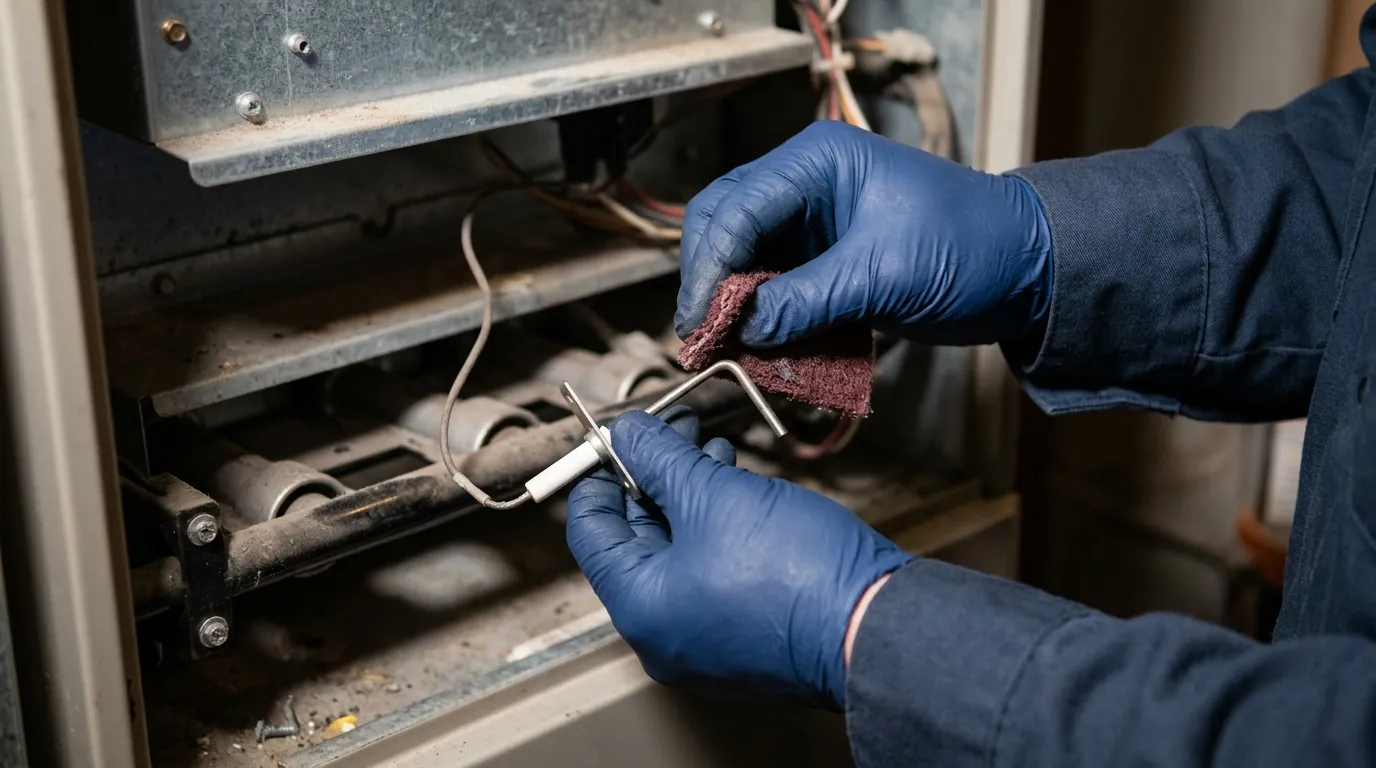
A furnace that lights, runs a few seconds and shuts down is often failing to prove flame. A flame sensor coated with oxidation cannot sense the flame, so the board closes the gas for safety and tries again. Longer cycles that end early point to an overheating limit switch, usually caused by a dirty filter, closed vents or a weak blower. We clean or replace the sensor, check the limit and what tripped it, and measure the temperature rise across the furnace to confirm the airflow is right.
Burning smell when the furnace first runs
A dusty smell the first time the furnace runs each season is normal: months of dust are burning off the heat exchanger, and it fades within an hour. A sharp electrical smell, a smell of gas, or any smell that stays is not. If you smell gas, leave the house and call the gas utility from outside before calling us. For electrical or lingering smells, switch the furnace off. We check the wiring, the blower motor, the heat exchanger and the venting before it runs again.
Long idle months, then a hard freeze
Furnaces in New Orleans can go a whole winter with little work, then face a night like January 21, 2025, when eight inches of snow fell at the airport, lows dropped into the teens and 20s, and the snow reached as far as Slidell. On nights like that every furnace in the region runs at once, and the ones with cracked igniters or dirty sensors fail first. A fall check before the first cold front catches most of them.
How we repair a furnace
- Read the codeThe board's flash code points to the failed step.
- Watch the start-upWe see exactly where the sequence stops.
- Check gas and CO safetyLeaks, venting and the heat exchanger are checked.
- Repair the failed stepIgniter, sensor, switch, board or valve, matched to the furnace.
- Run a full cycleTemperature rise and flame are checked before we leave.
What decides the cost of a furnace repair
We have no sourced local range for furnace repairs, so here is what moves the price.
- Small parts. Igniters, flame sensors and limit switches cost the least.
- Control board. A failed board costs more and must match the furnace.
- Gas valve. A failed valve is a larger repair with a pressure check.
- Inducer motor. A noisy or failed inducer is replaced as an assembly.
- Heat exchanger or venting. A cracked exchanger or blocked vent is a safety repair first.
What you can check first
Safe to check yourself
- Check the thermostat is on heat and set above room temperature
- Replace a dirty filter and open closed vents
- Confirm the furnace switch and breaker are on
Leave to a technician
- Anything involving the gas valve, burners or venting
- Igniter, flame sensor or limit switch work
- Any gas smell: leave the house and call from outside