Quick answer
Turn the AC off at the thermostat, catch the water with towels or a bucket, and switch off any circuit near the leak. Then look at the drain pan and drain line. The usual causes are a clogged condensate drain, a missing or failed float switch, a rusted pan, or a frozen coil thawing. Most are quick fixes once found.
The first ten minutes
- Turn the AC offSet the thermostat to off so the coil stops making water.
- Catch the waterTowels, a bucket or a shallow pan under the drip.
- Mind the electricityIf water is near a light fixture or outlet, switch off that circuit at the panel.
- Look at the panIf you can reach the air handler safely, see whether the pan under it is full.
- CallTell us where the water is and whether the system was icing up.
Do not keep running the system to see whether it stops. A clogged drain keeps filling, and a frozen coil makes more water as it thaws.
Why air handlers leak here
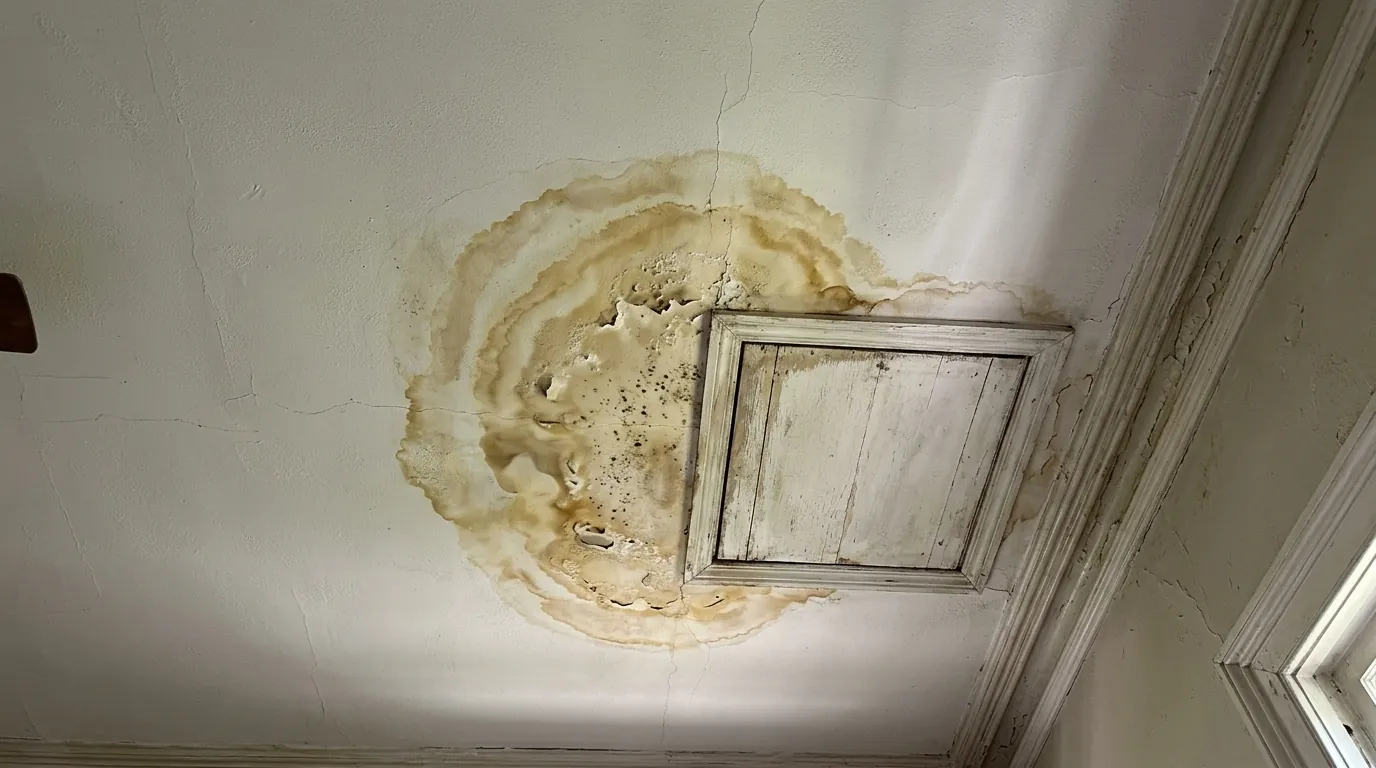
In the worst stretch of summer, dew points in New Orleans sit in the upper 70s, so the indoor coil pulls water out of the air all day. That water drips into a pan and runs out through a small plastic drain line. Slime and algae grow in that line in the warm, wet conditions, and sooner or later it clogs.
A float switch should shut the system off when the pan fills, but many older installs never had one, and some were mounted where they cannot sense the water. Pans rust through after years of standing water, and a coil that freezes from low airflow or low refrigerant can dump a lot of meltwater at once.
The usual causes, in the order we check them
A technician clears the line, tests or adds the float switch, checks the pan, and looks at airflow and refrigerant if the coil was icing. This Old House lists drain clogs among common AC repairs that usually run about $150 to $650. Our drain line repair page covers the work in detail.
How to keep it from happening again
- Change the filter on schedule so the coil does not freeze
- Flush the drain line each spring, or have it done at a tune-up
- Make sure a float switch shuts the system off when the pan fills
- Replace a rusted secondary pan before it leaks
- Keep the drain outlet outside clear of mulch and debris
If your drain clogs every summer, ask about a cleanout tee and treatment tablets, which make yearly cleaning quick.
If the ceiling got wet
Once the leak stops, dry the area quickly with fans and watch the ceiling for sagging. Small stains often dry out, but a ceiling that holds water or bulges needs attention fast. If water reached the insulation above, it should be dried or replaced so it does not stay damp against the drywall.
Keep a photo of the stain and the pan for your records. If the leak came from a part that failed, the technician's notes help if you later file a claim or sell the house.
Sources
Figures in this guide come from these sources. Programs and prices change, so check current terms.
About this guide. Ward Teague writes the HVAC guides for Byron Vegas. Each guide starts from questions people ask when they call, and the figures in it come from the sources listed at the end of the article. More about the writer.