Quick answer
Book an AC tune-up in spring, before the long heat. Prepare for hurricane season by June. Through summer, check filters monthly and watch the drain. In fall, have the heating checked before the first cold front. In winter, protect the system in a freeze. Check filters every month or two all year, and keep a record of what was done.
Spring: March and April
Spring is the time for the AC tune-up, before the long cooling season starts. The outdoor coil is cleaned, electrical parts are tested, the drain is flushed and the float switch checked, and refrigerant and airflow are measured. Entergy New Orleans customers have had an Energy Smart instant discount of about $150 to $200 on a qualifying tune-up, which makes spring an easy time to book.
- Book the tune-up before the first hot spell
- Replace the filter
- Clear plants and debris two feet back from the outdoor unit
- Test the thermostat in cooling mode
Early summer: May and June
Hurricane season starts June 1. Before it does, make sure the outdoor unit sits above the water your yard has seen and is strapped down, photograph the equipment for insurance, and know where the breaker and outdoor disconnect are. Our hurricane season checklist covers the rest.
High summer: July and August
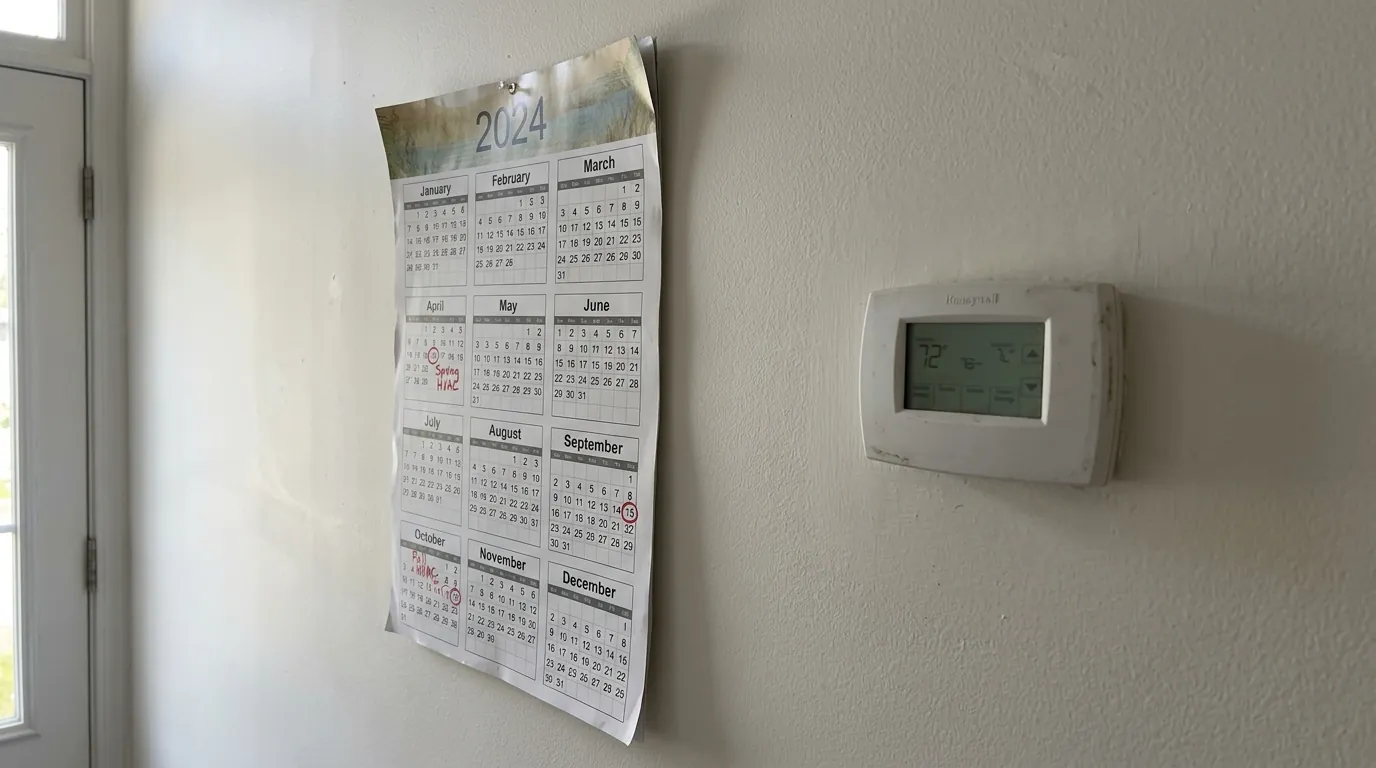
In the worst stretch of summer, dew points sit in the upper 70s and the system runs nearly nonstop. This is when drains clog, coils freeze if airflow drops, and weak capacitors fail. Check the filter every month, keep an eye on the drain pan or the outside drain outlet, and listen for new noises from the outdoor unit.
- Check the filter monthly
- Look at the drain outlet outside after hot days
- Keep returns and supply grilles open and clear
- Call at the first sign of ice on the copper line
Fall: October and November
Winters here are short, with few freezing days, so heating parts sit idle most of the year and fail on the first cold night. A fall heating tune-up checks furnace igniters, flame sensors and venting, heat pump defrost controls and reversing valves, and heat strips and their wiring.
Test carbon monoxide alarms at the same time if the house has any gas appliances, and replace batteries in any that are battery powered.
Winter: December to February
Cold snaps are rare, but they come. On January 21, 2025, eight inches of snow fell at the airport and lows dropped into the teens and 20s. When a freeze is forecast, make sure the heat works before the night arrives, keep the outdoor unit clear of snow and ice, and use emergency heat only if the heat pump has actually failed.
All year
- FiltersCheck every month or two, and change them when dirty.
- DrainFlush the condensate line at least once a year.
- Outdoor unitKeep it clear, level and strapped down.
- RecordsKeep tune-up notes, model numbers and warranty papers together.
- Age checkOnce a system passes 12 to 15 years, start planning its replacement.
Sources
Figures in this guide come from these sources. Programs and prices change, so check current terms.
About this guide. Ward Teague writes the HVAC guides for Byron Vegas. Each guide starts from questions people ask when they call, and the figures in it come from the sources listed at the end of the article. More about the writer.