Quick answer
Electric strip heat turns electricity into heat one for one, so it costs a lot to run. A heat pump moves heat from outdoor air instead, so on mild winter days it delivers far more heat for the same electricity. With our short winters, a heat pump with strips kept as backup is usually the cheaper way to heat, especially when the AC is due for replacement.
How strip heat works
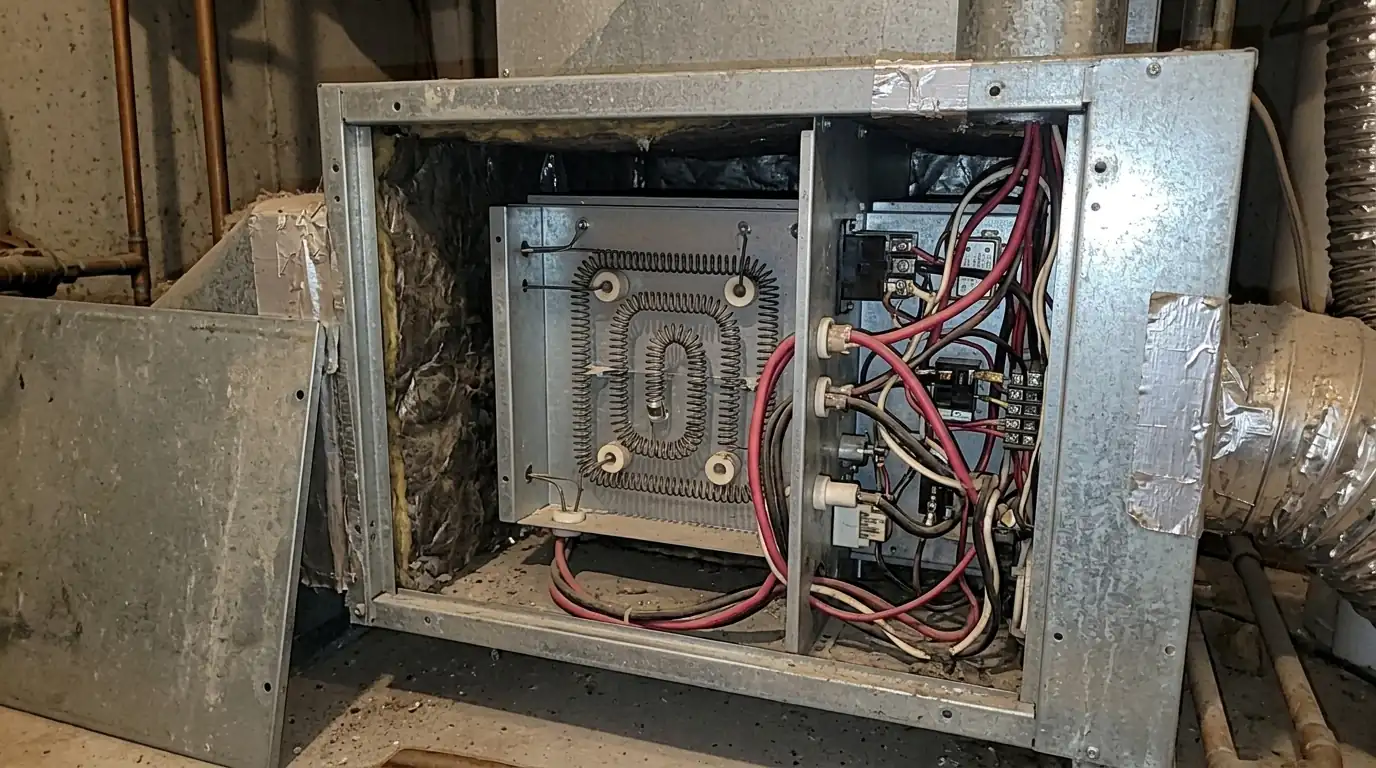
Heat strips are electric elements, much like the coils in a toaster, mounted in the air handler. When the thermostat calls for heat, sequencers switch them on one stage at a time and the blower pushes air across them. They are simple and cheap to install, which is why so many air handlers here carry them.
The catch is efficiency. Resistance heat turns each unit of electricity into one unit of heat, no more. On a cold night a house heated by strips alone can draw a lot of power, and the bill shows it.
How a heat pump heats
A heat pump is an air conditioner that can run in reverse. In winter its reversing valve flips the refrigerant flow, so the outdoor coil absorbs heat from the outside air and the indoor coil releases it into the house. Because it moves heat rather than making it, it delivers far more heat for each unit of electricity than strips do, especially in mild weather.
As the temperature drops, a heat pump's output falls, and on the coldest nights the backup strips come on to help. Set up properly, the strips run only when they are needed, not all winter.
What our winters mean for the choice
New Orleans winters are short, with few freezing days in most years. That is close to ideal for a heat pump, which does its best work in exactly the mild weather we have most of the winter.
Rare cold snaps still happen. On January 21, 2025, eight inches of snow fell at the airport and lows dropped into the teens and 20s. On nights like that a heat pump leans on its backup heat, which is why the strips stay in place. The goal is a system that heats cheaply most of the time and still copes with the outliers.
What switching costs
HomeAdvisor puts a heat pump installation at about $3,800 to $8,200 for the unit, or about $5,200 to $13,800 with new ductwork. In most homes with working ducts, switching means replacing the outdoor AC with a heat pump and matching the indoor coil or air handler, with the existing strips kept as backup.
That is why the best time to switch is when the AC is due for replacement anyway. You are buying new equipment either way, so the real question becomes the difference between an AC and a heat pump of the same size, set against lower winter bills for years.
Rebates that help
Incentives depend on your utility. Entergy New Orleans customers have seen Energy Smart rebates of up to $500 on qualifying ENERGY STAR heat pumps, and up to $500 when an ENERGY STAR mini-split heat pump replaces electric strip heat. Entergy Louisiana has offered up to $500 per heat pump through participating trade allies. Tammany Electric does not offer a heat pump rebate program. Programs change, so check current terms before you buy.
Signs your house heats on strips alone
- The thermostat shows emergency or auxiliary heat most of the time
- Winter bills jump on mild days, not just cold ones
- The outdoor unit sits still while the heat is running
- The outdoor unit's label says air conditioner, not heat pump
- A burning-dust smell every time the heat comes on
If your system is an AC with strips, a heat pump is an upgrade. If you already have a heat pump and the strips are doing all the work, it needs a repair; see heat pump repair.
When strip heat still makes sense
Strip heat is not always wrong. In a rental you rarely heat, a small apartment, or a house whose AC was replaced last year, a heat pump may take a long time to pay back. In those cases, keep the strips in good repair, use a thermostat that stages them properly, and revisit the question when the AC is due for replacement.
Sources
Figures in this guide come from these sources. Programs and prices change, so check current terms.
About this guide. Ward Teague writes the HVAC guides for Byron Vegas. Each guide starts from questions people ask when they call, and the figures in it come from the sources listed at the end of the article. More about the writer.