Quick answer
Before the season, raise and strap the outdoor unit, clear the drain and photograph the equipment for insurance. When a storm is coming, turn the system off at the thermostat before the power fails. Afterward, do not restart a unit that sat in water or took debris until it is inspected, and switch on only once the power is steady.
Before the season starts
Atlantic hurricane season runs from June 1 to November 30, so spring is the time to get the system ready, ideally at your AC tune-up.
- Raise the outdoor unit on a stand above the highest water your yard has seen
- Strap or bracket the unit to its stand or pad
- Clear the condensate drain and test the float switch
- Trim back branches and clear loose items near the unit
- Photograph the indoor and outdoor equipment and their data plates
- Know where your breaker and the outdoor disconnect are
- Plan where older relatives and infants can stay cool in an outage
When a storm is coming
Run the AC to cool and dry the house ahead of time, then turn the system off at the thermostat before the power fails. Switch the outdoor disconnect off if flooding is likely. Do not cover the outdoor unit with a tarp while it might run; it needs airflow, and a loose cover can become debris.
A whole-house surge protector at the panel, installed by an electrician, helps protect HVAC electronics, which are some of the most surge-sensitive equipment in the house.
During a long outage
Hurricane Ida came ashore on August 29, 2021 with 150 mph winds, all of New Orleans lost power, and Entergy aimed to restore most customers about 10 days later. In the days that followed, heat index values reached 106. Outages like that are dangerous for older people, infants and anyone with a medical condition, so plan where they can stay cool before the season starts.
If you run a portable generator, keep it outdoors and well away from windows and doors because of carbon monoxide. Do not try to run a central AC from it unless an electrician has set up a properly sized generator and transfer switch.
Before you switch the AC back on
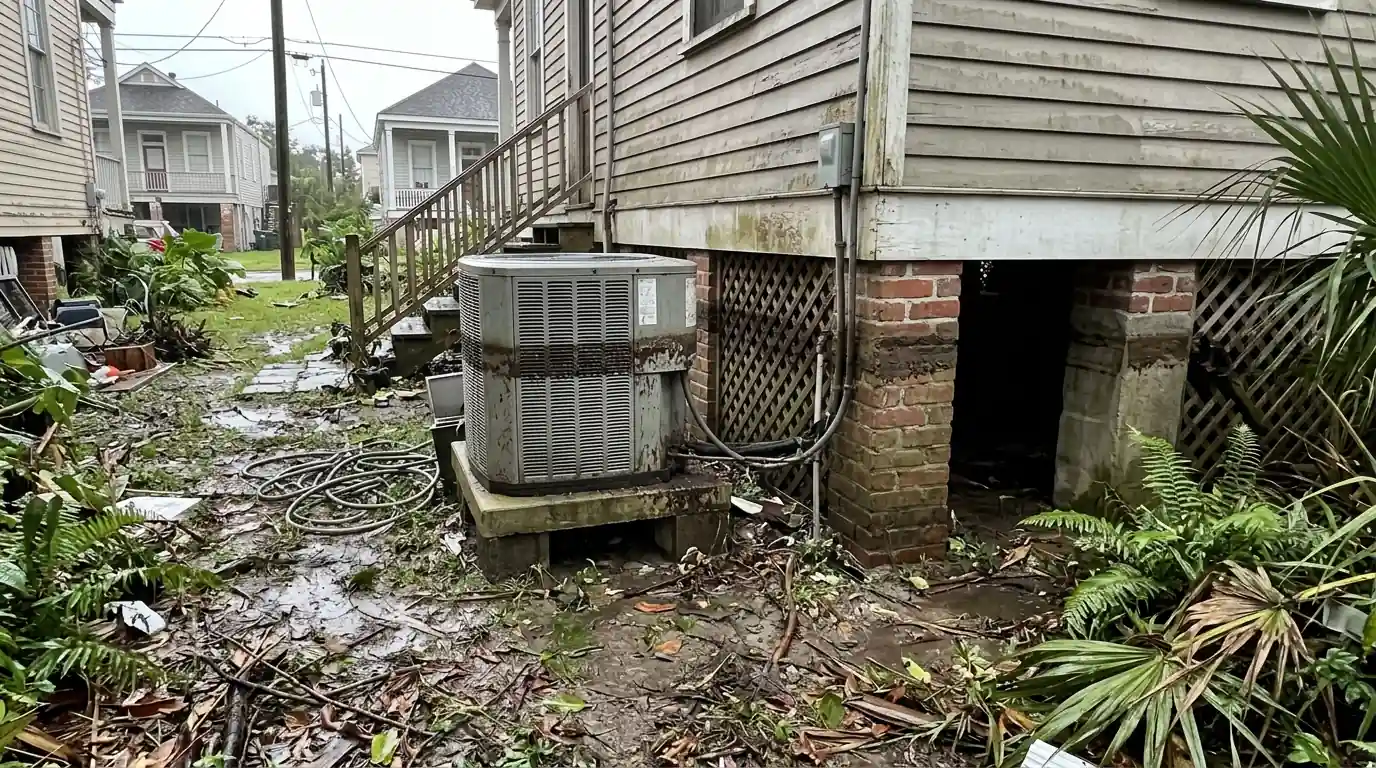
- Look at the outdoor unitMud or a waterline means it sat in water. Leave it off.
- Check for damageBent fins, a tipped unit or cracked lines need a technician.
- Wait for steady powerLet the power settle before restarting anything.
- Restart onceIf it hums, clicks or will not start, turn it off. Do not keep trying.
- Watch the drainMake sure water drains outside, not into the pan.
Units that sat in water above their electrical parts usually need replacing; units that only took a surge often need a capacitor, contactor or board. Both should be checked before they run. Our hurricane and flood repair page explains the inspection.
Insurance and records
If you plan to claim storm damage, photograph the equipment and any water lines before anything is moved or repaired, and keep the inspection report. Ask the technician to note what failed and why, since adjusters look for that.
Keep the photos you took before the season too. A clear picture of an undamaged unit and its data plate makes the before and after easy to show.
Sources
Figures in this guide come from these sources. Programs and prices change, so check current terms.
About this guide. Ward Teague writes the HVAC guides for Byron Vegas. Each guide starts from questions people ask when they call, and the figures in it come from the sources listed at the end of the article. More about the writer.